Xia En-Hua, Jiang Jian-Jun, Huang Hui, Zhang Li-Ping, Zhang Hai-Bin, Gao Li-Zhi
Plant Germplasm and Genomics Center, Germplasm Bank of Wild Species, Kunming Institute of Botany, the Chinese Academy of Sciences, Kunming, China; University of the Chinese Academy of Sciences, Beijing, China.
Plant Germplasm and Genomics Center, Germplasm Bank of Wild Species, Kunming Institute of Botany, the Chinese Academy of Sciences, Kunming, China.
PLoS One. 2014 Aug 19;9(8):e104150. doi: 10.1371/journal.pone.0104150. eCollection 2014.
Rapidly driven by the need for developing sustainable sources of nutritionally important fatty acids and the rising concerns about environmental impacts after using fossil oil, oil-plants have received increasing awareness nowadays. As an important oil-rich plant in China, Camellia oleifera has played a vital role in providing nutritional applications, biofuel productions and chemical feedstocks. However, the lack of C. oleifera genome sequences and little genetic information have largely hampered the urgent needs for efficient utilization of the abundant germplasms towards modern breeding efforts of this woody oil-plant.
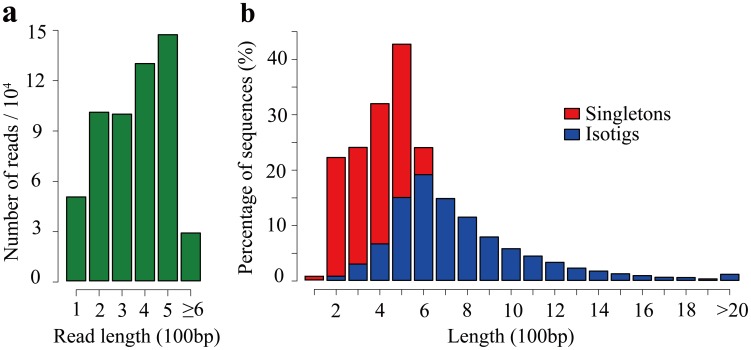
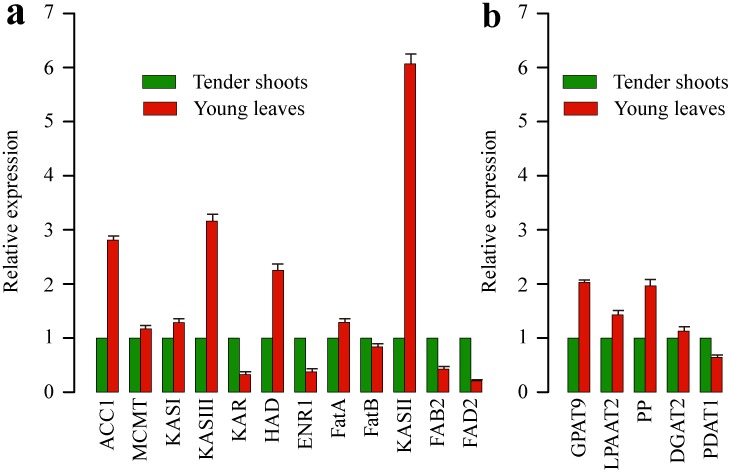
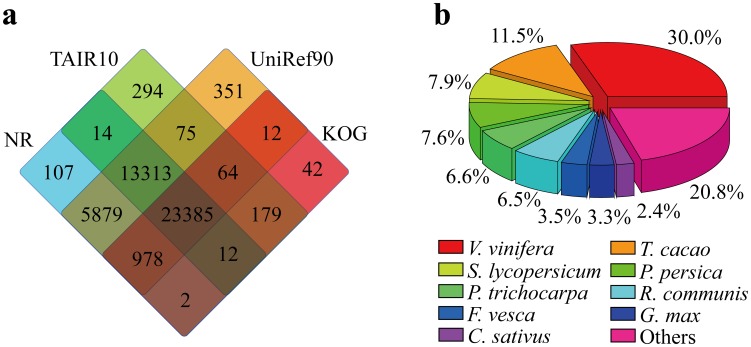
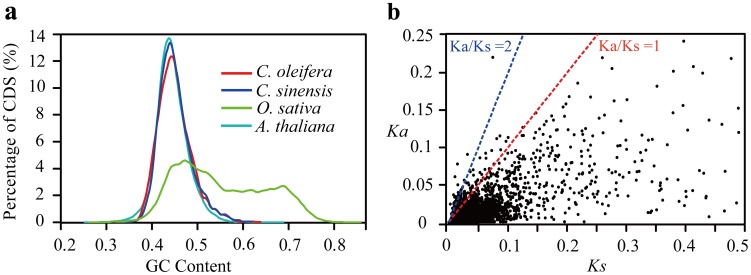
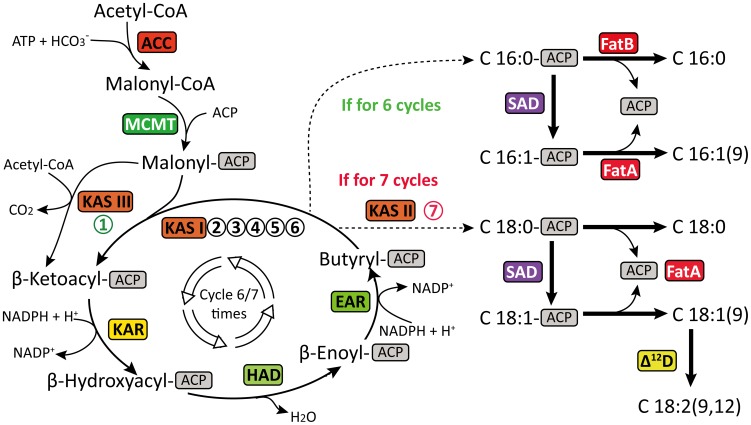
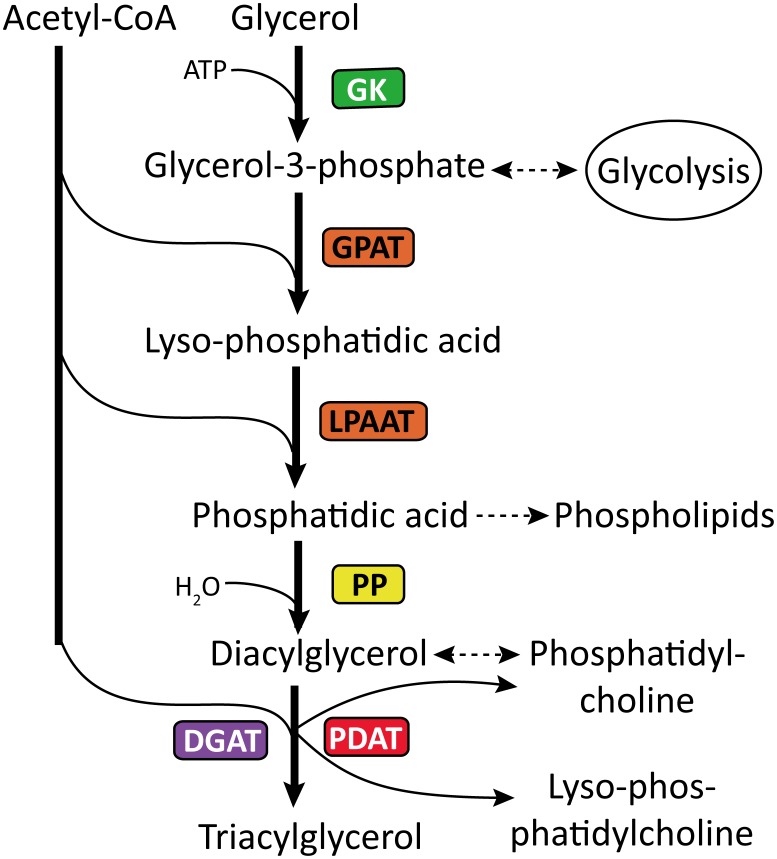
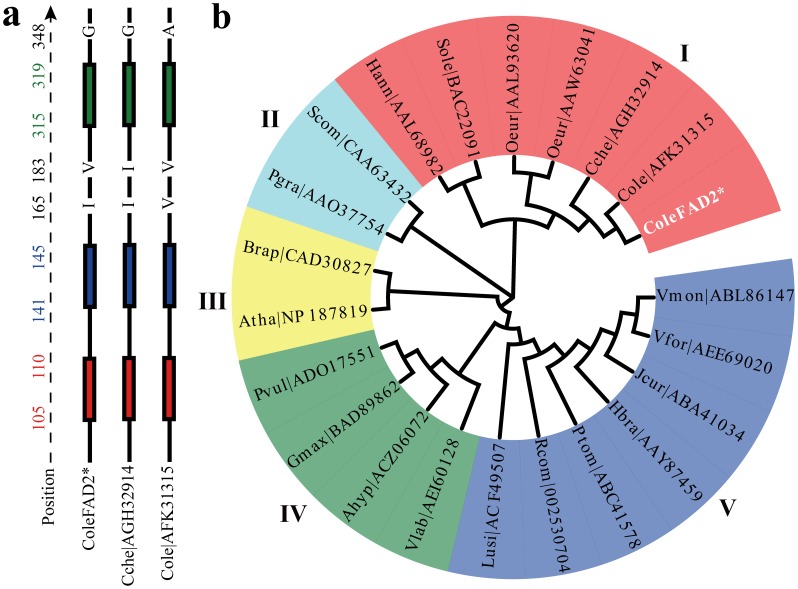
Here, using the 454 GS-FLX sequencing platform, we generated approximately 600,000 RNA-Seq reads from four tissues of C. oleifera. These reads were trimmed and assembled into 104,842 non-redundant putative transcripts with a total length of ∼38.9 Mb, representing more than 218-fold of all the C. oleifera sequences currently deposited in the GenBank (as of March 2014). Based on the BLAST similarity searches, nearly 42.6% transcripts could be annotated with known genes, conserved domains, or Gene Ontology (GO) terms. Comparisons with the cultivated tea tree, C. sinensis, identified 3,022 pairs of orthologs, of which 211 exhibited the evidence under positive selection. Pathway analysis detected the majority of genes potentially related to lipid metabolism. Evolutionary analysis of omega-6 fatty acid desaturase (FAD2) genes among 20 oil-plants unexpectedly suggests that a parallel evolution may occur between C. oleifera and Olea oleifera. Additionally, more than 2,300 simple sequence repeats (SSRs) and 20,200 single-nucleotide polymorphisms (SNPs) were detected in the C. oleifera transcriptome.
The generated transcriptome represents a considerable increase in the number of sequences deposited in the public databases, providing an unprecedented opportunity to discover all related-genes associated with lipid metabolic pathway in C. oleifera. It will greatly enhance the generation of new varieties of C. oleifera with increased yields and high quality.
在开发具有重要营养意义的脂肪酸可持续来源的需求推动下,以及在使用化石油后对环境影响的担忧日益增加,油用植物如今受到了越来越多的关注。作为中国一种重要的富含油脂的植物,油茶在提供营养应用、生物燃料生产和化学原料方面发挥了至关重要的作用。然而,油茶基因组序列的缺乏和遗传信息的匮乏在很大程度上阻碍了有效利用丰富种质资源以推动这种木本油料植物现代育种工作的迫切需求。
在此,我们使用454 GS-FLX测序平台,从油茶的四个组织中生成了约600,000条RNA测序读数。这些读数经过修剪后组装成104,842个非冗余的假定转录本,总长度约为38.9 Mb,比目前保存在GenBank中的所有油茶序列(截至2014年3月)多218倍以上。基于BLAST相似性搜索,近42.6%的转录本可以用已知基因、保守结构域或基因本体(GO)术语进行注释。与栽培茶树中华茶的比较确定了3022对直系同源基因,其中211对表现出正选择的证据。通路分析检测到了大多数可能与脂质代谢相关的基因。对20种油用植物中ω-6脂肪酸去饱和酶(FAD2)基因的进化分析意外地表明,油茶和油橄榄之间可能发生了平行进化。此外,在油茶转录组中检测到了2300多个简单序列重复(SSR)和20200个单核苷酸多态性(SNP)。
所生成的转录组代表了公共数据库中 deposited序列数量的显著增加,为发现与油茶脂质代谢途径相关的所有基因提供了前所未有的机会。它将极大地促进高产优质油茶新品种的培育。