General Surgery, Liverpool Hospital, University of New South Wales, Liverpool, New South Wales, Australia,
University of New South Wales Clinical School, Liverpool, New South Wales, Australia and.
Gastroenterol Rep (Oxf). 2015 Aug;3(3):243-53. doi: 10.1093/gastro/gou054. Epub 2014 Aug 19.
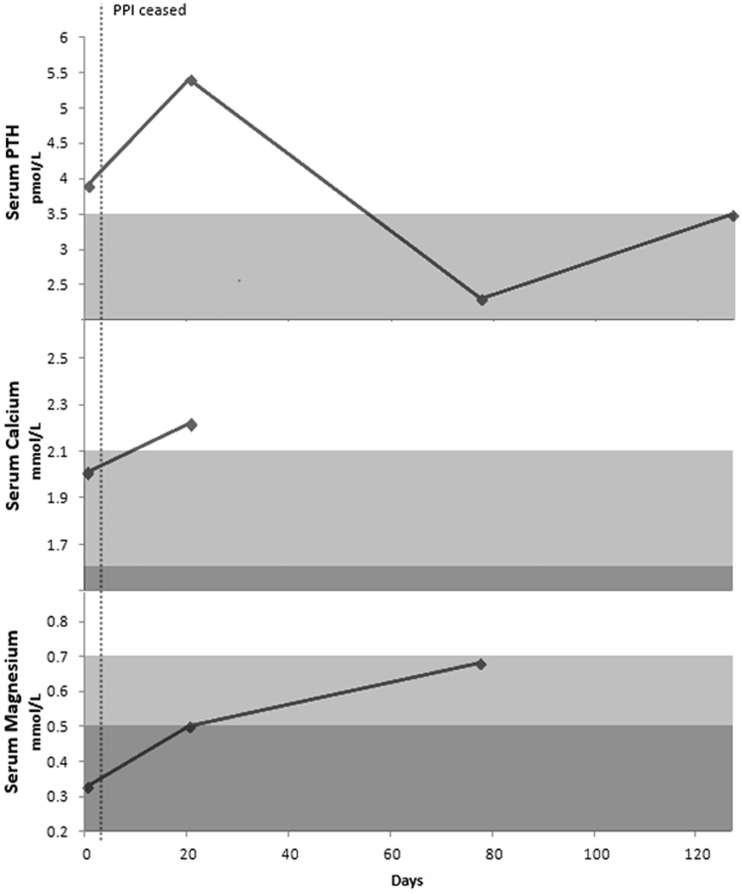
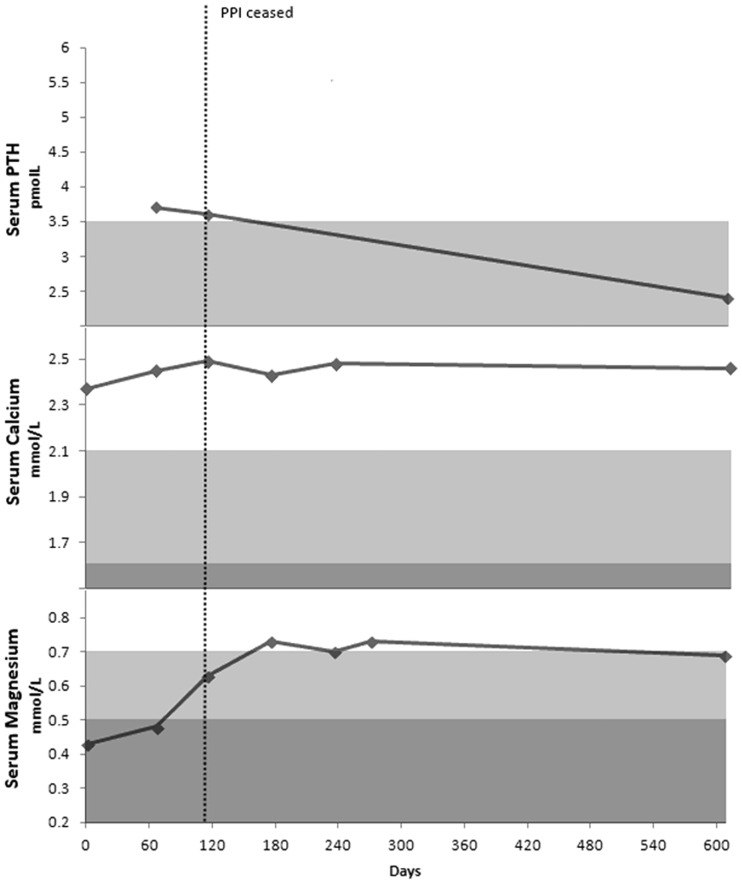
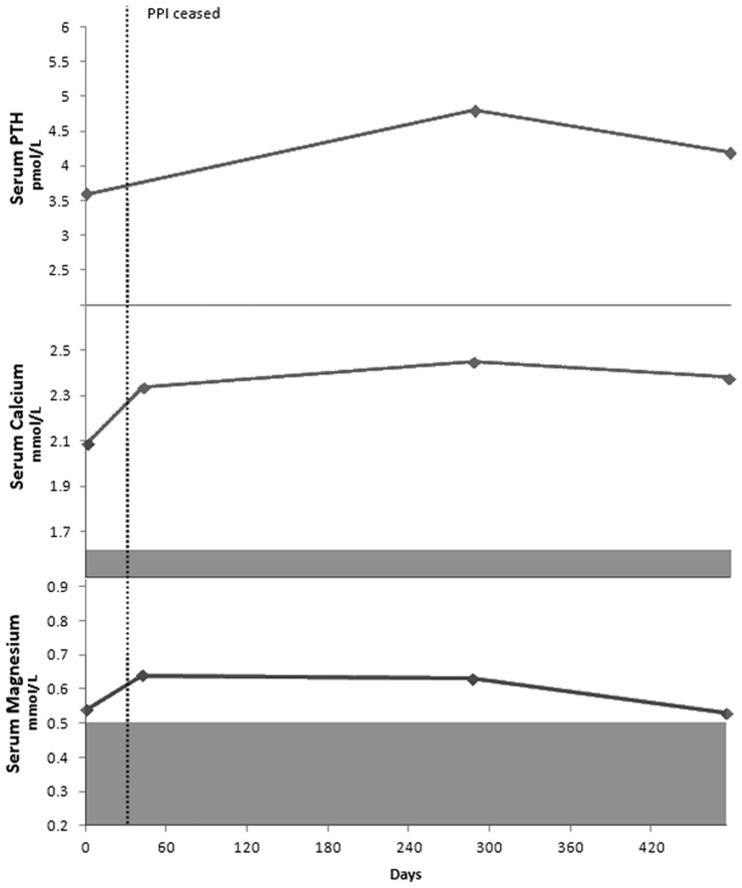
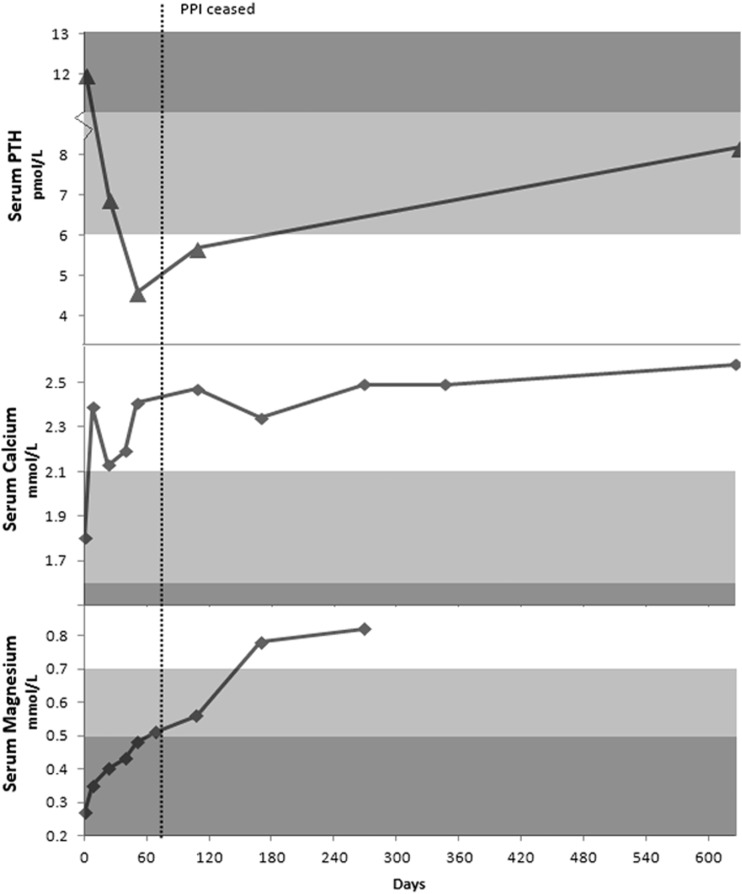
Hypomagnesaemia and associated hypocalcaemia and hypoparathyroidism have been increasingly recognised as rare long-term side-effects of proton pump inhibitors (PPIs). The PPIs may inhibit active magnesium (Mg) absorption by interfering with transcellular transient receptor potential melastatin-6 and -7 (TRPM 6 and 7) channels. More recent cell culture studies have suggested concomitant inhibition of passive Mg absorption by omeprazole. After being treated with a range of PPIs, the four patients in our case series developed hypomagnesaemia, which responded to withdrawal of therapy and initiation of Mg replacement. Their clinical course and management demonstrate key aspects of hypomagnesaemia associated with long-term use of PPIs.
低镁血症以及相关的低钙血症和甲状旁腺功能减退症已越来越被认为是质子泵抑制剂(PPIs)的罕见长期副作用。PPIs 可能通过干扰细胞间瞬时受体电位 melastatin-6 和 -7(TRPM 6 和 7)通道来抑制主动镁(Mg)吸收。最近的细胞培养研究表明,奥美拉唑同时抑制被动 Mg 吸收。在接受一系列 PPI 治疗后,我们病例系列中的 4 名患者出现低镁血症,该血症对停用治疗和开始补充镁有反应。他们的临床病程和治疗方法说明了与长期使用 PPI 相关的低镁血症的关键方面。