Sadtler Patrick T, Quick Kristin M, Golub Matthew D, Chase Steven M, Ryu Stephen I, Tyler-Kabara Elizabeth C, Yu Byron M, Batista Aaron P
1] Department of Bioengineering, University of Pittsburgh, Pittsburgh, Pennsylvania 15261, USA [2] Center for the Neural Basis of Cognition, Pittsburgh, Pennsylvania 15213, USA [3] Systems Neuroscience Institute, University of Pittsburgh, Pittsburgh Pennsylvania 15261, USA.
1] Center for the Neural Basis of Cognition, Pittsburgh, Pennsylvania 15213, USA [2] Department of Electrical and Computer Engineering, Carnegie Mellon University, Pittsburgh, Pennsylvania 15213, USA.
Nature. 2014 Aug 28;512(7515):423-6. doi: 10.1038/nature13665.
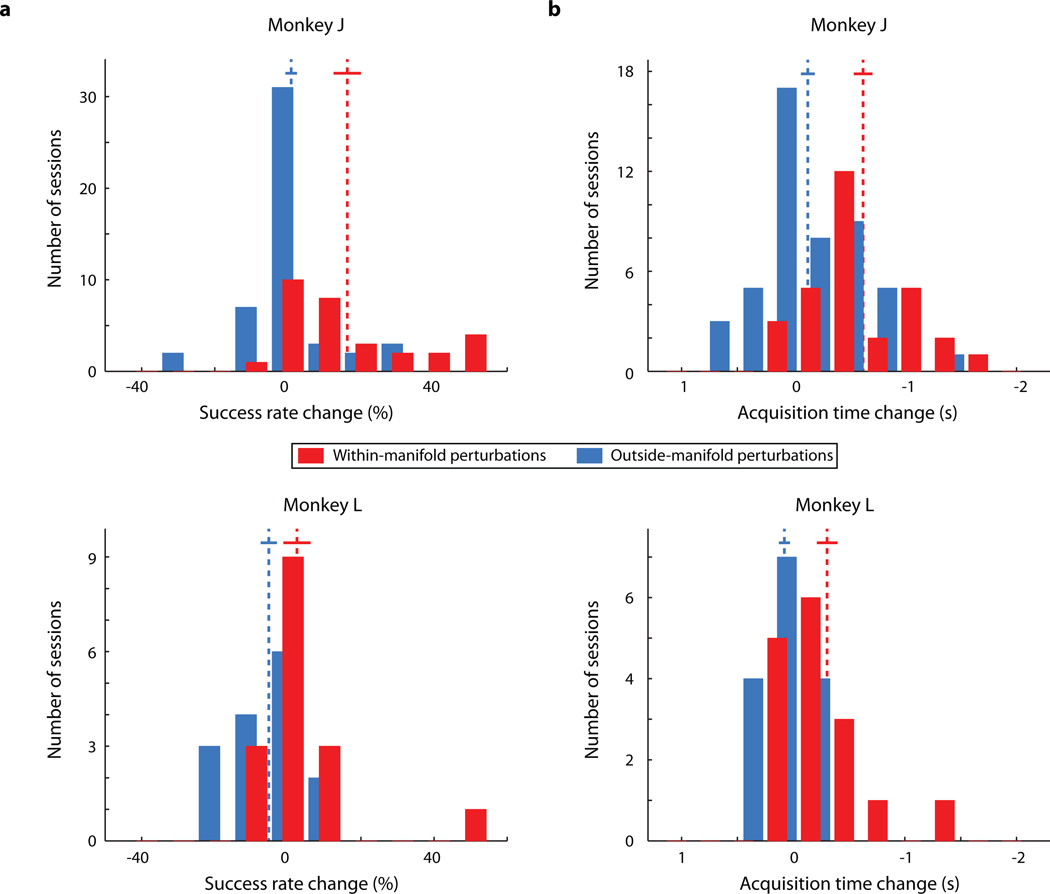
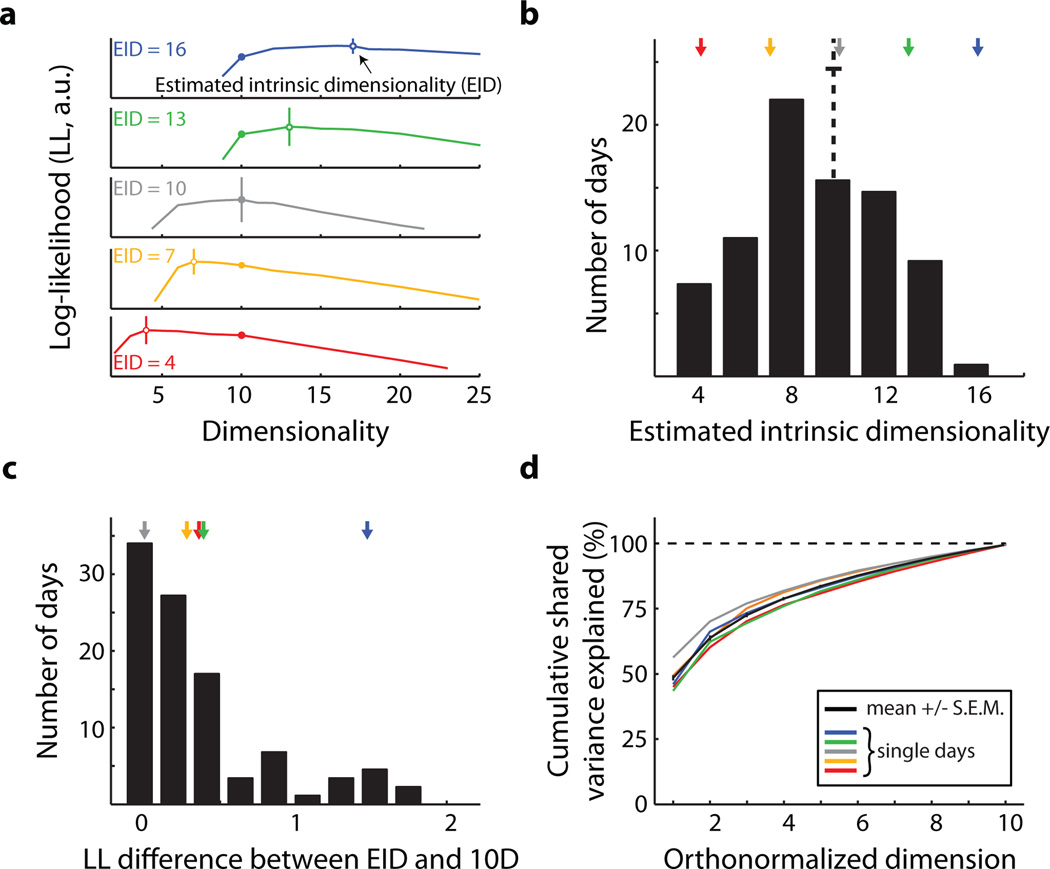
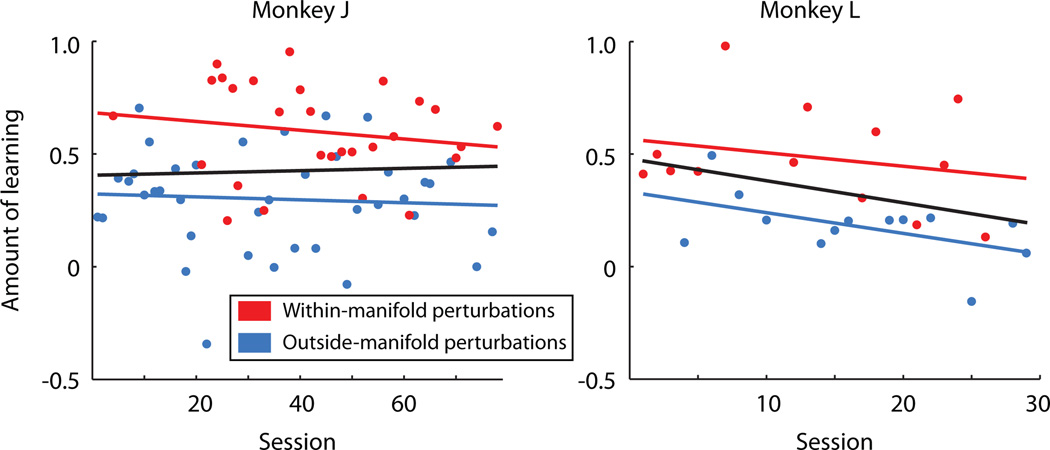
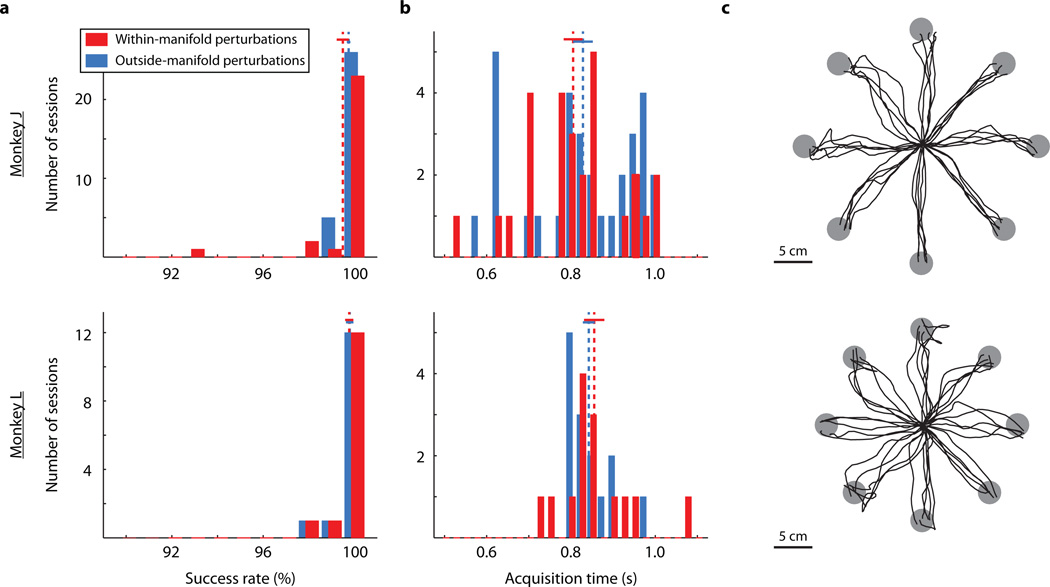
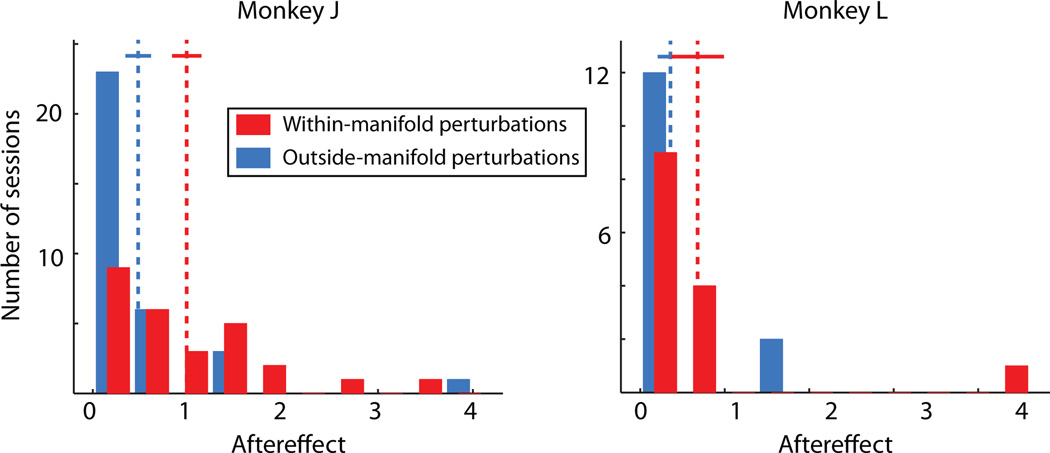
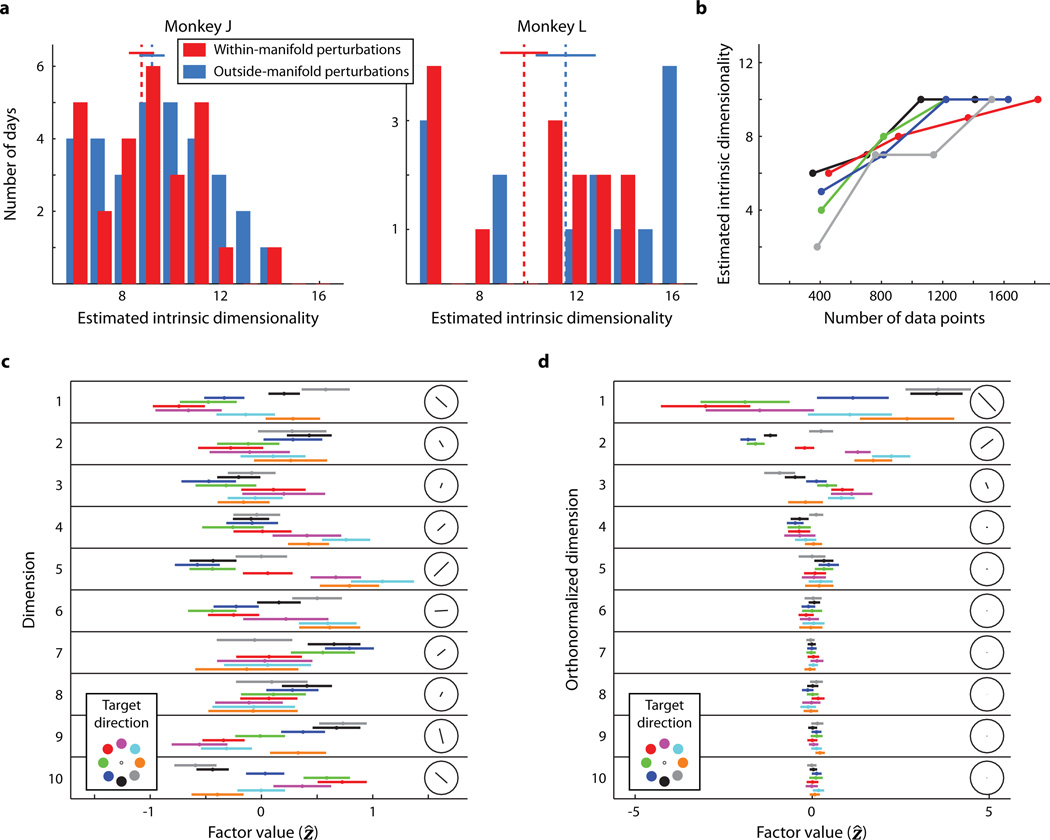
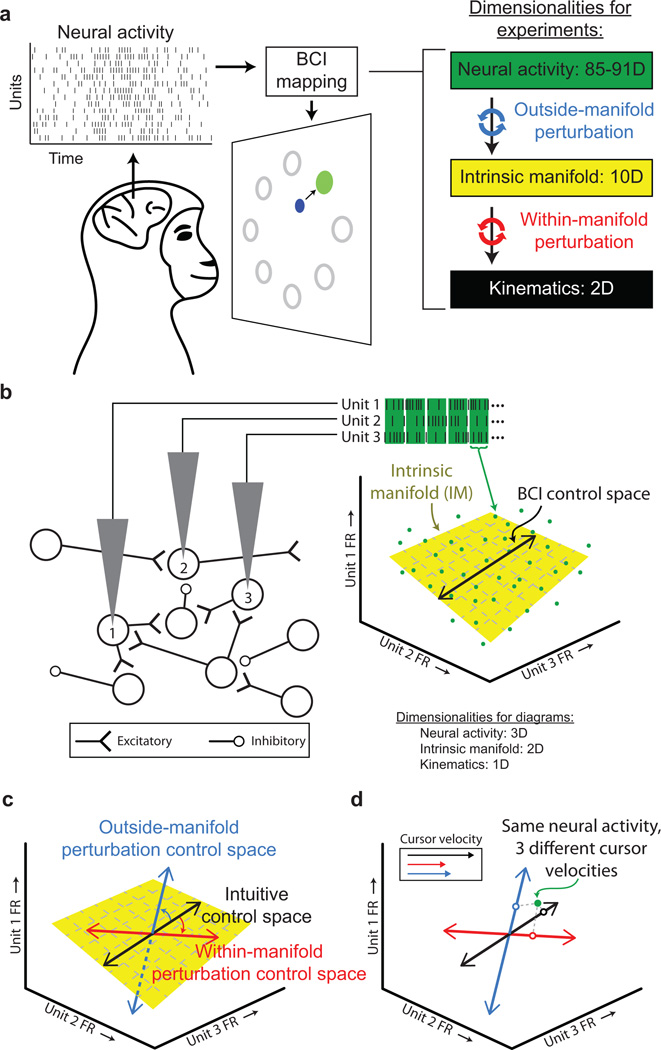
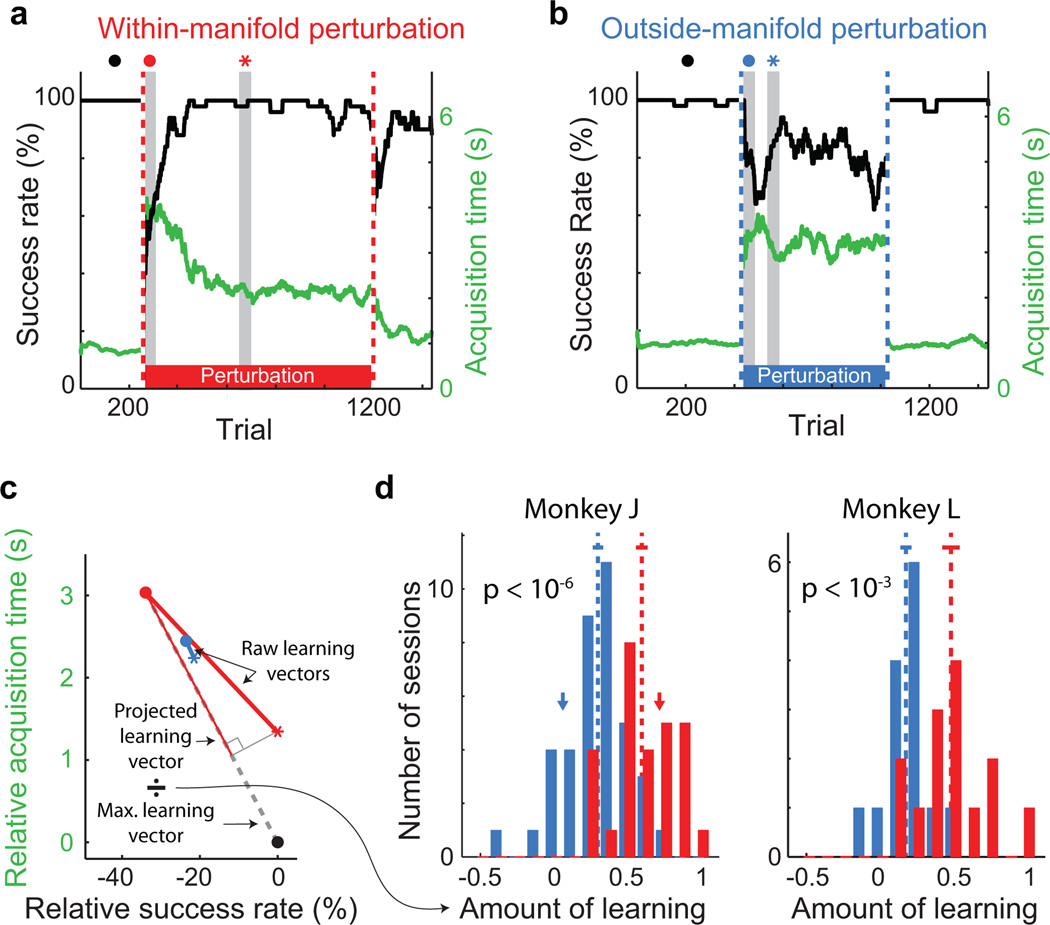
Learning, whether motor, sensory or cognitive, requires networks of neurons to generate new activity patterns. As some behaviours are easier to learn than others, we asked if some neural activity patterns are easier to generate than others. Here we investigate whether an existing network constrains the patterns that a subset of its neurons is capable of exhibiting, and if so, what principles define this constraint. We employed a closed-loop intracortical brain-computer interface learning paradigm in which Rhesus macaques (Macaca mulatta) controlled a computer cursor by modulating neural activity patterns in the primary motor cortex. Using the brain-computer interface paradigm, we could specify and alter how neural activity mapped to cursor velocity. At the start of each session, we observed the characteristic activity patterns of the recorded neural population. The activity of a neural population can be represented in a high-dimensional space (termed the neural space), wherein each dimension corresponds to the activity of one neuron. These characteristic activity patterns comprise a low-dimensional subspace (termed the intrinsic manifold) within the neural space. The intrinsic manifold presumably reflects constraints imposed by the underlying neural circuitry. Here we show that the animals could readily learn to proficiently control the cursor using neural activity patterns that were within the intrinsic manifold. However, animals were less able to learn to proficiently control the cursor using activity patterns that were outside of the intrinsic manifold. These results suggest that the existing structure of a network can shape learning. On a timescale of hours, it seems to be difficult to learn to generate neural activity patterns that are not consistent with the existing network structure. These findings offer a network-level explanation for the observation that we are more readily able to learn new skills when they are related to the skills that we already possess.
学习,无论是运动、感官还是认知方面的学习,都需要神经元网络产生新的活动模式。由于某些行为比其他行为更容易学习,我们不禁要问,某些神经活动模式是否比其他模式更容易产生。在这里,我们研究一个现有的神经网络是否会限制其子集神经元能够展现的活动模式,如果是,那么定义这种限制的原则是什么。我们采用了一种闭环皮质内脑机接口学习范式,在该范式中,恒河猴通过调节初级运动皮层中的神经活动模式来控制电脑光标。利用脑机接口范式,我们可以指定并改变神经活动如何映射到光标速度。在每个实验环节开始时,我们观察记录的神经群体的特征活动模式。神经群体的活动可以在一个高维空间(称为神经空间)中表示,其中每个维度对应一个神经元的活动。这些特征活动模式在神经空间内构成一个低维子空间(称为本征流形)。本征流形大概反映了底层神经回路所施加的限制。在这里我们表明,动物能够轻松地学会使用本征流形内的神经活动模式熟练地控制光标。然而,动物使用本征流形外的活动模式来熟练控制光标的能力较弱。这些结果表明,网络的现有结构可以塑造学习过程。在数小时的时间尺度上,似乎很难学会产生与现有网络结构不一致的神经活动模式。这些发现为以下观察结果提供了一个网络层面的解释:当新技能与我们已掌握的技能相关时,我们更容易学会这些新技能。