Dalle Pezze Piero, Nelson Glyn, Otten Elsje G, Korolchuk Viktor I, Kirkwood Thomas B L, von Zglinicki Thomas, Shanley Daryl P
Institute for Ageing and Health, Newcastle University, Campus for Ageing and Vitality, Newcastle upon Tyne, United Kingdom; Centre for Integrated Systems Biology of Ageing and Nutrition, Institute for Ageing and Health, Newcastle University, Newcastle upon Tyne, United Kingdom.
PLoS Comput Biol. 2014 Aug 28;10(8):e1003728. doi: 10.1371/journal.pcbi.1003728. eCollection 2014 Aug.
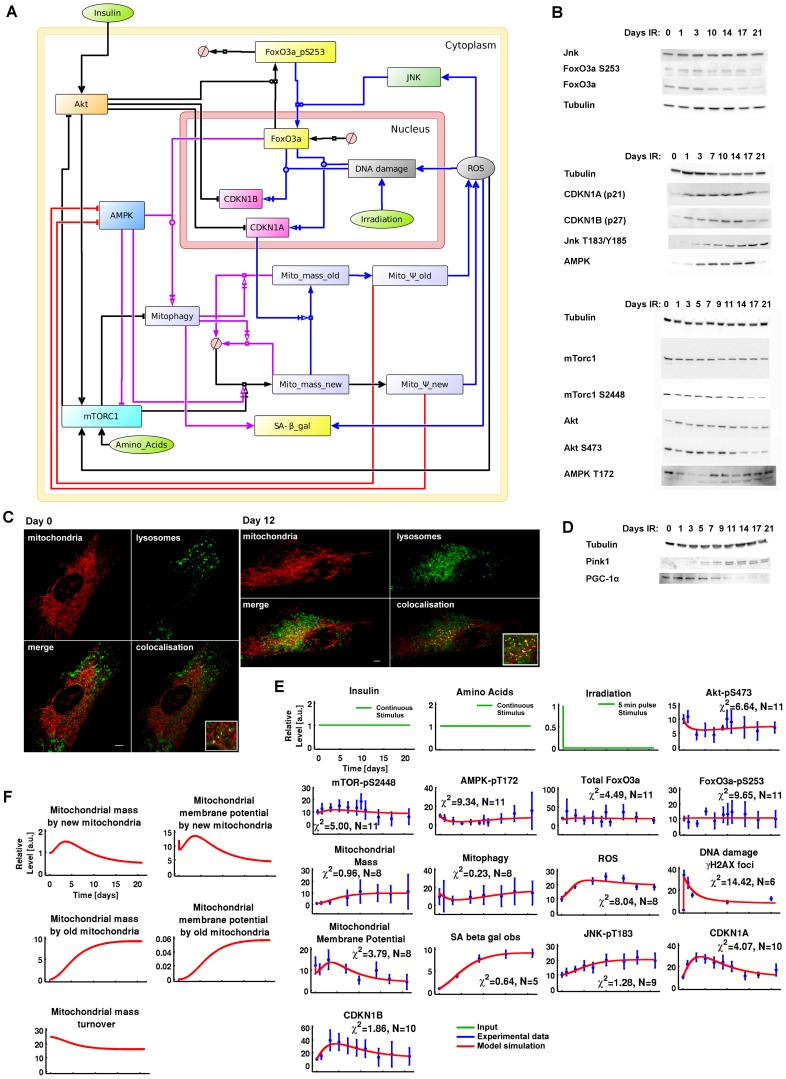
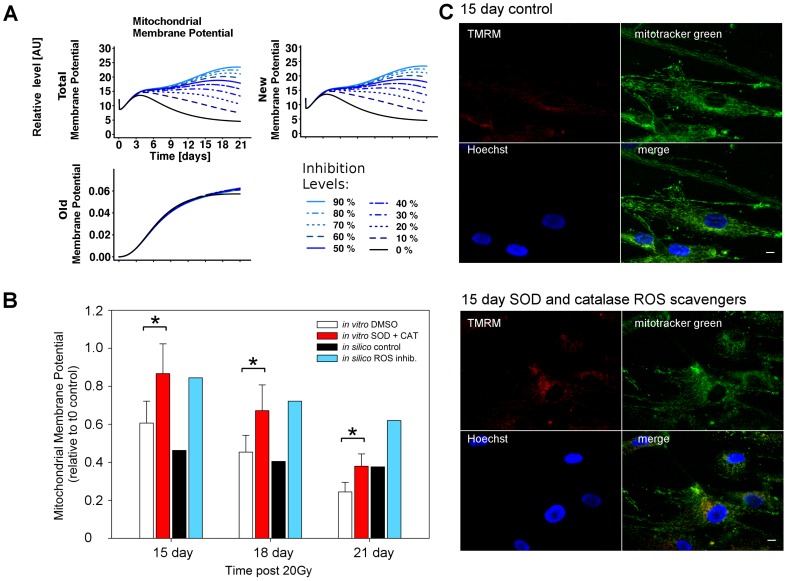
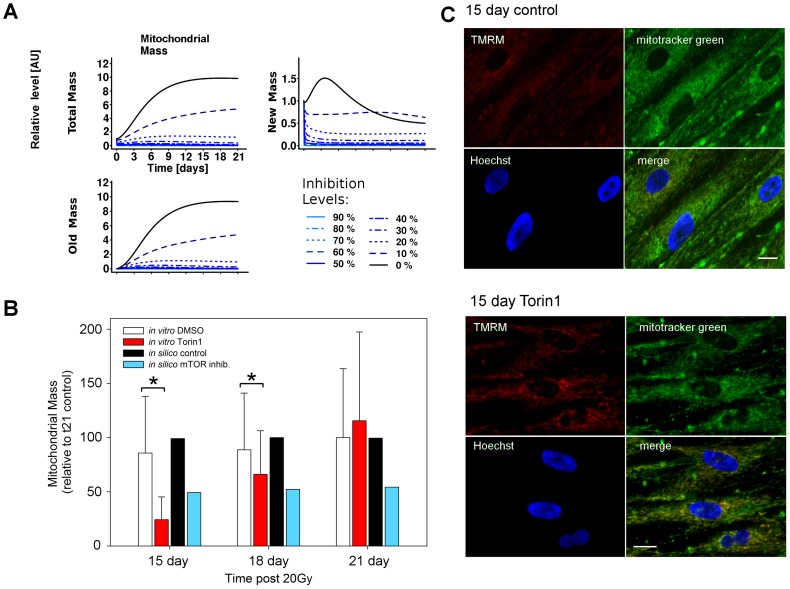
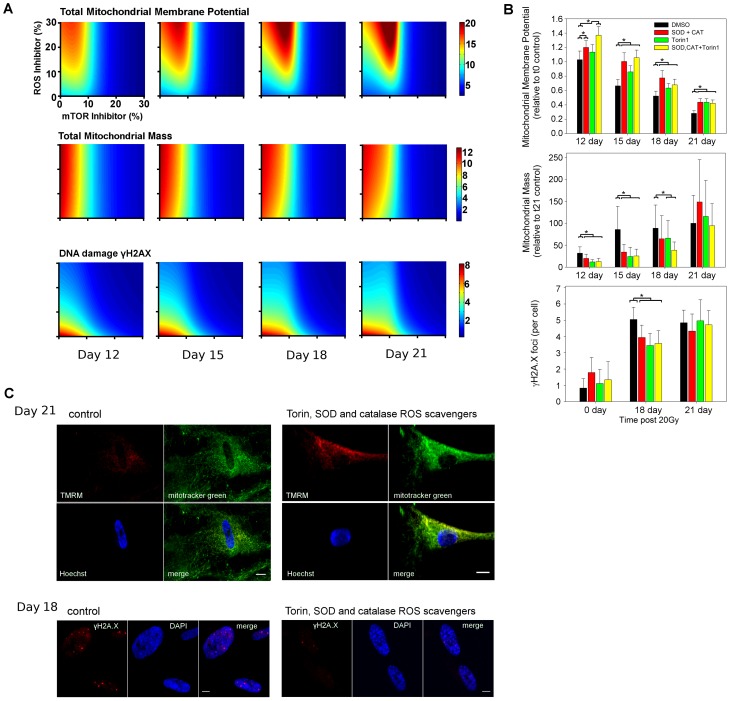
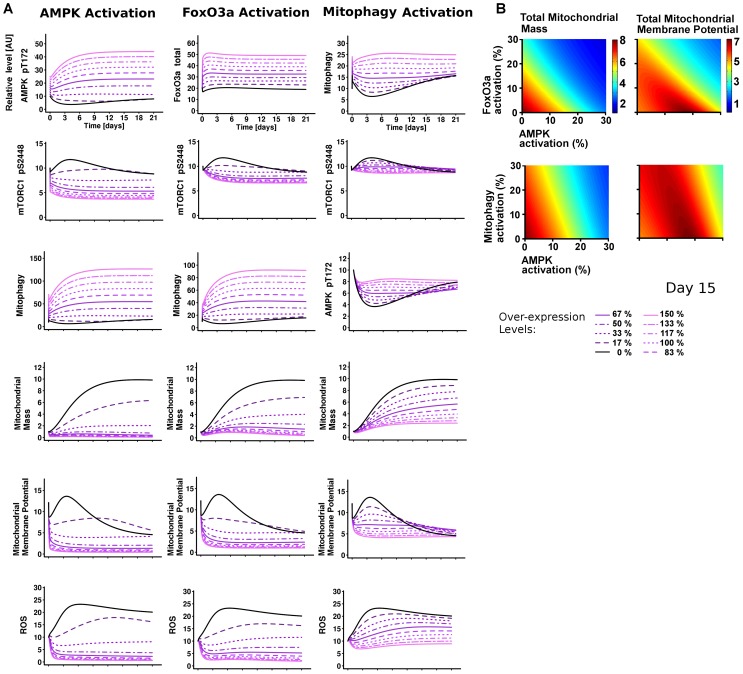
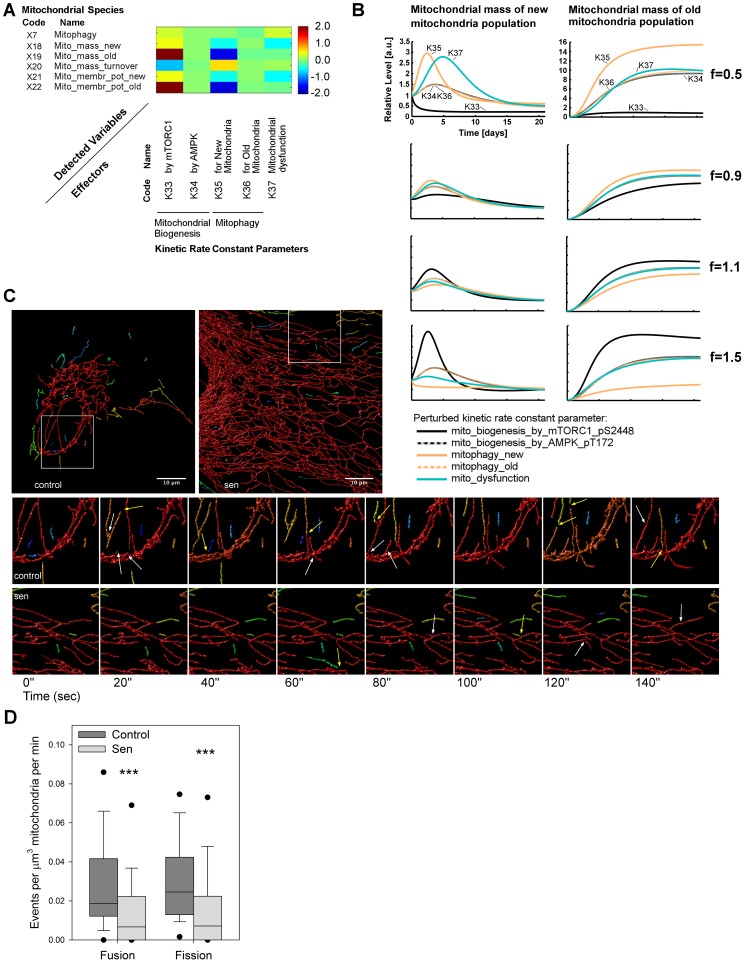
Cellular senescence, a state of irreversible cell cycle arrest, is thought to help protect an organism from cancer, yet also contributes to ageing. The changes which occur in senescence are controlled by networks of multiple signalling and feedback pathways at the cellular level, and the interplay between these is difficult to predict and understand. To unravel the intrinsic challenges of understanding such a highly networked system, we have taken a systems biology approach to cellular senescence. We report a detailed analysis of senescence signalling via DNA damage, insulin-TOR, FoxO3a transcription factors, oxidative stress response, mitochondrial regulation and mitophagy. We show in silico and in vitro that inhibition of reactive oxygen species can prevent loss of mitochondrial membrane potential, whilst inhibition of mTOR shows a partial rescue of mitochondrial mass changes during establishment of senescence. Dual inhibition of ROS and mTOR in vitro confirmed computational model predictions that it was possible to further reduce senescence-induced mitochondrial dysfunction and DNA double-strand breaks. However, these interventions were unable to abrogate the senescence-induced mitochondrial dysfunction completely, and we identified decreased mitochondrial fission as the potential driving force for increased mitochondrial mass via prevention of mitophagy. Dynamic sensitivity analysis of the model showed the network stabilised at a new late state of cellular senescence. This was characterised by poor network sensitivity, high signalling noise, low cellular energy, high inflammation and permanent cell cycle arrest suggesting an unsatisfactory outcome for treatments aiming to delay or reverse cellular senescence at late time points. Combinatorial targeted interventions are therefore possible for intervening in the cellular pathway to senescence, but in the cases identified here, are only capable of delaying senescence onset.
细胞衰老,即一种不可逆的细胞周期停滞状态,被认为有助于保护生物体免受癌症侵害,但同时也会促进衰老。衰老过程中发生的变化是由细胞水平上多个信号传导和反馈通路网络控制的,而这些通路之间的相互作用很难预测和理解。为了揭示理解这样一个高度网络化系统的内在挑战,我们采用了系统生物学方法来研究细胞衰老。我们报告了通过DNA损伤、胰岛素 - TOR、FoxO3a转录因子、氧化应激反应、线粒体调节和线粒体自噬对衰老信号传导的详细分析。我们在计算机模拟和体外实验中表明,抑制活性氧可以防止线粒体膜电位的丧失,而抑制mTOR则显示在衰老建立过程中线粒体质量变化得到部分挽救。体外对ROS和mTOR的双重抑制证实了计算模型的预测,即有可能进一步减少衰老诱导的线粒体功能障碍和DNA双链断裂。然而,这些干预措施无法完全消除衰老诱导的线粒体功能障碍,并且我们发现线粒体裂变减少是通过阻止线粒体自噬导致线粒体质量增加的潜在驱动力。该模型的动态敏感性分析表明,网络在细胞衰老的新晚期状态下稳定下来。其特征是网络敏感性差、信号噪声高、细胞能量低、炎症高以及永久性细胞周期停滞,这表明对于旨在在晚期时间点延迟或逆转细胞衰老的治疗来说,结果并不理想。因此,组合靶向干预有可能介入细胞衰老途径,但在此处确定的情况下,仅能延迟衰老的开始。