Silvestri Mark M, Lewis Jennifer M, Borsari Brian, Correia Christopher J
Department of Psychology, Auburn University , Alabama .
Am J Drug Alcohol Abuse. 2014 Sep;40(5):403-10. doi: 10.3109/00952990.2014.931408.
Drinking games are prevalent among college students and are associated with increased alcohol use and negative alcohol-related consequences. There has been substantial growth in research on drinking games. However, the majority of published studies rely on retrospective self-reports of behavior and very few studies have made use of laboratory procedures to systematically observe drinking game behavior.
The current paper draws on the authors' experiences designing and implementing methods for the study of drinking games in the laboratory.
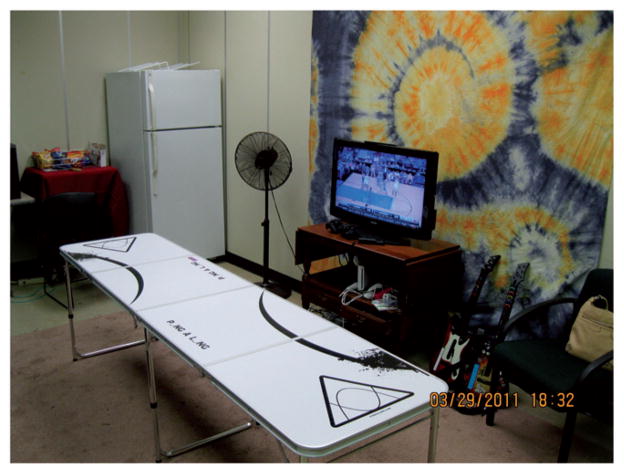
The paper addressed the following key design features: (a) drinking game selection; (b) beverage selection; (c) standardizing game play; (d) selection of dependent and independent variables; and (e) creating a realistic drinking game environment.
The goal of this methodological review paper is to encourage other researchers to pursue laboratory research on drinking game behavior. Use of laboratory-based methodologies will facilitate a better understanding of the dynamics of risky drinking and inform prevention and intervention efforts.
饮酒游戏在大学生中很普遍,且与酒精使用增加及与酒精相关的负面后果有关。关于饮酒游戏的研究有了显著增长。然而,大多数已发表的研究依赖于对行为的回顾性自我报告,很少有研究利用实验室程序来系统观察饮酒游戏行为。
本文借鉴了作者在设计和实施实验室饮酒游戏研究方法方面的经验。
本文讨论了以下关键设计特征:(a)饮酒游戏选择;(b)饮料选择;(c)规范游戏玩法;(d)选择因变量和自变量;(e)营造逼真的饮酒游戏环境。
这篇方法学综述文章的目的是鼓励其他研究人员开展关于饮酒游戏行为的实验室研究。使用基于实验室的方法将有助于更好地理解危险饮酒的动态,并为预防和干预工作提供信息。