Bissonette Gregory B, Schoenbaum Geoffrey, Roesch Matthew R, Powell Elizabeth M
Department of Anatomy and Neurobiology, University of Maryland School of Medicine, Baltimore; Program in Neuroscience, University of Maryland, Baltimore; Department of Psychology, University of Maryland, College Park.
National Institute on Drug Abuse-Intramural Research Program, Baltimore.
Biol Psychiatry. 2015 Mar 1;77(5):454-64. doi: 10.1016/j.biopsych.2014.07.023. Epub 2014 Aug 1.
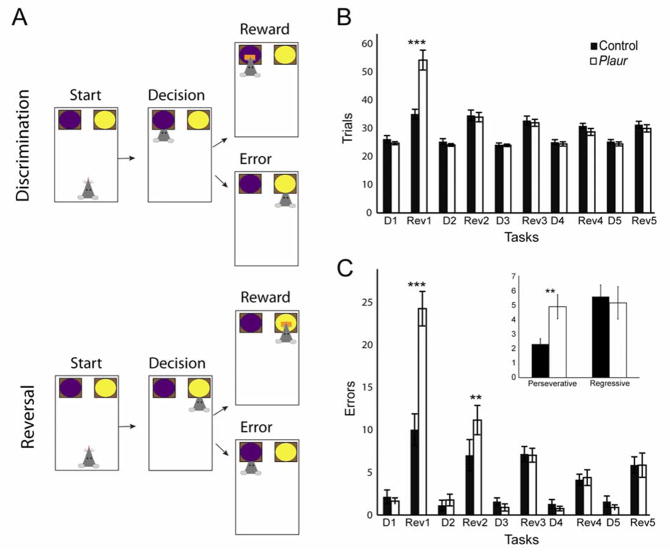
Cerebral cortical gamma-aminobutyric acidergic interneuron dysfunction is hypothesized to lead to cognitive deficits comorbid with human neuropsychiatric disorders, including schizophrenia, autism, and epilepsy. We have previously shown that mice that harbor mutations in the Plaur gene, which is associated with schizophrenia, have deficits in frontal cortical parvalbumin-expressing interneurons. Plaur mice have impaired reversal learning, similar to deficits observed in patients with schizophrenia.
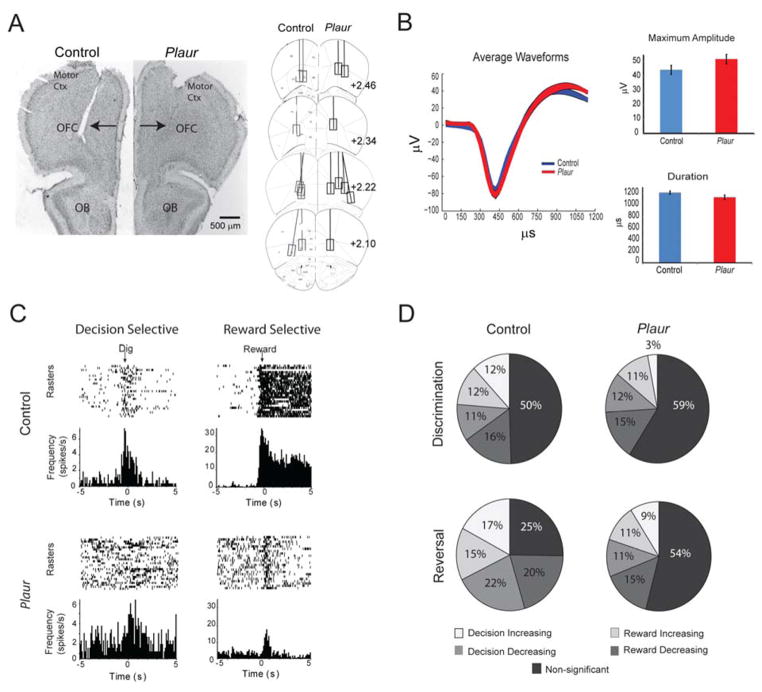
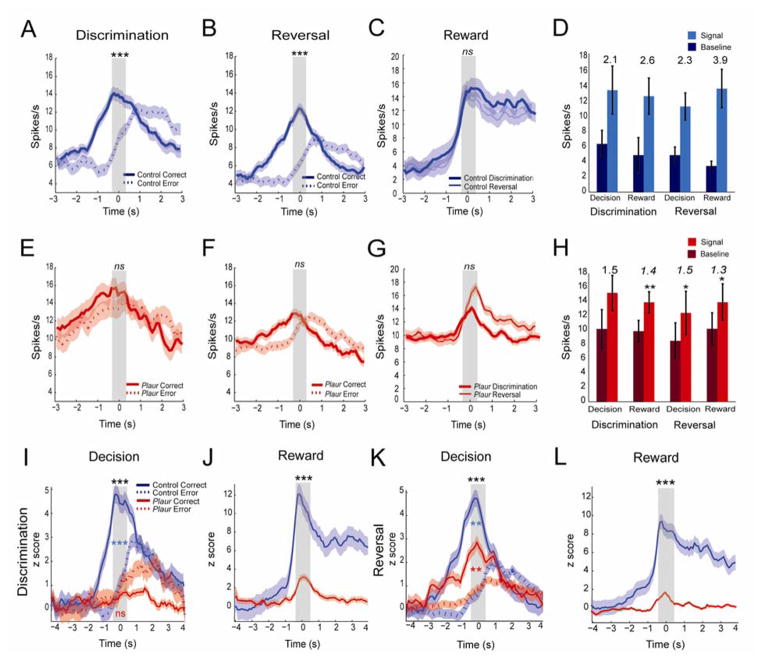
We examined the role of parvalbumin interneurons in orbitofrontal cortex during reversal learning by recording single unit activity from 180 control and 224 Plaur mouse neurons during a serial reversal task. Neural activity was analyzed during correct and incorrect decision choices and reward receipt.
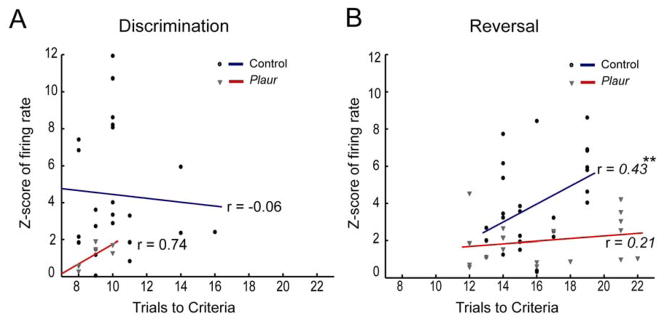
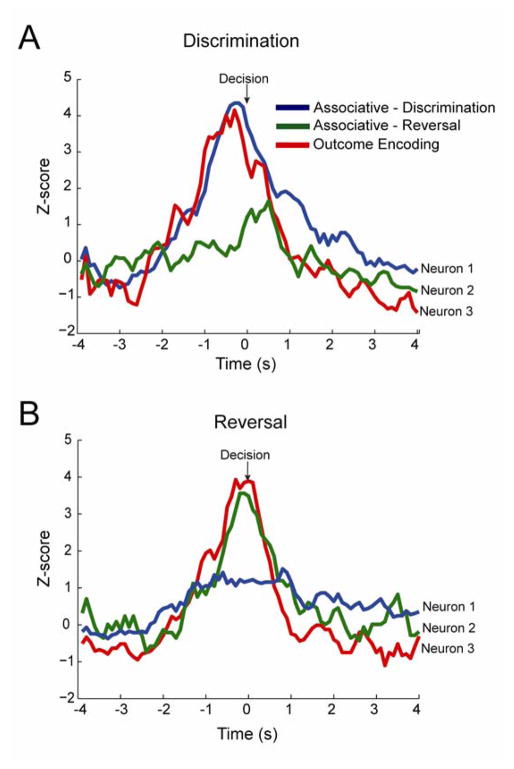
Neurons in control mice exhibited strong phasic responses both during discrimination and reversal learning to decisions and rewards, and the strength of the response was correlated with behavioral performance. Although baseline firing was significantly enhanced in Plaur mice, neural selectivity for correct or erroneous decisions was diminished and not correlated with behavior, and reward encoding was downscaled. In addition, Plaur mice showed a significant reduction in the number of neurons that encoded expected outcomes across task phases during the decision period.
These data indicate that parvalbumin interneurons are necessary for the representation of outcomes in orbitofrontal cortex. Deficits in inhibition blunt selective neural firing during key decisions, contributing to behavioral inflexibility. These data provide a potential explanation for disorders of cognitive control that accompany the loss of these gamma-aminobutyric acidergic interneurons in human neuropsychiatric disorders, such as autism, epilepsy, and schizophrenia.
大脑皮质γ-氨基丁酸能中间神经元功能障碍被认为会导致与人类神经精神疾病(包括精神分裂症、自闭症和癫痫)共病的认知缺陷。我们之前已经表明,携带与精神分裂症相关的Plaur基因突变的小鼠,其额叶皮质中表达小白蛋白的中间神经元存在缺陷。Plaur小鼠的逆向学习受损,类似于精神分裂症患者所观察到的缺陷。
我们通过在连续逆向任务中记录180只对照小鼠和224只Plaur小鼠神经元的单单位活动,研究了眶额皮质中表达小白蛋白的中间神经元在逆向学习过程中的作用。在正确和错误的决策选择以及奖励接收期间分析神经活动。
对照小鼠的神经元在辨别和逆向学习过程中对决策和奖励均表现出强烈的相位反应,且反应强度与行为表现相关。虽然Plaur小鼠的基线放电显著增强,但对正确或错误决策的神经选择性降低且与行为无关,奖励编码也下调。此外,在决策期,Plaur小鼠在整个任务阶段编码预期结果的神经元数量显著减少。
这些数据表明,小白蛋白中间神经元对于眶额皮质中结果的表征是必需的。抑制功能的缺陷会削弱关键决策过程中的选择性神经放电,导致行为灵活性下降。这些数据为人类神经精神疾病(如自闭症、癫痫和精神分裂症)中这些γ-氨基丁酸能中间神经元丧失所伴随的认知控制障碍提供了一个潜在的解释。