Tirado Francisco, Gómez Andrés, Rocamora Verónica
Universitat Autònoma de Barcelona, Edifici B, Bellaterra, 08193 Barcelona, Spain.
Universitat Autònoma de Barcelona, Edifici B, Bellaterra, 08193 Barcelona, Spain.
Soc Sci Med. 2015 Mar;129:113-22. doi: 10.1016/j.socscimed.2014.09.003. Epub 2014 Sep 3.
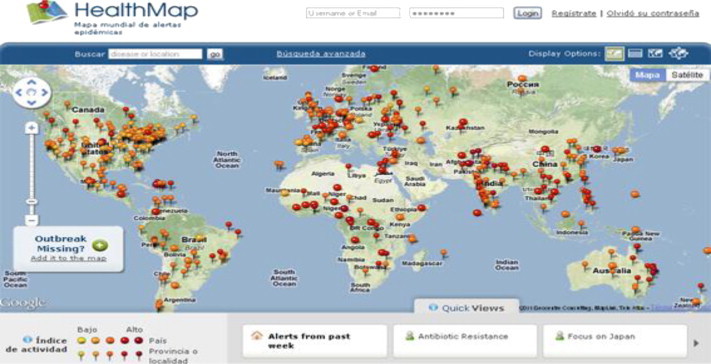
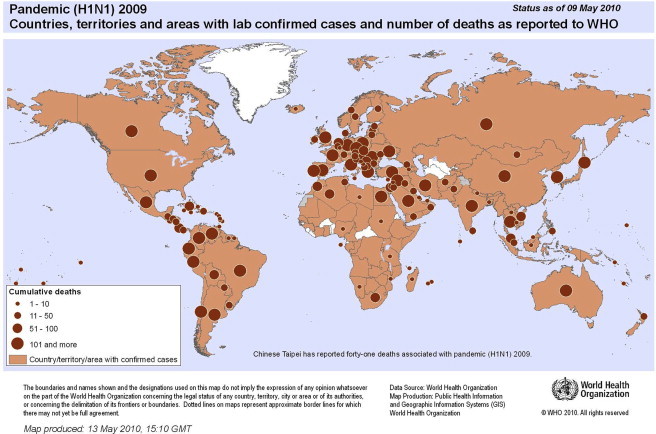
Among the most relevant elements contributing to define the One World One Health programme we find epidemics. The reason is that in recent decades, infectious diseases such as HIV/SIDA, SARS and Influenza have shown that we need new approaches and concepts in order to understand how biological emergencies and health alerts deploy new scales of action. Especially relevant has been the case of A(H1N1) influenza. This reached the status of global threat virtually from its onset, triggering an international response with a diffusion, visibility and rapidity unparalleled in previous health alerts. This article maintains that this global condition cannot be explained solely by the epidemiologic characteristics of the disease, such as mortality rate, severe cases, propagation capacity, etc. Resorting to the approach proposed by the Actor-Network Theory (ANT), this paper suggests that the action of certain socio-technical operators was what built a heterogeneous network of ideas, concepts and materials that turned the A (H1N1) influenza into a global-scale phenomenon with unprecedented speed. Among these operators, the most important ones were: the speaking position, a discourse about threat, the protocols and guidelines that were used and, lastly, the maps that allowed a real-time monitoring of the influenza. The paper ends with the notion of panorama, as defined by Bruno Latour: a suggestion to describe the common denominator of the aforementioned operators, and a means to foresee the development of global scales for certain health alerts. The paper will conclude by proposing that this type of analysis would allow the One World One Health to understand with greater precision the dynamic of epidemics and thus make its principles of action much more specific as well as its definition of what global health should be.
在构成“同一个世界,同一个健康”计划的最相关要素中,我们发现流行病是其中之一。原因在于,近几十年来,诸如艾滋病毒/艾滋病、非典和流感等传染病表明,我们需要新的方法和概念,以便理解生物突发事件和健康警报如何展开新的行动规模。甲型H1N1流感的情况尤其值得关注。几乎从一开始,它就达到了全球威胁的程度,引发了一场国际反应,其传播范围、关注度和速度在以往的健康警报中是无与伦比的。本文认为,这种全球状况不能仅仅用该疾病的流行病学特征来解释,比如死亡率、重症病例、传播能力等。借助行动者网络理论(ANT)提出的方法,本文认为某些社会技术操作者的行动构建了一个由观念、概念和材料组成的异质网络,这个网络以前所未有的速度将甲型H1N1流感变成了一个全球范围的现象。在这些操作者中,最重要的有:话语权位置、关于威胁的论述、所采用的协议和指南,以及最后能实现流感实时监测的地图。本文以布鲁诺·拉图尔所定义的全景概念作为结尾:这是一种描述上述操作者共同特征的建议,也是一种预见某些健康警报全球范围发展的手段。本文将通过提出这一观点来得出结论,即这种类型的分析将使“同一个世界,同一个健康”计划能够更精确地理解流行病的动态,从而使其行动原则更加具体,以及对全球健康应是什么的定义更加明确。