Brown M W, Banks P J
University of Bristol, School of Physiology and Pharmacology, Medical Sciences Building, Bristol BS8 1TD, UK.
University of Bristol, School of Physiology and Pharmacology, Medical Sciences Building, Bristol BS8 1TD, UK.
Neurosci Biobehav Rev. 2015 Mar;50:12-28. doi: 10.1016/j.neubiorev.2014.09.016. Epub 2014 Oct 2.
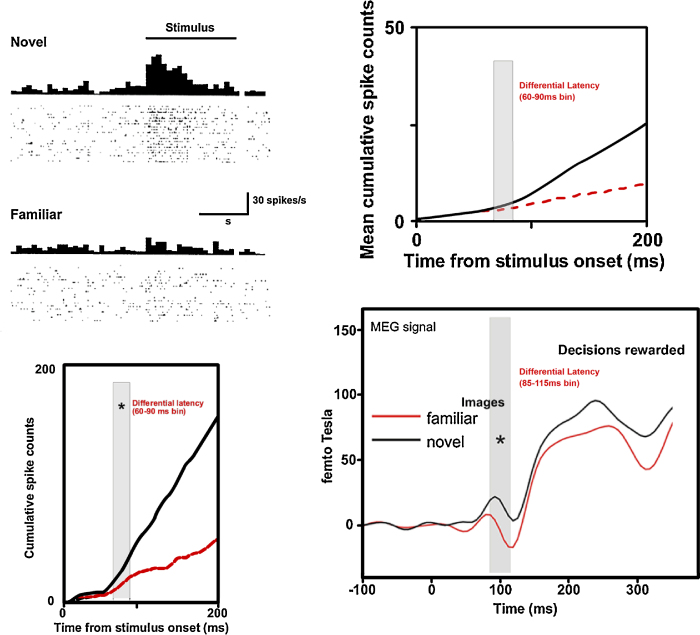
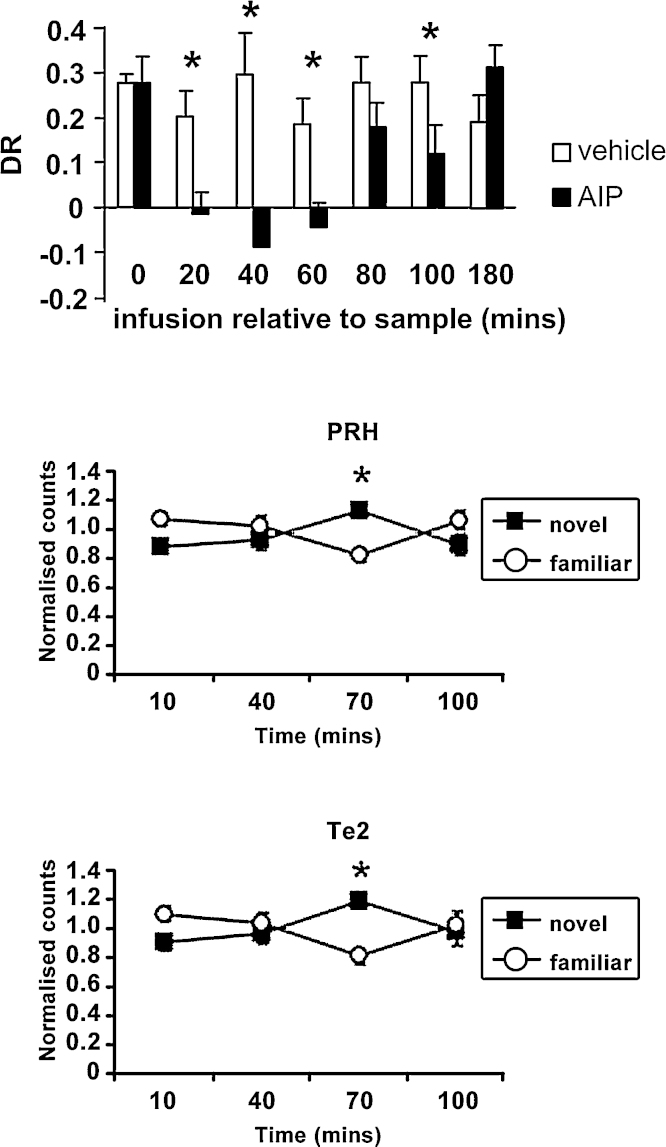
A large body of data from human and animal studies using psychological, recording, imaging, and lesion techniques indicates that recognition memory involves at least two separable processes: familiarity discrimination and recollection. Familiarity discrimination for individual visual stimuli seems to be effected by a system centred on the perirhinal cortex of the temporal lobe. The fundamental change that encodes prior occurrence within the perirhinal cortex is a reduction in the responses of neurones when a stimulus is repeated. Neuronal network modelling indicates that a system based on such a change in responsiveness is potentially highly efficient in information theoretic terms. A review is given of findings indicating that perirhinal cortex acts as a storage site for recognition memory of objects and that such storage depends upon processes producing synaptic weakening.
来自人类和动物研究的大量数据,运用心理学、记录、成像和损伤技术表明,再认记忆至少涉及两个可分离的过程:熟悉性辨别和回忆。对单个视觉刺激的熟悉性辨别似乎受一个以颞叶嗅周皮质为中心的系统影响。在嗅周皮质中编码先前出现情况的根本变化是,当刺激重复时神经元反应的减少。神经网络建模表明,基于这种反应性变化的系统在信息理论方面可能非常高效。本文综述了相关研究结果,这些结果表明嗅周皮质是物体再认记忆的存储部位,并且这种存储依赖于产生突触弱化的过程。