Institute for Systems Biology, Seattle, WA 98109, USA.
BMC Med Genomics. 2014 Oct 5;7:58. doi: 10.1186/1755-8794-7-58.
We have identified candidate protein and microRNA (miRNA) biomarkers for dyspnea by studying serum, lavage fluid, and urine from military personnel who reported serious respiratory symptoms after they were deployed to Iraq or Afghanistan.
Forty-seven soldiers with the complaint of dyspnea who enrolled in the STudy of Active Duty Military Personnel for Environmental Dust Exposure (STAMPEDE) underwent comprehensive pulmonary evaluations at the San Antonio Military Medical Center. The evaluation included fiber-optic bronchoscopy with bronchoalveolar lavage. The clinical findings from the STAMPEDE subjects pointed to seven general underlying diagnoses or findings including airway hyperreactivity, asthma, low diffusivity of carbon monoxide, and abnormal cell counts. The largest category was undiagnosed. As an exploratory study, not a classification study, we profiled proteins or miRNAs in lavage fluid, serum, or urine in this group to look for any underlying molecular patterns that might lead to biomarkers. Proteins in lavage fluid and urine were identified by accurate mass tag (database-driven) proteomics methods while miRNAs were profiled by a hybridization assay applied to serum, urine, and lavage fluid.
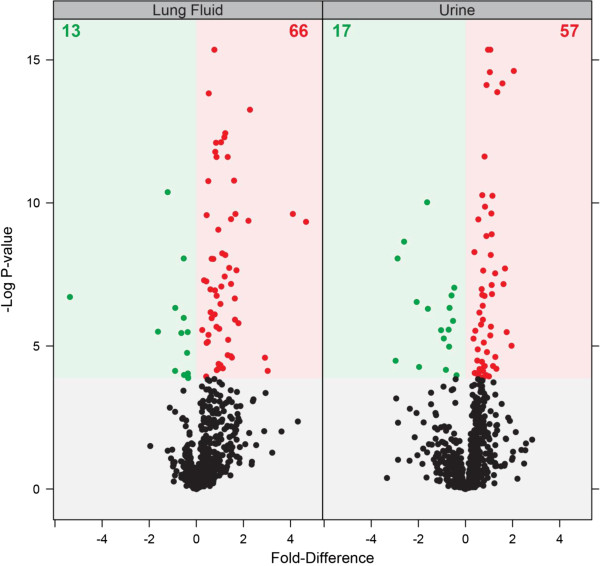
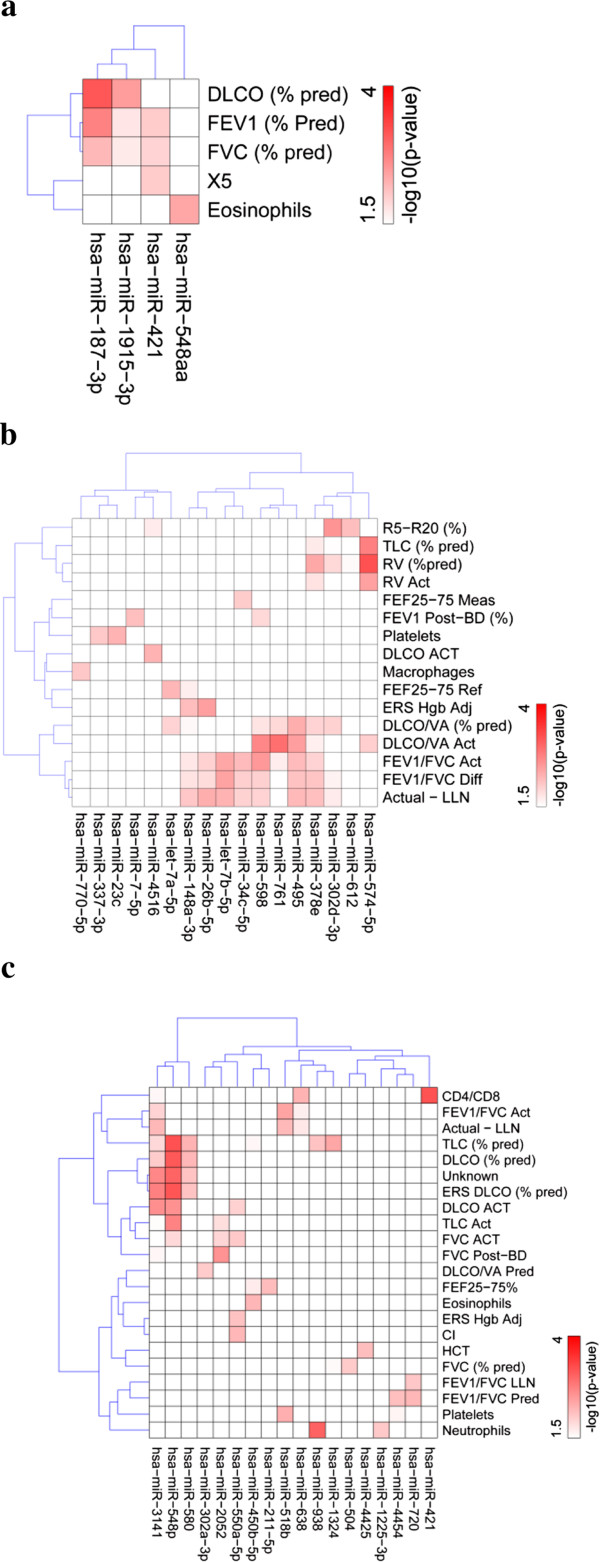
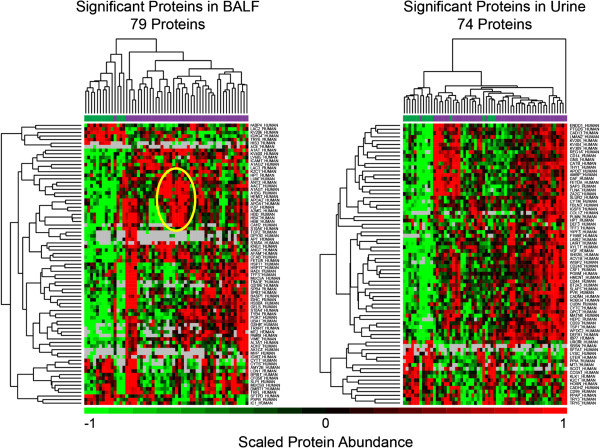
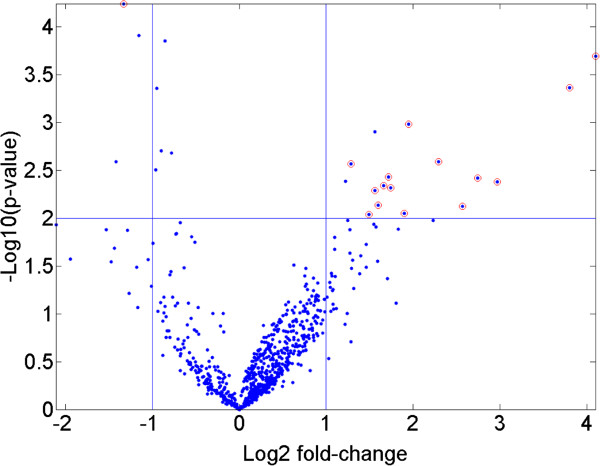
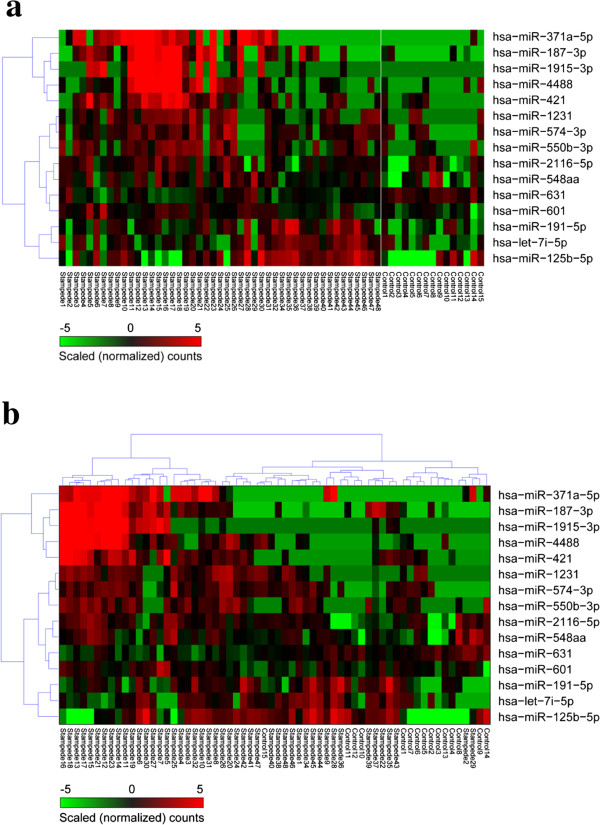
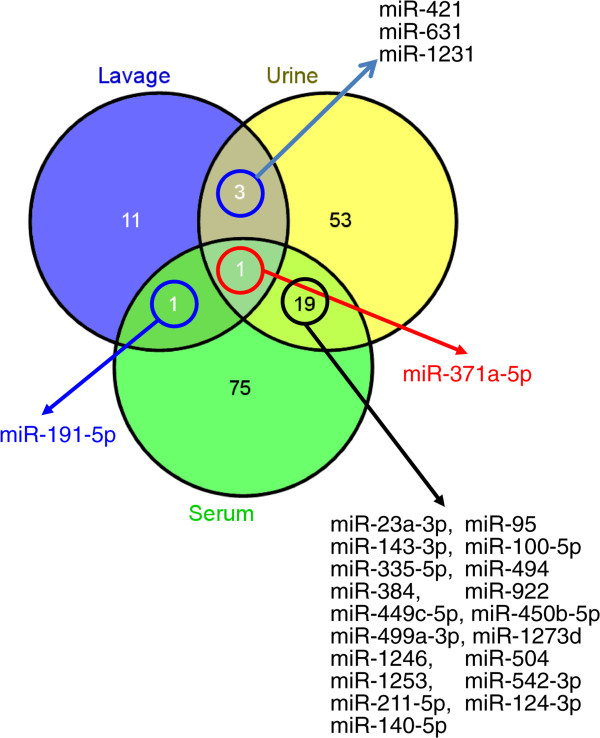
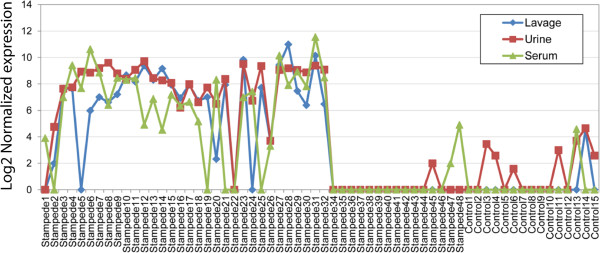
Over seventy differentially expressed proteins were reliably identified both from lavage and from urine in forty-eight dyspnea subjects compared to fifteen controls with no known lung disorder. Six of these proteins were detected both in urine and lavage. One group of subjects was distinguished from controls by expressing a characteristic group of proteins. A related group of dyspnea subjects expressed a unique group of miRNAs that included one miRNA that was differentially overexpressed in all three fluids studied. The levels of several miRNAs also showed modest but direct associations with several standard clinical measures of lung health such as forced vital capacity or gas exchange efficiency.
Candidate proteins and miRNAs associated with the general diagnosis of dyspnea have been identified in subjects with differing medical diagnoses. Since these markers can be measured in readily obtained clinical samples, further studies are possible that test the value of these findings in more formal classification or case-control studies in much larger cohorts of subjects with specific lung diseases such as asthma, emphysema, or some other well-defined lung disease.
我们通过研究部署到伊拉克或阿富汗后出现严重呼吸症状的军人的血清、灌洗液和尿液,确定了呼吸困难的候选蛋白和 microRNA(miRNA)生物标志物。
47 名呼吸困难的士兵参加了现役军人环境尘暴露研究(STAMPEDE),在圣安东尼奥军事医疗中心接受了全面的肺部评估。评估包括纤维支气管镜检查和支气管肺泡灌洗。STAMPEDE 受试者的临床发现指向七种一般潜在诊断或发现,包括气道高反应性、哮喘、一氧化碳弥散降低和异常细胞计数。最大的类别是未确诊的。作为一项探索性研究,而不是分类研究,我们在该组中分析了灌洗液、血清或尿液中的蛋白质或 miRNA,以寻找可能导致生物标志物的潜在分子模式。灌洗液和尿液中的蛋白质通过准确质量标签(基于数据库)蛋白质组学方法鉴定,而 miRNA 通过应用于血清、尿液和灌洗液的杂交分析进行分析。
与 15 名无已知肺部疾病的对照相比,在 48 名呼吸困难受试者的灌洗液和尿液中可靠地鉴定出 70 多种差异表达的蛋白质。其中 6 种蛋白质在尿液和灌洗液中均有检测到。一组受试者通过表达一组特征蛋白与对照组区分开来。一组相关的呼吸困难受试者表达了一组独特的 miRNA,其中一种 miRNA 在三种研究的液体中均差异过表达。几种 miRNA 的水平也与肺健康的几个标准临床测量(如用力肺活量或气体交换效率)呈适度但直接的关联。
在具有不同医学诊断的受试者中,已经确定了与一般呼吸困难诊断相关的候选蛋白和 miRNA。由于这些标记物可以在容易获得的临床样本中测量,因此可以进行进一步的研究,以测试这些发现在更大队列的具有特定肺部疾病(如哮喘、肺气肿或其他明确定义的肺部疾病)的受试者中进行更正式的分类或病例对照研究中的价值。