Zhang Xuelian, Li Yanxia, Liu Bei, Wang Jing, Feng Chenghong, Gao Min, Wang Lina
State Key Laboratory of Water Environment Simulation, School of Environment, Beijing Normal University, Beijing, China.
PLoS One. 2014 Nov 5;9(11):e111026. doi: 10.1371/journal.pone.0111026. eCollection 2014.
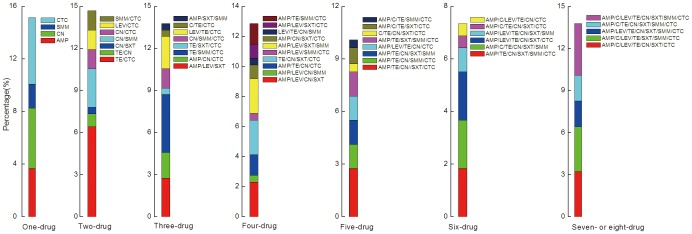
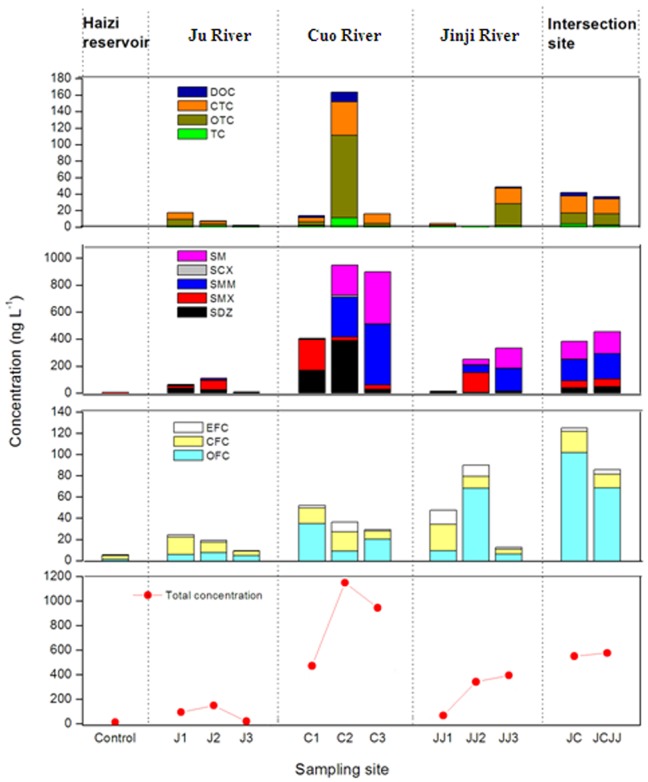
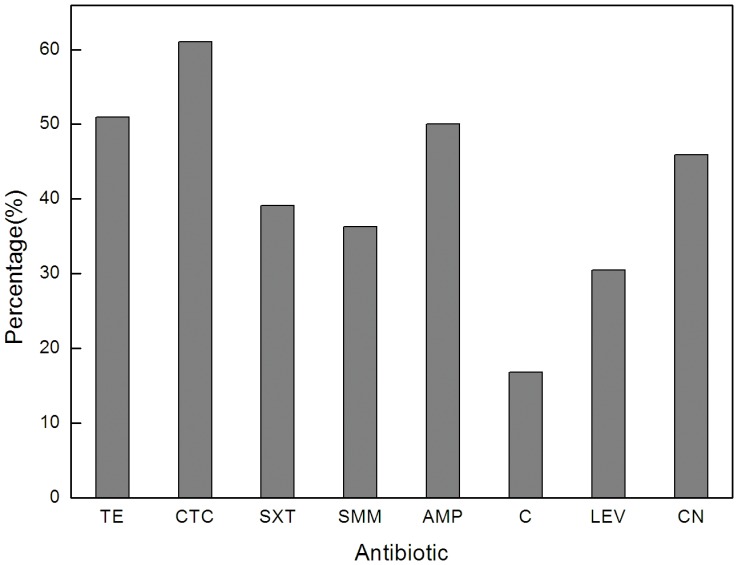
This study investigated the occurrence of 12 veterinary antibiotics (VAs) and the susceptibility of Escherichia coli (E. coli) in a rural water system that was affected by livestock production in northern China. Each of the surveyed sites was determined with at least eight antibiotics with maximum concentration of up to 450 ng L(-1). The use of VAs in livestock farming probably was a primary source of antibiotics in the rivers. Increasing total antibiotics were measured from up- to mid- and downstream in the two tributaries. Eighty-eight percent of the 218 E. coli isolates that were derived from the study area exhibited, in total, 48 resistance profiles against the eight examined drugs. Significant correlations were found among the resistance rates of sulfamethoxazole-trimethoprim, chloromycetin and ampicillin as well as between tetracycline and chlortetracycline, suggesting a possible cross-selection for resistance among these drugs. The E. coli resistance frequency also increased from up- to midstream in the three rivers. E. coli isolates from different water systems showed varying drug numbers of resistance. No clear relationship was observed in the antibiotic resistance frequency with corresponding antibiotic concentration, indicating that the antibiotic resistance for E. coli in the aquatic environment might be affected by factors besides antibiotics. High numbers of resistant E. coli were also isolated from the conserved reservoir. These results suggest that rural surface water may become a large pool of VAs and resistant bacteria. This study contributes to current information on VAs and resistant bacteria contamination in aquatic environments particularly in areas under intensive agriculture. Moreover, this study indicates an urgent need to monitor the use of VAs in animal production, and to control the release of animal-originated antibiotics into the environment.
本研究调查了中国北方一个受畜牧生产影响的农村水系统中12种兽用抗生素(VAs)的存在情况以及大肠杆菌(E. coli)的药敏性。每个被调查地点至少检测出8种抗生素,最高浓度可达450 ng L(-1)。畜牧养殖中兽用抗生素的使用可能是河流中抗生素的主要来源。在两条支流中,从上游到中游再到下游,检测到的总抗生素量不断增加。从研究区域分离出的218株大肠杆菌中,88%的菌株对8种受试药物总共呈现出48种耐药谱。磺胺甲恶唑-甲氧苄啶、氯霉素和氨苄西林的耐药率之间以及四环素和金霉素的耐药率之间存在显著相关性,表明这些药物之间可能存在交叉耐药选择。在三条河流中,大肠杆菌的耐药频率也从上游到中游增加。来自不同水系统的大肠杆菌分离株显示出不同的耐药药物数量。未观察到抗生素耐药频率与相应抗生素浓度之间有明确关系,这表明水生环境中大肠杆菌的抗生素耐药性可能受到抗生素以外的因素影响。在保护水库中也分离出大量耐药大肠杆菌。这些结果表明,农村地表水可能成为兽用抗生素和耐药菌的一个大库。本研究为当前关于水生环境中,特别是集约化农业地区兽用抗生素和耐药菌污染的信息提供了补充。此外,本研究表明迫切需要监测兽用抗生素在动物生产中的使用情况,并控制动物源抗生素向环境中的释放。