Larmarange Joseph, Bendaud Victoria
aCeped (UMR 196 Paris Descartes Ined IRD), IRD, Paris, France bStrategic Information and Monitoring Division, UNAIDS, Geneva, Switzerland.
AIDS. 2014 Nov;28 Suppl 4(4):S469-76. doi: 10.1097/QAD.0000000000000480.
A better understanding of the subnational variations could be paramount to the efficiency and effectiveness of the response to the HIV epidemic. The purpose of this study is to describe the methodology used to produce the first estimates at second subnational level released by UNAIDS.
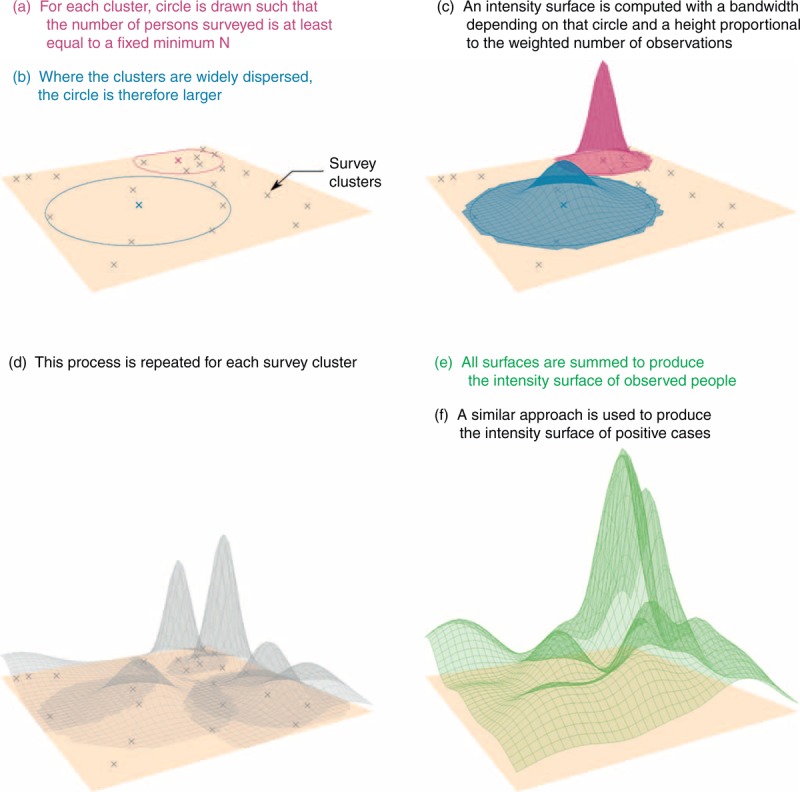
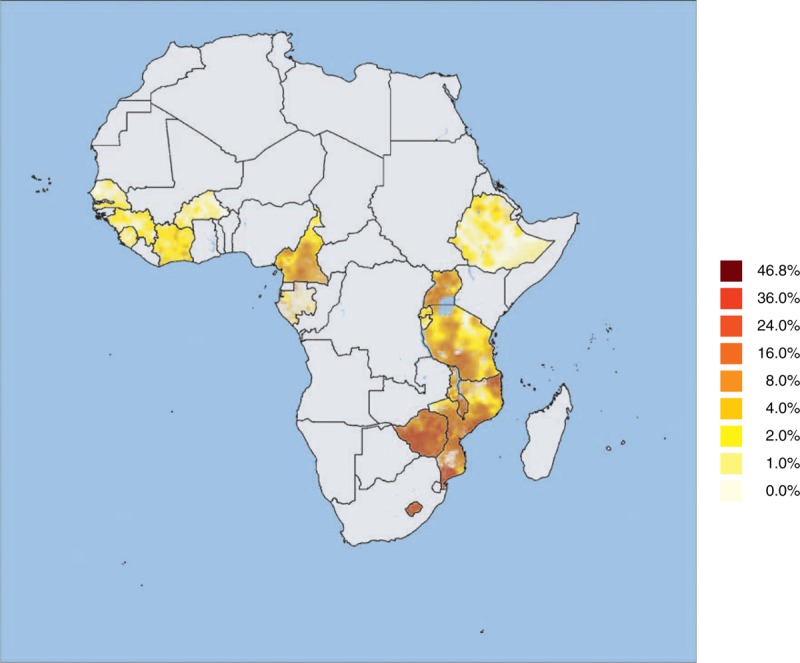
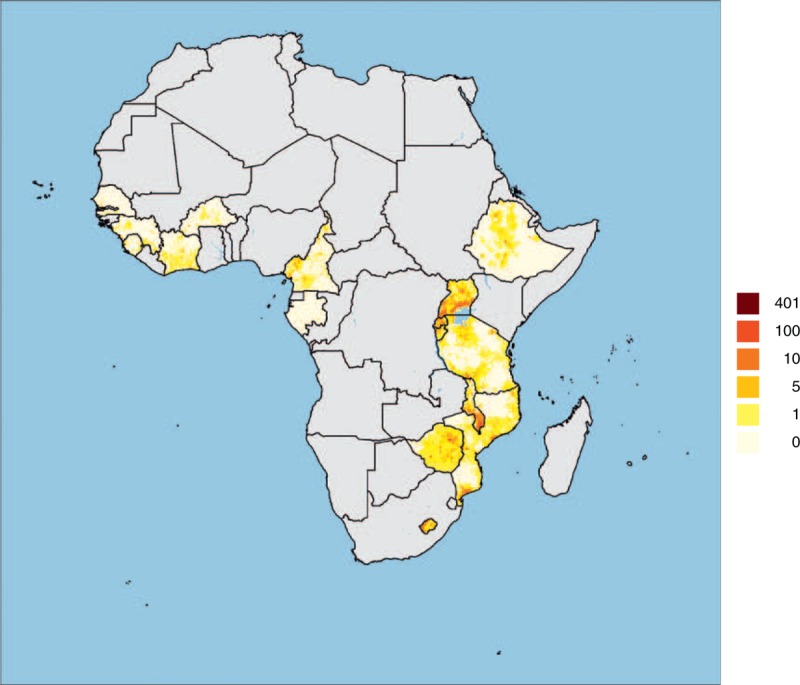
We selected national population-based surveys with HIV testing and survey clusters geolocation, conducted in 2008 or later. A kernel density estimation approach (prevR) with adaptive bandwidths was used to generate a surface of HIV prevalence. This surface was combined with LandScan global population distribution grid to estimate the spatial distribution of people living with HIV (PLWHIV). Finally, results were adjusted to national UNAIDS's published estimates and merged per second subnational administrative unit. An indicator of the quality of the estimates was computed for each administrative unit.
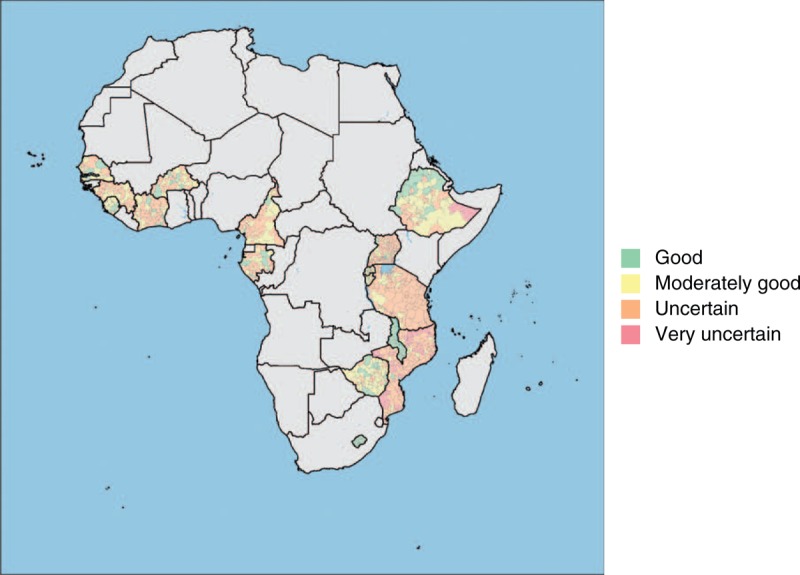
These estimates combine two complementary approaches: the prevR method, focusing on spatial variations of HIV prevalence, as well as national estimates published by UNAIDS, taking into account trends of HIV prevalence over time. Seventeen country reports have been produced. However, quality of the estimates at second subnational level is highly heterogonous between countries, depending on the number of units and the survey sampling size. In some countries, estimates at second subnational level are very uncertain and should be interpreted with caution.
These estimates at second subnational level constitute a first step to help countries to better understand their HIV epidemic and to inform programming at lower geographical levels. Further developments are needed to better match local needs.
更好地了解国家以下层面的差异对于应对艾滋病毒疫情的效率和成效至关重要。本研究的目的是描述用于生成联合国艾滋病规划署发布的首个国家以下二级层面估计数的方法。
我们选取了2008年或之后开展的、具有艾滋病毒检测及调查群组地理位置信息的全国性人口调查。采用具有自适应带宽的核密度估计方法(prevR)生成艾滋病毒流行率曲面。该曲面与LandScan全球人口分布网格相结合,以估计艾滋病毒感染者(PLWHIV)的空间分布。最后,将结果调整为联合国艾滋病规划署公布的国家层面估计数,并按国家以下二级行政单位合并。为每个行政单位计算估计数质量指标。
这些估计数结合了两种互补方法:prevR方法,侧重于艾滋病毒流行率的空间差异,以及联合国艾滋病规划署公布的国家层面估计数,同时考虑了艾滋病毒流行率随时间的趋势。已编制了17份国家报告。然而,国家以下二级层面估计数的质量在各国之间差异很大,这取决于单位数量和调查抽样规模。在一些国家,国家以下二级层面的估计数非常不确定,应谨慎解读。
这些国家以下二级层面的估计数是帮助各国更好地了解其艾滋病毒疫情并为较低地理层面的规划提供信息的第一步。需要进一步发展以更好地满足当地需求。