van den Tillaar Roland, Andersen Vidar, Saeterbakken Atle Hole
Department of Teacher Education of Nord Trøndelag University College, Levanger Norway.
Department of Teacher Education and Sports of Sogn and Fjordane University College, Norway.
J Hum Kinet. 2014 Oct 10;42:63-71. doi: 10.2478/hukin-2014-0061. eCollection 2014 Sep 29.
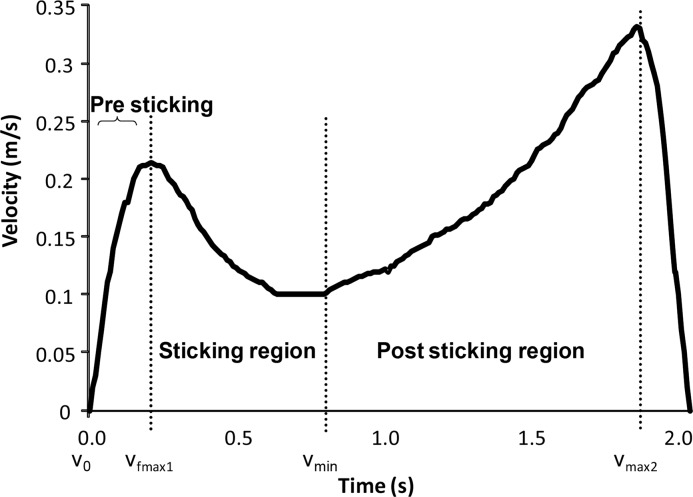
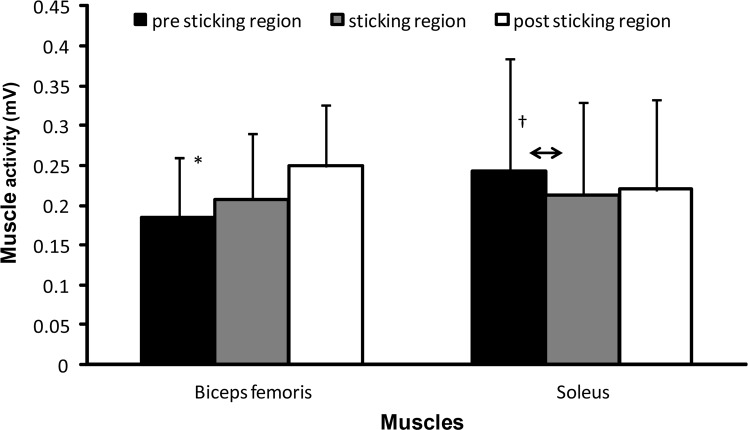
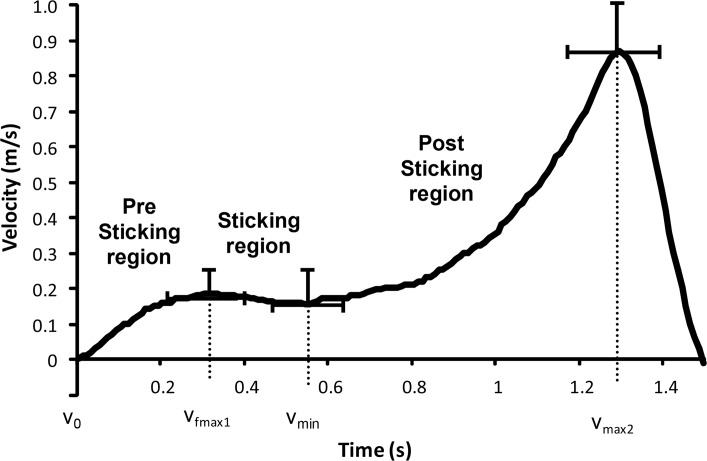
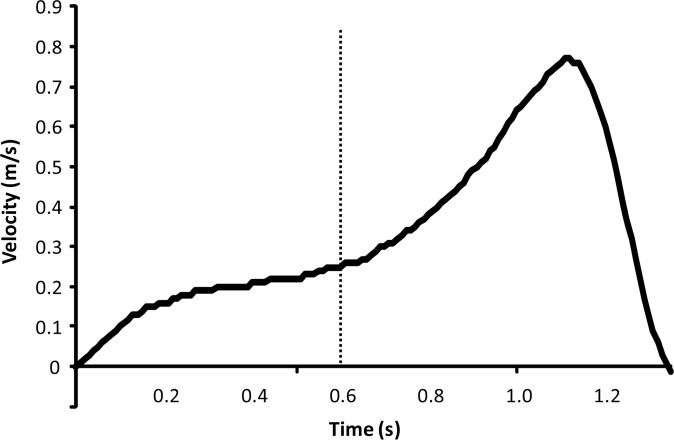
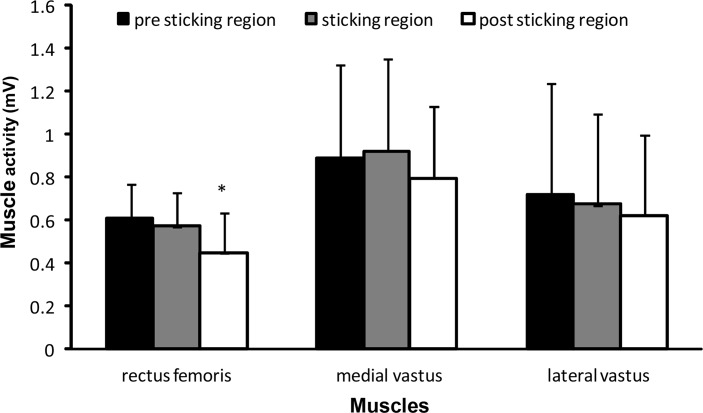
The aim of this study was to investigate the existence of the sticking region in two legged free weight squats. Fifteen resistance-training males (age 24 ± 4 years, body mass 82 ± 11 kg, body height 179 ± 6 cm) with 6 ± 3 years of resistance-training experience performed 6-RM in free weight squats. The last repetition was analyzed for the existence of a sticking region. Only in 10 out of 15 participants a sticking region was observed. The observed sticking region was much shorter than in the bench press. Furthermore, rectus femoris decreased the EMG activity in contrast to increased EMG activity in biceps femoris around the sticking and surrounding region. No significant change in EMG activity was found for the lateral and medial vastus muscles. It is suggested that a combination of these muscle activity changes could be one of the causes of the existence of the sticking region in free weight squats.
本研究的目的是调查双腿自由重量深蹲中停滞区域的存在情况。15名有6±3年抗阻训练经验的男性抗阻训练者(年龄24±4岁,体重82±11千克,身高179±6厘米)进行自由重量深蹲的6次重复最大负荷训练。对最后一次重复动作进行分析以确定是否存在停滞区域。15名参与者中只有10名观察到了停滞区域。观察到的停滞区域比卧推中的要短得多。此外,在停滞及周围区域,股直肌的肌电图活动下降,而股二头肌的肌电图活动增加。外侧和内侧股四头肌的肌电图活动未发现显著变化。有人认为,这些肌肉活动变化的综合作用可能是自由重量深蹲中存在停滞区域的原因之一。