Kovtun Anna, Goeckelmann Melanie J, Niclas Antje A, Montufar Edgar B, Ginebra Maria-Pau, Planell Josep A, Santin Matteo, Ignatius Anita
Institute of Orthopaedic Research and Biomechanics, University of Ulm, Helmholtzstrasse 14, D-89081 Ulm, Germany.
Military Hospital Ulm, Oberer Eselsberg 40, D-89081 Ulm, Germany.
Acta Biomater. 2015 Jan;12:242-249. doi: 10.1016/j.actbio.2014.10.034. Epub 2014 Oct 29.
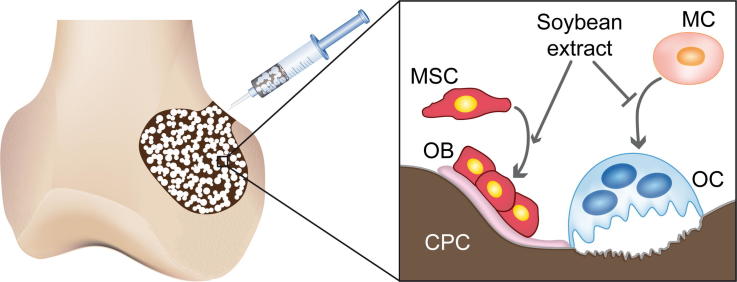
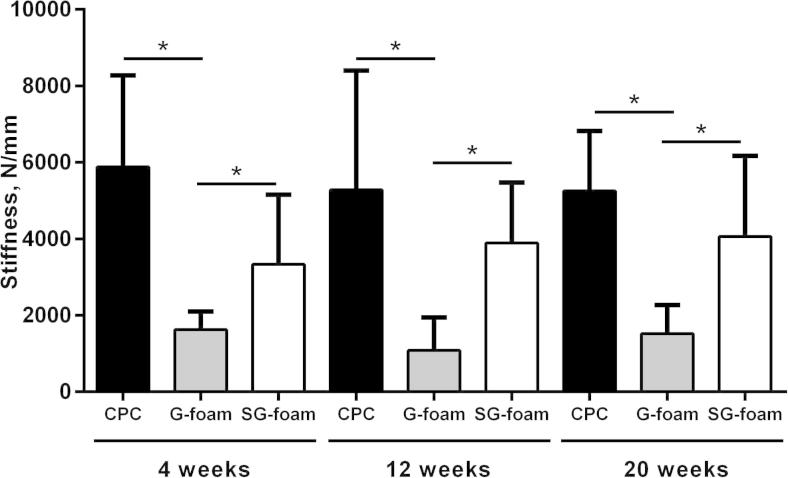
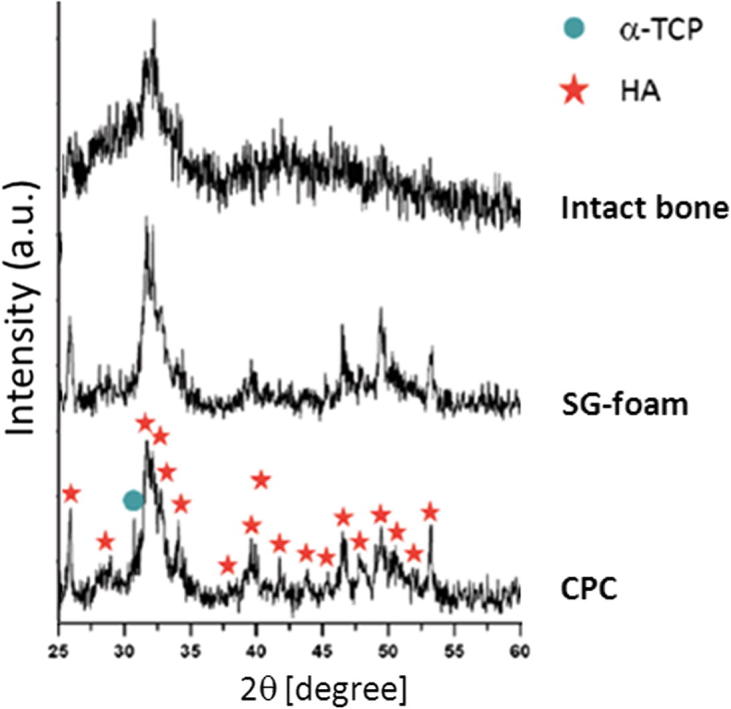
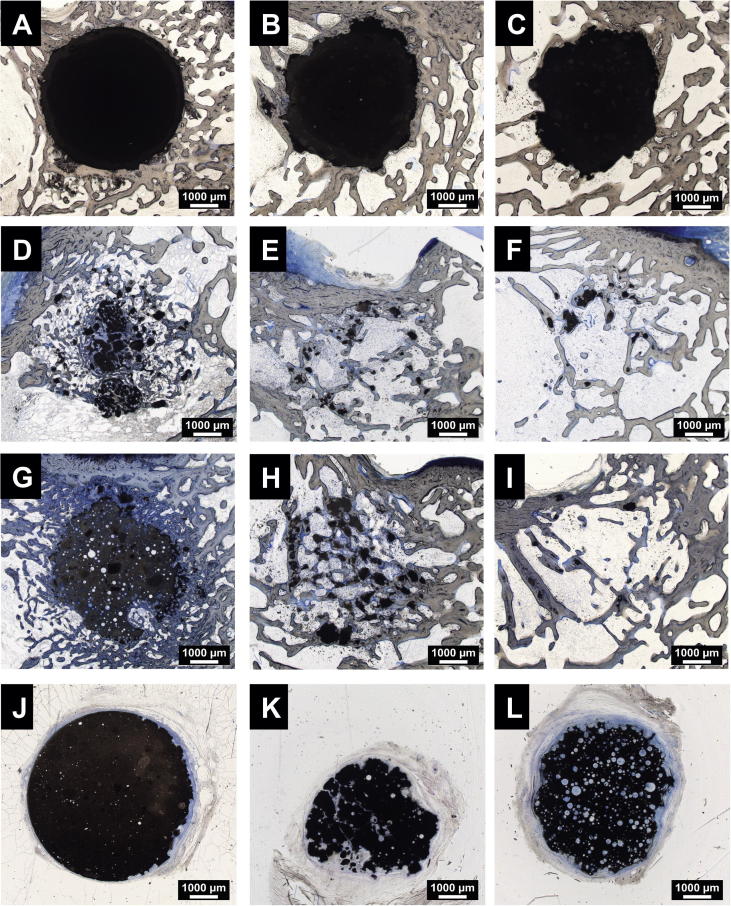
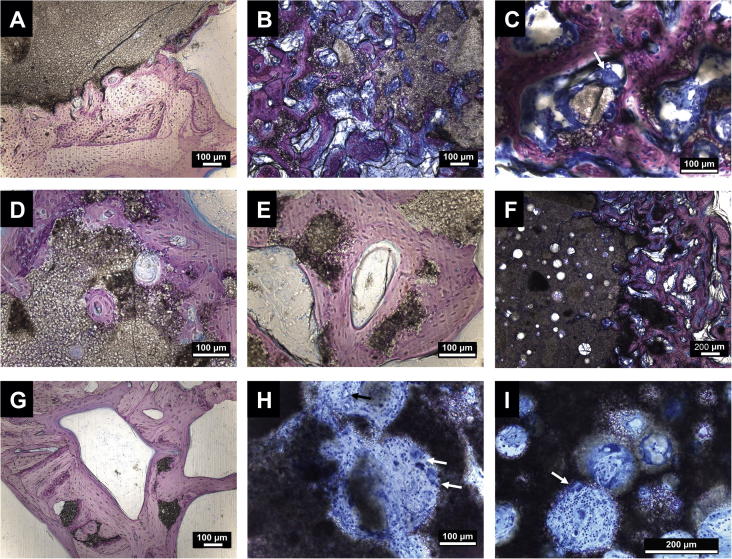
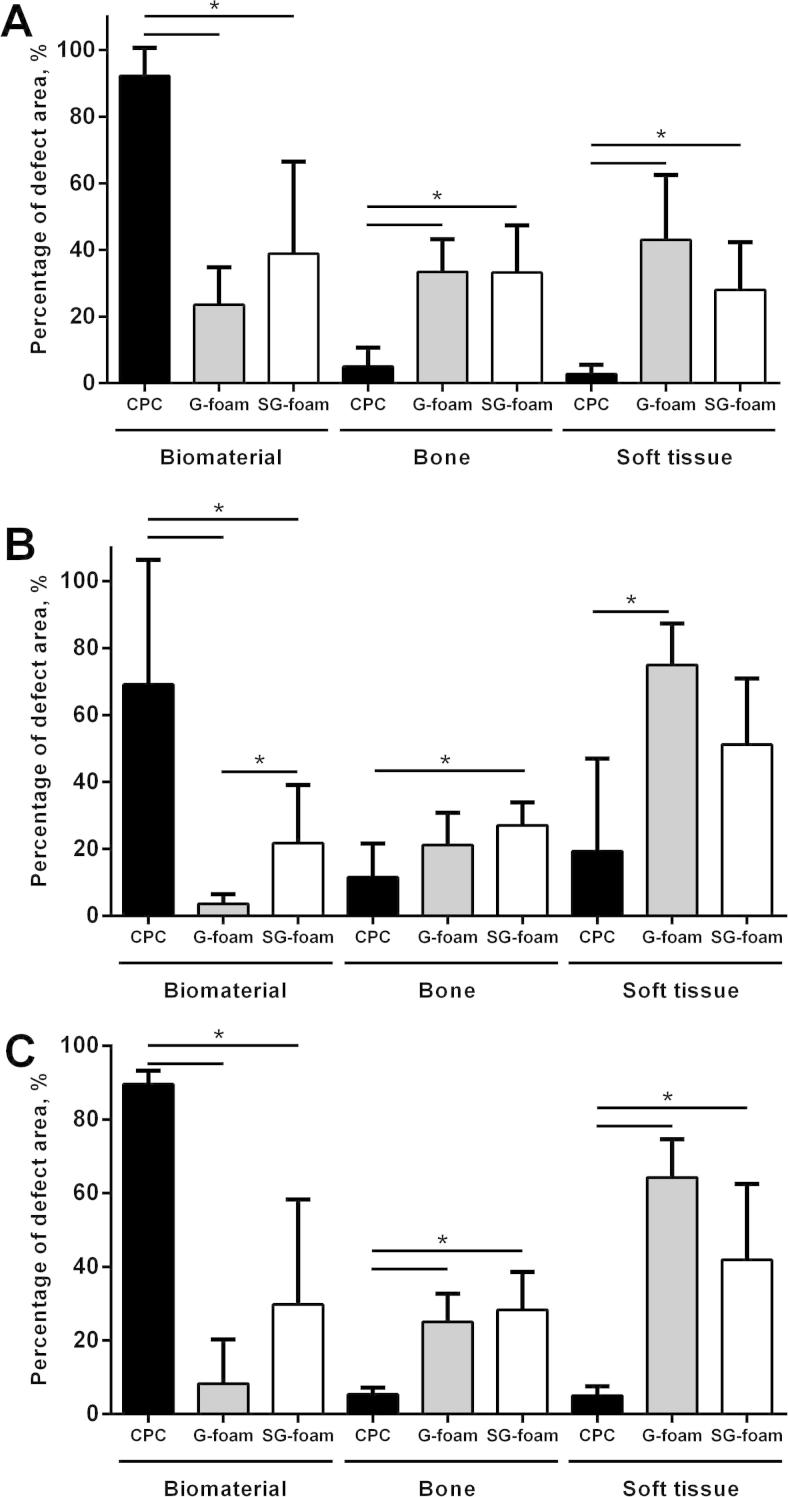
Major limitations of calcium phosphate cements (CPCs) are their relatively slow degradation rate and the lack of macropores allowing the ingrowth of bone tissue. The development of self-setting cement foams has been proposed as a suitable strategy to overcome these limitations. In previous work we developed a gelatine-based hydroxyapatite foam (G-foam), which exhibited good injectability and cohesion, interconnected porosity and good biocompatibility in vitro. In the present study we evaluated the in vivo performance of the G-foam. Furthermore, we investigated whether enrichment of the foam with soybean extract (SG-foam) increased its bioactivity. G-foam, SG-foam and non-foamed CPC were implanted in a critical-size bone defect in the distal femoral condyle of New Zealand white rabbits. Bone formation and degradation of the materials were investigated after 4, 12 and 20weeks using histological and biomechanical methods. The foams maintained their macroporosity after injection and setting in vivo. Compared to non-foamed CPC, cellular degradation of the foams was considerably increased and accompanied by new bone formation. The additional functionalization with soybean extract in the SG-foam slightly reduced the degradation rate and positively influenced bone formation in the defect. Furthermore, both foams exhibited excellent biocompatibility, implying that these novel materials may be promising for clinical application in non-loaded bone defects.
磷酸钙骨水泥(CPCs)的主要局限性在于其降解速率相对较慢,且缺乏允许骨组织长入的大孔。自固化水泥泡沫的开发被认为是克服这些局限性的合适策略。在之前的工作中,我们开发了一种基于明胶的羟基磷灰石泡沫(G-泡沫),其在体外表现出良好的可注射性和内聚力、相互连通的孔隙率以及良好的生物相容性。在本研究中,我们评估了G-泡沫的体内性能。此外,我们研究了用大豆提取物富集泡沫(SG-泡沫)是否会提高其生物活性。将G-泡沫、SG-泡沫和非泡沫CPC植入新西兰白兔股骨远端髁的临界尺寸骨缺损中。在4周、12周和20周后,使用组织学和生物力学方法研究材料的骨形成和降解情况。泡沫在体内注射和凝固后保持其大孔结构。与非泡沫CPC相比,泡沫的细胞降解显著增加,并伴有新骨形成。SG-泡沫中大豆提取物的额外功能化略微降低了降解速率,并对缺损处的骨形成产生了积极影响。此外,两种泡沫都表现出优异的生物相容性,这意味着这些新型材料在非负重骨缺损的临床应用中可能很有前景。