LaRocque Joshua J, Eichenbaum Adam S, Starrett Michael J, Rose Nathan S, Emrich Stephen M, Postle Bradley R
Neuroscience Training Program and Medical Scientist Training Program, University of Wisconsin, Madison, WI, USA,
Mem Cognit. 2015 Apr;43(3):453-68. doi: 10.3758/s13421-014-0486-y.
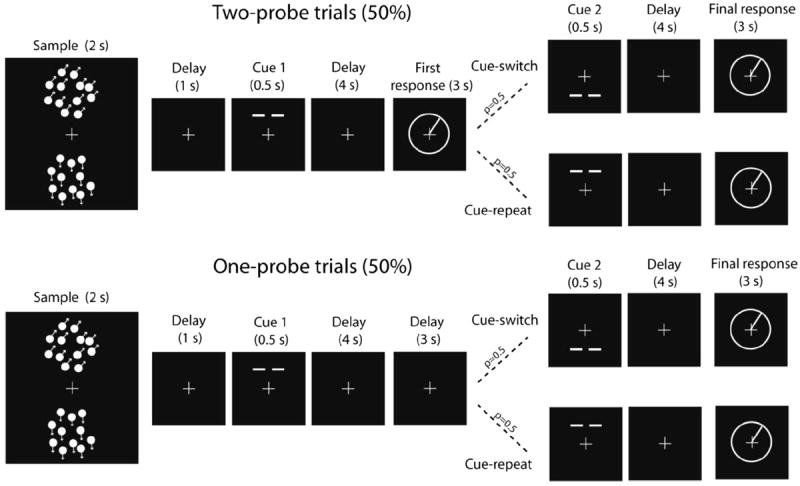
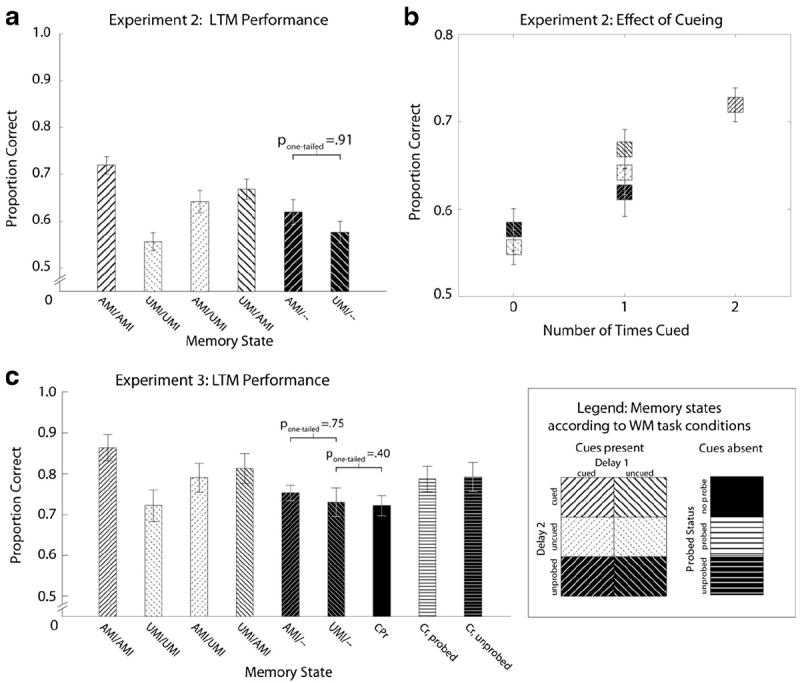
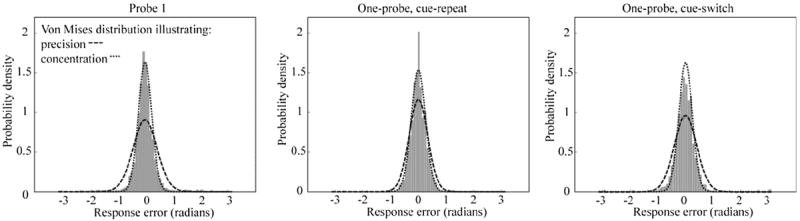
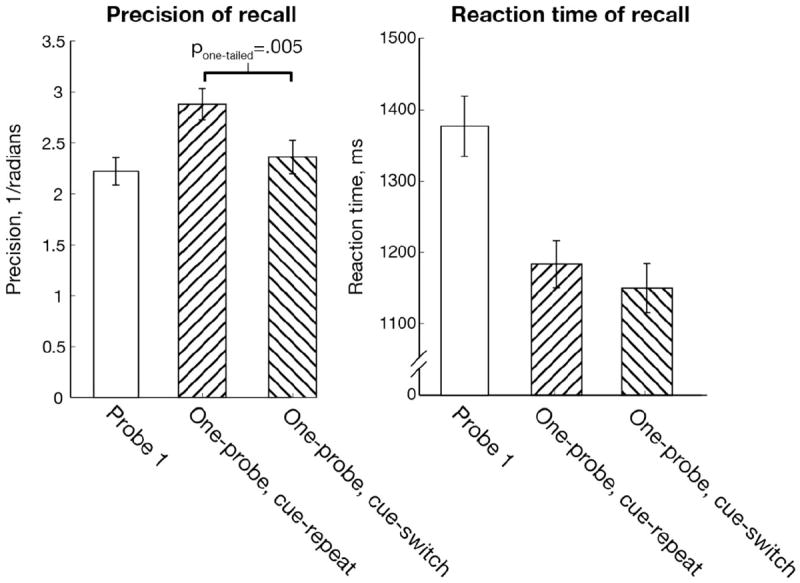
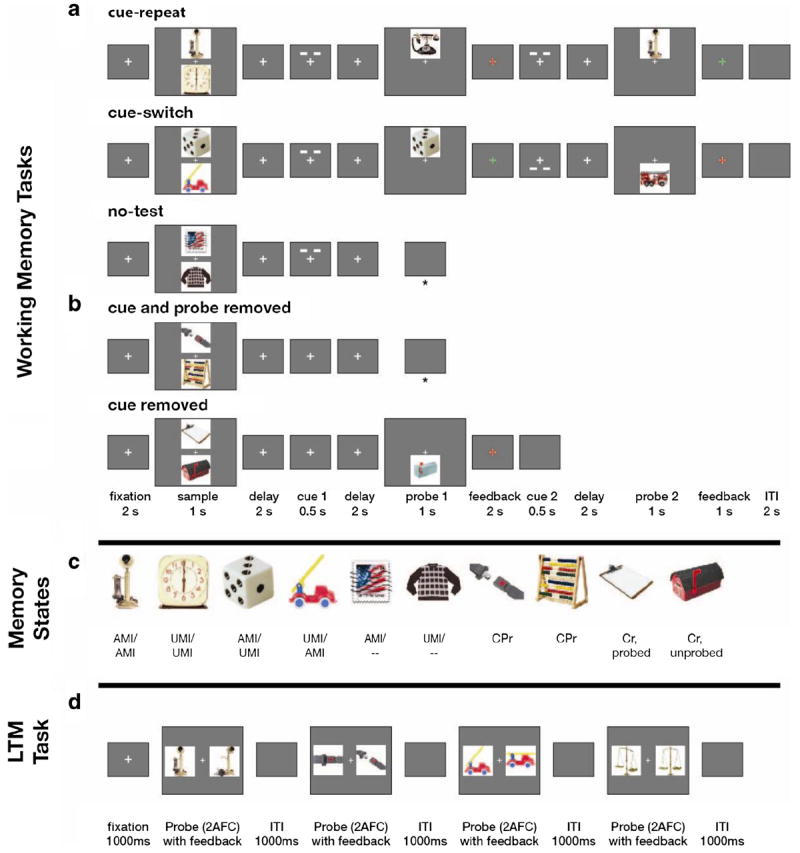
When a test of working memory (WM) requires the retention of multiple items, a subset of them can be prioritized. Recent studies have shown that, although prioritized (i.e., attended) items are associated with active neural representations, unprioritized (i.e., unattended) memory items can be retained in WM despite the absence of such active representations, and with no decrement in their recognition if they are cued later in the trial. These findings raise two intriguing questions about the nature of the short-term retention of information outside the focus of attention. First, when the focus of attention shifts from items in WM, is there a loss of fidelity for those unattended memory items? Second, could the retention of unattended memory items be accomplished by long-term memory mechanisms? We addressed the first question by comparing the precision of recall of attended versus unattended memory items, and found a significant decrease in precision for unattended memory items, reflecting a degradation in the quality of those representations. We addressed the second question by asking subjects to perform a WM task, followed by a surprise memory test for the items that they had seen in the WM task. Long-term memory for unattended memory items from the WM task was not better than memory for items that had remained selected by the focus of attention in the WM task. These results show that unattended WM representations are degraded in quality and are not preferentially represented in long-term memory, as compared to attended memory items.
当工作记忆(WM)测试需要保留多个项目时,可以对其中的一个子集进行优先级排序。最近的研究表明,尽管被优先排序(即被关注)的项目与活跃的神经表征相关,但未被优先排序(即未被关注)的记忆项目在没有这种活跃表征的情况下仍可保留在工作记忆中,并且如果在试验后期对其进行提示,它们的识别能力不会下降。这些发现引发了两个关于注意力焦点之外信息的短期保留本质的有趣问题。第一,当注意力焦点从工作记忆中的项目转移时,那些未被关注的记忆项目的保真度是否会丧失?第二,未被关注的记忆项目的保留是否可以通过长期记忆机制来完成?我们通过比较被关注与未被关注的记忆项目的回忆精度来解决第一个问题,结果发现未被关注的记忆项目的精度显著下降,这反映了这些表征质量的下降。我们通过要求受试者执行一项工作记忆任务,然后对他们在工作记忆任务中看到的项目进行一次突击记忆测试来解决第二个问题。对工作记忆任务中未被关注的记忆项目的长期记忆并不比工作记忆任务中一直被注意力焦点选中的项目的记忆更好。这些结果表明,与被关注的记忆项目相比,未被关注的工作记忆表征质量下降,并且在长期记忆中没有得到优先表征。