Alberghina L, Gaglio D
1] SYSBIO Center for Systems Biology, Department of Biotechnology and Biosciences, University of Milano-Bicocca, Milan and Rome, Italy [2] Department of Biotechnology and Biosciences, University of Milano-Bicocca, Piazza della Scienza 2, Milan, Italy.
1] SYSBIO Center for Systems Biology, Department of Biotechnology and Biosciences, University of Milano-Bicocca, Milan and Rome, Italy [2] Institute of Molecular Bioimaging and Physiology (IBFM), National Research Council (CNR), Via F.lli Cervi 93, Segrate, Milan, Italy.
Cell Death Dis. 2014 Dec 4;5(12):e1561. doi: 10.1038/cddis.2014.513.
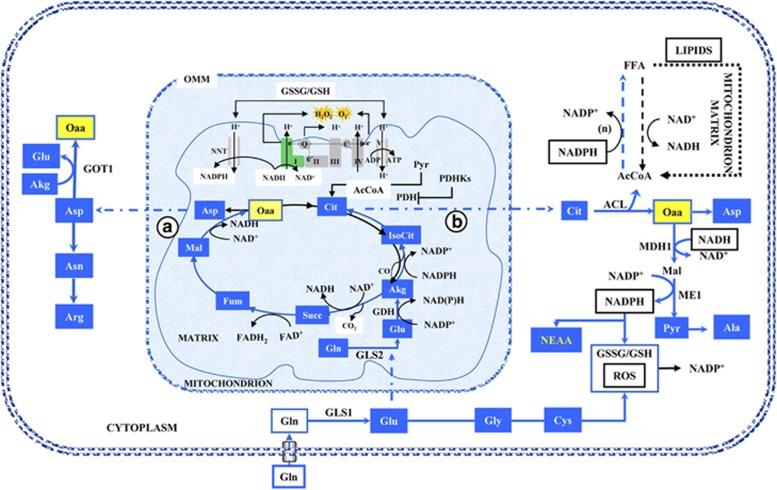
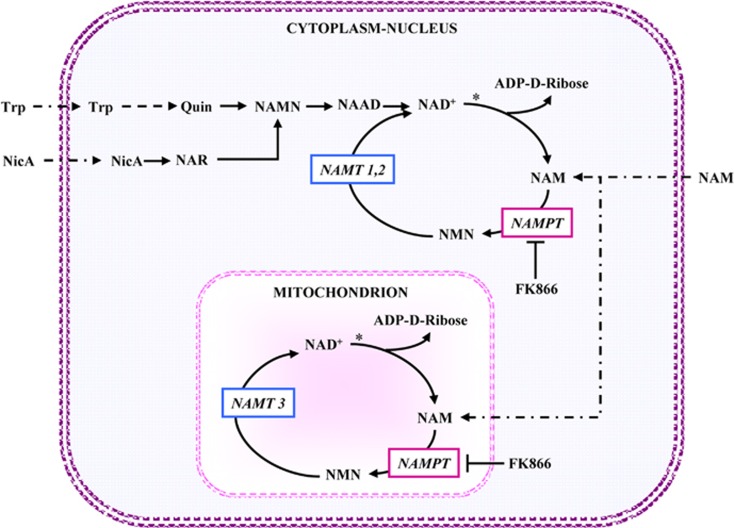
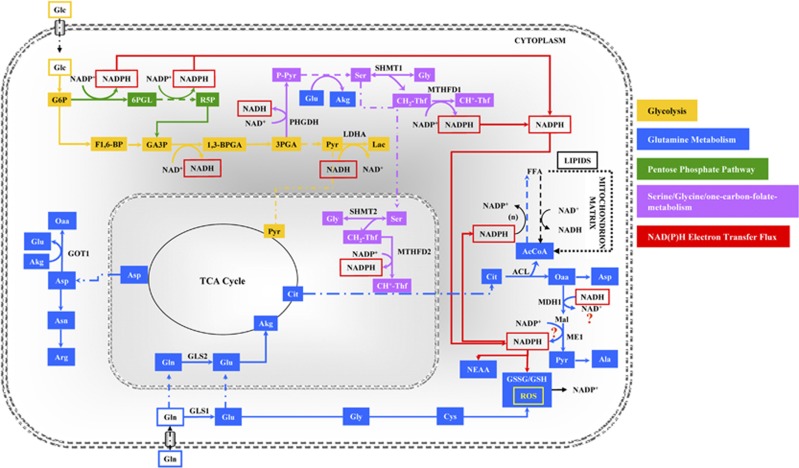
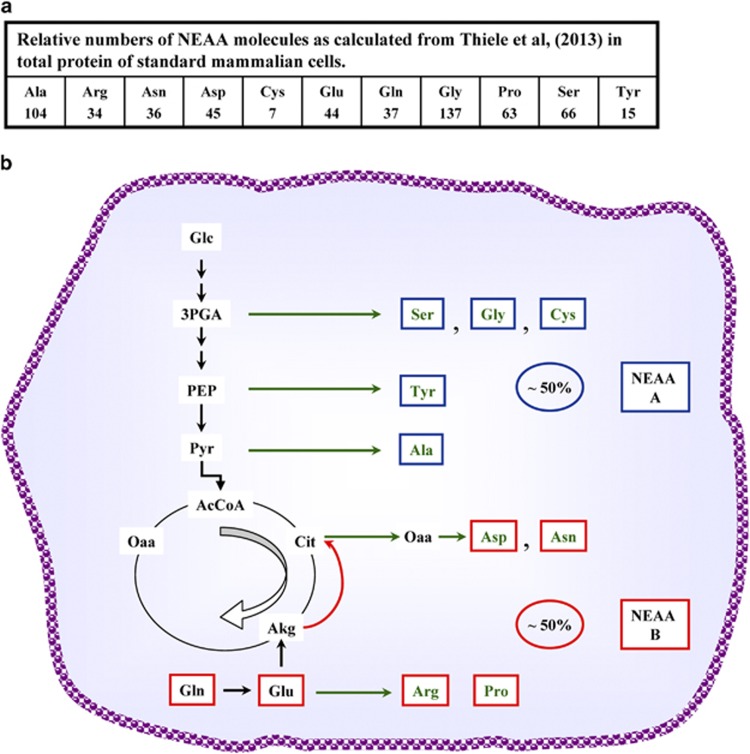
Glutamine utilization promotes enhanced growth of cancer cells. We propose a new concept map of cancer metabolism in which mitochondrial NADH and NADPH, in the presence of a dysfunctional electron transfer chain, promote reductive carboxylation from glutamine. We also discuss why nicotinamide nucleotide transhydrogenase (NNT) is required in vivo for glutamine utilization by reductive carboxylation. Moreover, NADPH, generated by both the pentose phosphate pathway and the cancer-specific serine glycolytic diversion, appears to sustain glutamine utilization for amino-acid synthesis, lipid synthesis, and for ROS quenching. The fact that the supply of NAD(+) precursors reduces tumor aggressiveness suggests experimental approaches to clarify the role of the NADH-driven redox network in cancer.
谷氨酰胺的利用促进癌细胞的生长增强。我们提出了一种新的癌症代谢概念图,其中在电子传递链功能失调的情况下,线粒体NADH和NADPH会促进谷氨酰胺的还原羧化反应。我们还讨论了为什么体内通过还原羧化作用利用谷氨酰胺需要烟酰胺核苷酸转氢酶(NNT)。此外,磷酸戊糖途径和癌症特异性丝氨酸糖酵解支路产生的NADPH似乎能维持谷氨酰胺用于氨基酸合成、脂质合成以及活性氧淬灭的利用。NAD⁺前体的供应会降低肿瘤侵袭性这一事实提示了一些实验方法,以阐明NADH驱动的氧化还原网络在癌症中的作用。