Eames Matthew Dc, Hananel Arik, Snell John W, Kassell Neal F, Aubry Jean-Francois
Focused Ultrasound Foundation, Charlottesville, VA 22903, USA.
Focused Ultrasound Foundation, Charlottesville, VA 22903, USA ; Department of Radiation Oncology, University of Virginia, Charlottesville, VA 22908, USA.
J Ther Ultrasound. 2014 Jan 2;1:24. doi: 10.1186/2050-5736-1-24. eCollection 2013.
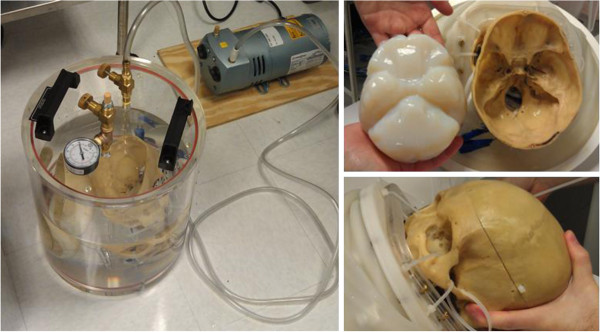
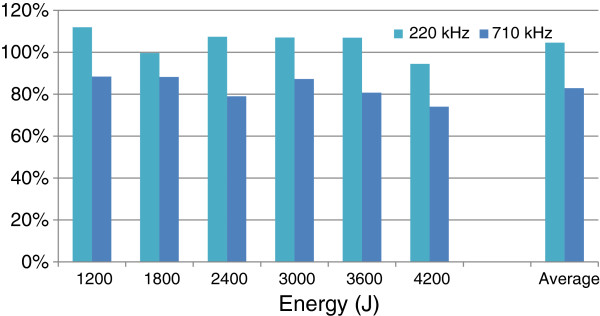
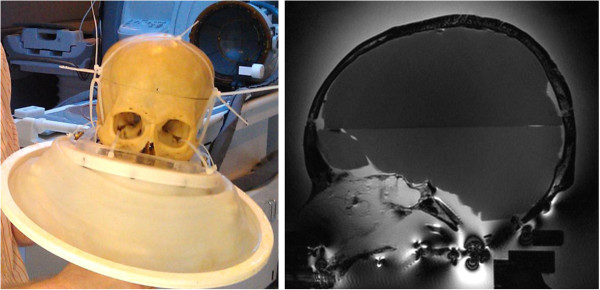
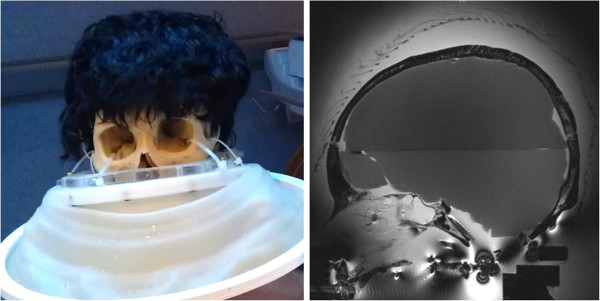
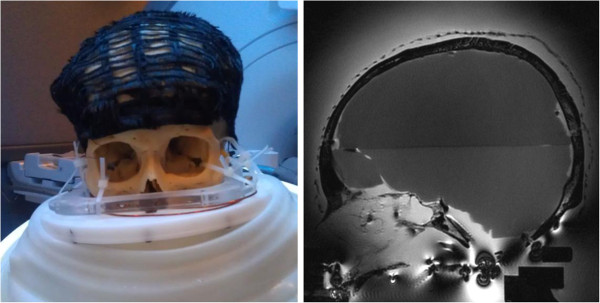
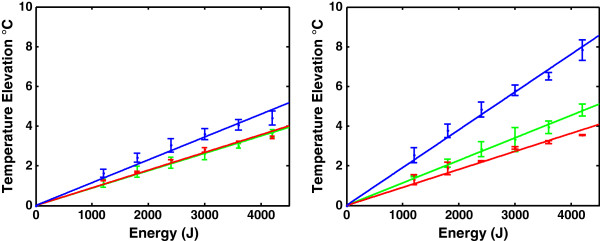
In preparing a patient for a trans-cranial magnetic resonance (MR)-guided focused ultrasound procedure, current practice is to shave the patient's head on treatment day. Here we present an initial attempt to evaluate the feasibility of trans-cranial focused ultrasound in an unshaved, ex vivo human head model. A human skull filled with tissue-mimicking phantom and covered with a wig made of human hair was sonicated using 220- and 710-kHz head transducers to evaluate the feasibility of acoustic energy transfer. Heating at the focal point was measured by MR proton resonance shift thermometry. Results showed that the hair had a negligible effect on focal spot thermal rise at 220 kHz and a 17% drop in temperature elevation when using 710 kHz.
在为患者准备经颅磁共振(MR)引导的聚焦超声手术时,目前的做法是在治疗当天剃光患者的头发。在此,我们首次尝试在未剃发的离体人类头部模型中评估经颅聚焦超声的可行性。使用220 kHz和710 kHz的头部换能器对填充有组织模拟体模并覆盖有人造假发的人类颅骨进行超声处理,以评估声能传递的可行性。通过MR质子共振频移测温法测量焦点处的加热情况。结果表明,头发对220 kHz时焦点处的热升幅影响可忽略不计,而在使用710 kHz时温度升高下降了17%。