Luo Guang-Hua, Li Xiao-Huan, Han Zhao-Jun, Guo Hui-Fang, Yang Qiong, Wu Min, Zhang Zhi-Chun, Liu Bao-Sheng, Qian Lu, Fang Ji-Chao
Institute of Plant Protection, Jiangsu Academy of Agricultural Sciences, Nanjing, 210014, China.
Education Ministry Key Laboratory of Integrated Management of Crop Diseases and Pests, College of Plant Protection, Nanjing Agricultural University, Nanjing, 210095, China.
BMC Mol Biol. 2014 Dec 17;15:28. doi: 10.1186/s12867-014-0028-y.
Transposable elements (TEs, transposons) are mobile genetic DNA sequences. TEs can insert copies of themselves into new genomic locations and they have the capacity to multiply. Therefore, TEs have been crucial in the shaping of hosts' current genomes. TEs can be utilized as genetic markers to study population genetic diversity. The rice stem borer Chilo suppressalis Walker is one of the most important insect pests of many subtropical and tropical paddy fields. This insect occurs in all the rice-growing areas in China. This research was carried out in order to find diversity between C. suppressalis field populations and detect the original settlement of C. suppressalis populations based on the piggyBac-like element (PLE). We also aim to provide insights into the evolution of PLEs in C. suppressalis and the phylogeography of C. suppressalis.
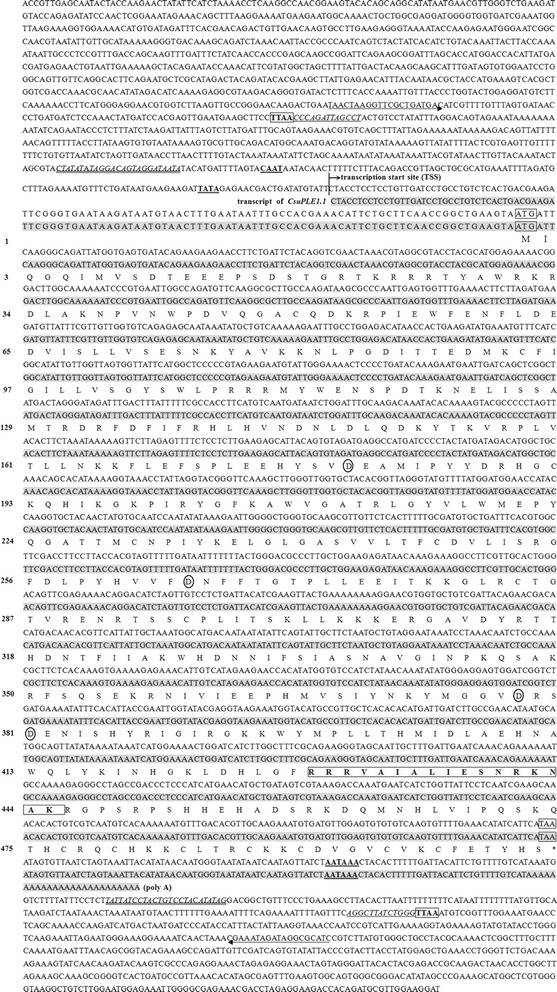
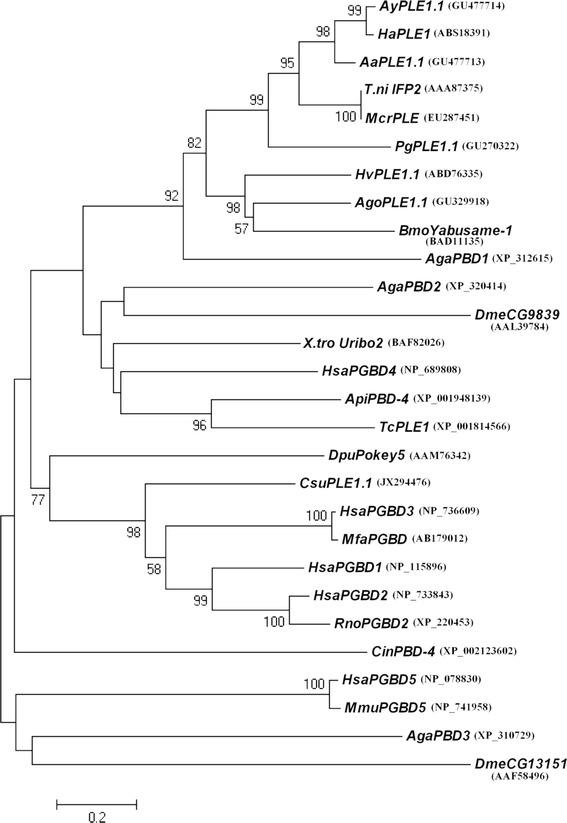
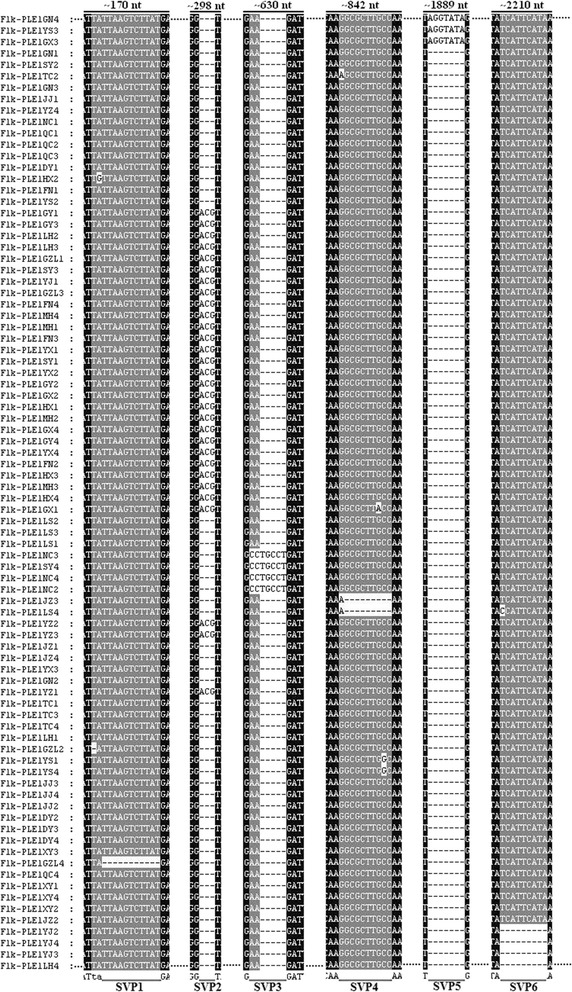
Here we identify a new piggyBac-like element (PLE) in the rice stem borer Chilo suppressalis Walker, which is called CsuPLE1.1 (GenBank accession no. JX294476). CsuPLE1.1 is transcriptionally active. Additionally, the CsuPLE1.1 sequence varied slightly between field populations, with polymorphic indels (insertion/deletion) and hyper-variable regions including the identification of the 3' region outside the open reading frame (ORF). CsuPLE1.1 insertion frequency varied between field populations. Sequences variation was found between CsuPLE1 copies and varied within and among field populations. Twenty-one different insertion sites for CsuPLE1 copies were identified with at least two insertion loci found in all populations.
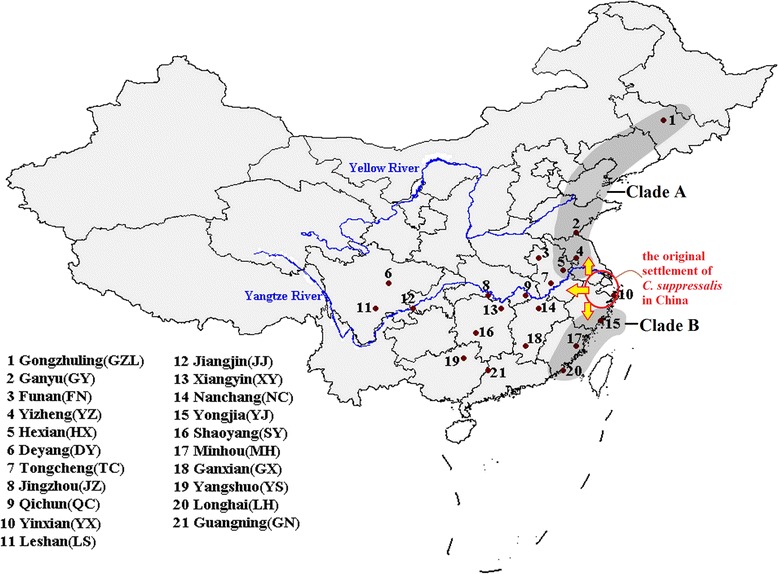
Our results indicate that the initial invasion of CsuPLE1 into C. suppressalis occurred before C. suppressalis populations spread throughout China, and suggest that C. suppressalis populations have a common ancestor in China. Additionally, the lower reaches of the Yangtze River are probably the original settlement of C. suppressalis in China. Finally, the CsuPLE1 insertion site appears to be a candidate marker for phylogenetic research of C. suppressalis.
转座元件(TEs,转座子)是可移动的遗传DNA序列。转座元件能够将自身的拷贝插入到新的基因组位置,并且具有增殖能力。因此,转座元件在塑造宿主当前基因组的过程中发挥了关键作用。转座元件可被用作遗传标记来研究种群遗传多样性。二化螟Chilo suppressalis Walker是许多亚热带和热带稻田中最重要的害虫之一。这种昆虫在中国所有水稻种植区均有发生。本研究旨在基于类piggyBac元件(PLE),探寻二化螟田间种群之间的多样性,并检测二化螟种群的原始定居地。我们还旨在深入了解二化螟中PLEs的进化以及二化螟的系统地理学。
在此,我们在二化螟Chilo suppressalis Walker中鉴定出一种新的类piggyBac元件(PLE),命名为CsuPLE1.1(GenBank登录号:JX294476)。CsuPLE1.1具有转录活性。此外,CsuPLE1.1序列在田间种群之间略有差异,存在多态性插入/缺失(indels)以及高变区,包括开放阅读框(ORF)外3'区域的鉴定。CsuPLE1.1的插入频率在田间种群之间有所不同。在CsuPLE1拷贝之间发现了序列变异,并且在田间种群内部和种群之间也存在差异。鉴定出了21个不同的CsuPLE1拷贝插入位点,所有种群中至少发现了两个插入位点。
我们的结果表明,CsuPLE1最初侵入二化螟发生在二化螟种群扩散至中国各地之前,这表明二化螟种群在中国有一个共同的祖先。此外,长江下游地区可能是二化螟在中国的原始定居地。最后,CsuPLE1插入位点似乎是二化螟系统发育研究的一个候选标记。