
墨西哥东北部传统医学中使用的植物对溶组织内阿米巴的抗原生动物活性。来自墨西哥薄荷和芸香的生物活性化合物。
Antiprotozoal activity against Entamoeba histolytica of plants used in northeast Mexican traditional medicine. Bioactive compounds from Lippia graveolens and Ruta chalepensis.
作者信息
Quintanilla-Licea Ramiro, Mata-Cárdenas Benito David, Vargas-Villarreal Javier, Bazaldúa-Rodríguez Aldo Fabio, Kavimngeles-Hernández Isvar, Garza-González Jesús Norberto, Hernández-García Magda Elizabeth
机构信息
Universidad Autónoma de Nuevo León, UANL, Facultad de Ciencias Biológicas, Av. Universidad S/N, Cd. Universitaria, San Nicolás de los Garza, C.P. 66451 Nuevo León, Mexico.
Universidad Autónoma de Nuevo León, UANL, Facultad de Ciencias Químicas, Av. Universidad S/N, Cd. Universitaria, San Nicolás de los Garza, C.P. 66451 Nuevo León, Mexico.
出版信息
Molecules. 2014 Dec 15;19(12):21044-65. doi: 10.3390/molecules191221044.
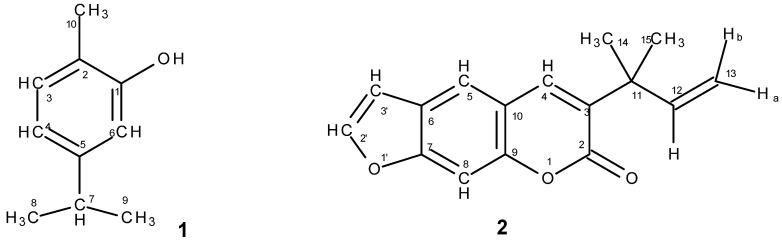
Amoebiasis caused by Entamoeba histolytica is associated with high morbidity and mortality is becoming a major public health problem worldwide, especially in developing countries. Because of the side-effects and the resistance that pathogenic protozoa build against the standard antiparasitic drugs, e.g., metronidazole, much recent attention has been paid to plants used in traditional medicine around the world in order to find new antiprotozoal agents. We collected 32 plants used in Northeast Mexican traditional medicine and the methanolic extracts of these species were screened for antiprotozoal activity against E. histolytica trophozoites using in vitro tests. Only 18 extracts showed a significant inhibiting activity and among them six plant extracts showed more than 80% growth inhibition against E. histolytica at a concentration of 150 µg/mL and the IC50 values of these extracts were determined. Lippia graveolens Kunth and Ruta chalepensis Pers. showed the more significant antiprotozoal activity (91.54% and 90.50% growth inhibition at a concentration of 150 µg/mL with IC50 values of 59.14 and 60.07 µg/mL, respectively). Bioassay-guided fractionation of the methanolic extracts from these two plants afforded carvacrol (1) and chalepensin (2), respectively, as bioactive compounds with antiprotozoal activity.
由溶组织内阿米巴引起的阿米巴病与高发病率和高死亡率相关,正成为全球尤其是发展中国家的一个主要公共卫生问题。由于致病性原生动物对标准抗寄生虫药物(如甲硝唑)产生副作用和耐药性,近年来人们十分关注世界各地传统医学中使用的植物,以寻找新的抗原生动物药物。我们收集了墨西哥东北部传统医学中使用的32种植物,并通过体外试验筛选了这些植物的甲醇提取物对溶组织内阿米巴滋养体的抗原生动物活性。只有18种提取物显示出显著的抑制活性,其中6种植物提取物在浓度为150µg/mL时对溶组织内阿米巴的生长抑制率超过80%,并测定了这些提取物的半数抑制浓度(IC50)值。墨西哥牛至和芸香表现出更显著的抗原生动物活性(在浓度为150µg/mL时生长抑制率分别为91.54%和90.50%,IC50值分别为59.14和60.07µg/mL)。对这两种植物的甲醇提取物进行生物活性导向分离,分别得到了香芹酚(1)和白藓碱(2)这两种具有抗原生动物活性的生物活性化合物。
 Zotero 插件