McCormick Susan P, Kato Takayuki, Maragos Chris M, Busman Mark, Lattanzio Veronica M T, Galaverna Gianni, Dall-Asta Chiara, Crich David, Price Neil P J, Kurtzman Cletus P
Bacterial Foodborne Pathogens and Mycology Research Unit , National Center for Agricultural Utilization Research, U.S. Department of Agriculture, Peoria, Illinois 61604, United States.
J Agric Food Chem. 2015 Jan 21;63(2):731-8. doi: 10.1021/jf504737f. Epub 2015 Jan 6.
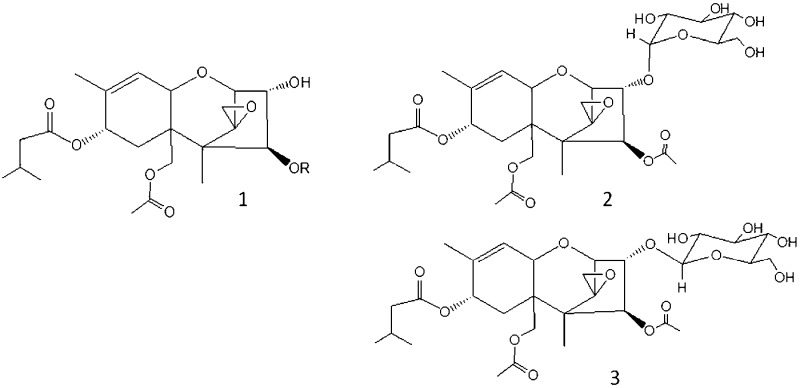
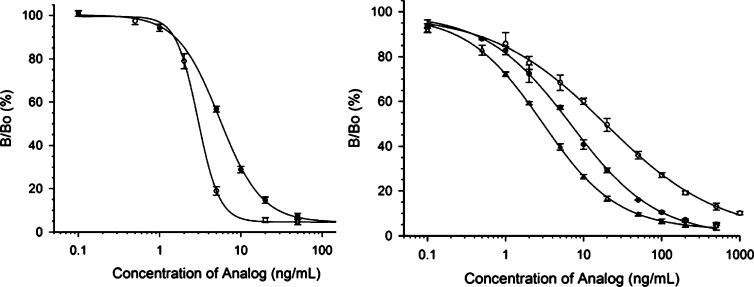
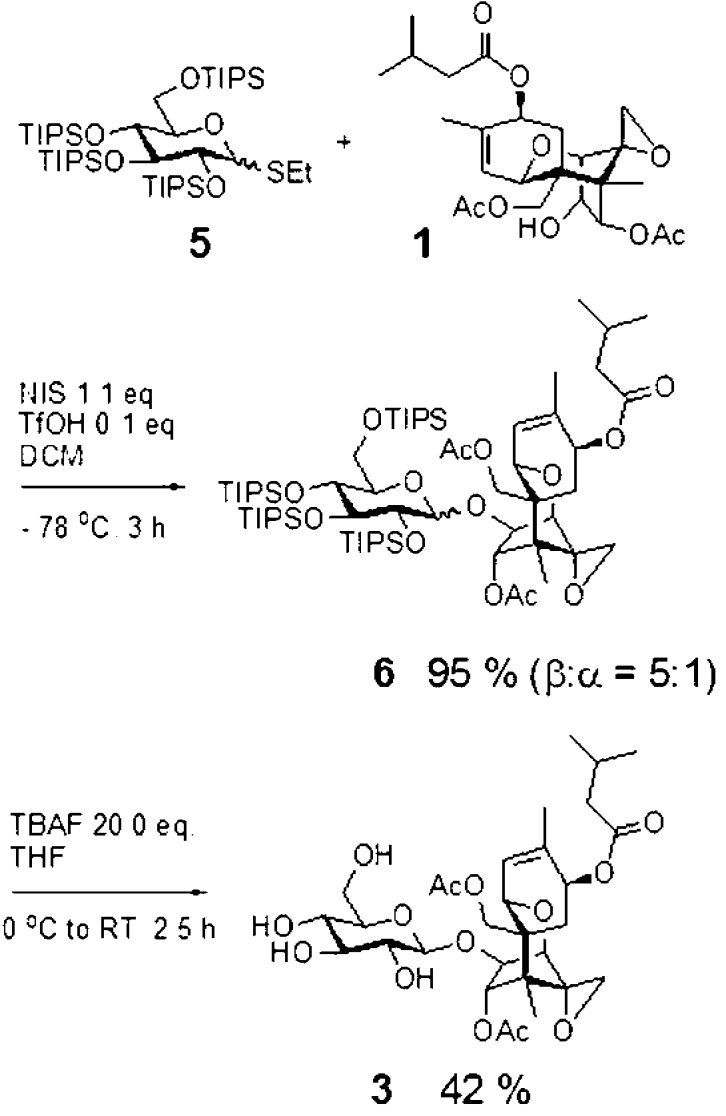
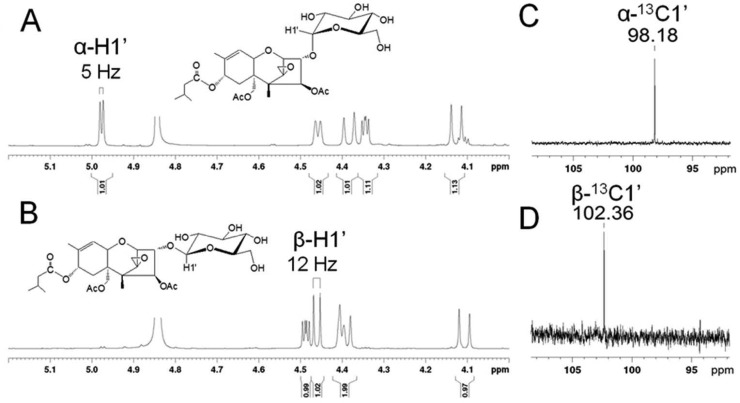
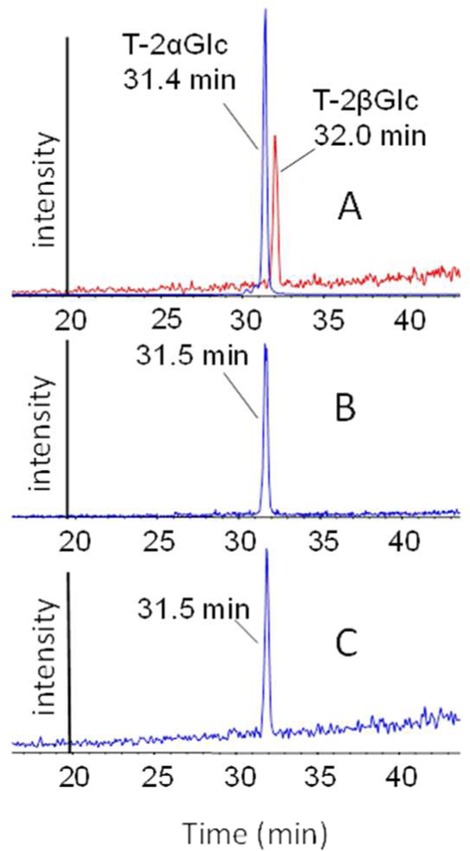
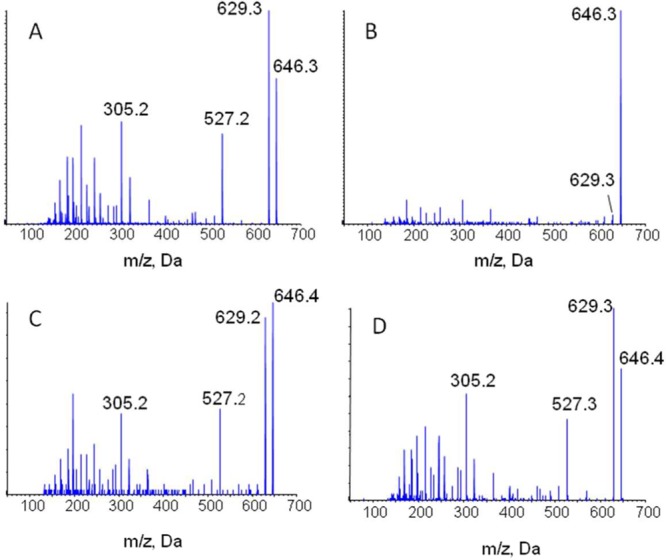
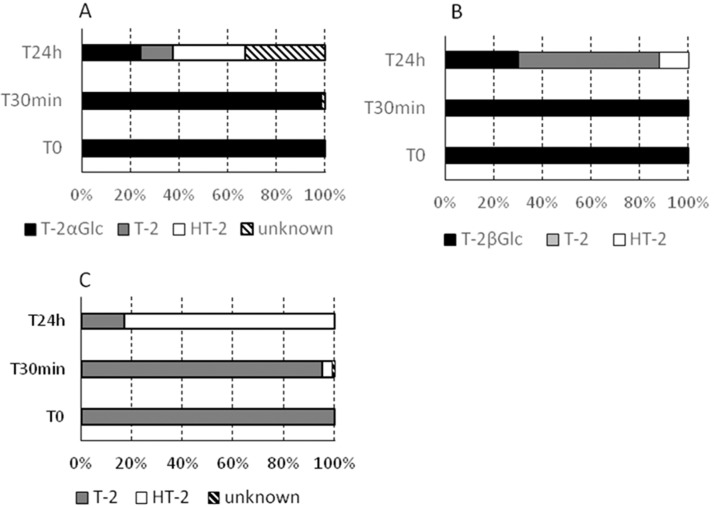
T-2 toxin is a trichothecene mycotoxin produced when Fusarium fungi infect grains, especially oats and wheat. Ingestion of T-2 toxin contaminated grain can cause diarrhea, hemorrhaging, and feed refusal in livestock. Cereal crops infected with mycotoxin-producing fungi form toxin glycosides, sometimes called masked mycotoxins, which are a potential food safety concern because they are not detectable by standard approaches and may be converted back to the parent toxin during digestion or food processing. The work reported here addresses four aspects of T-2 toxin-glucosides: phytotoxicity, stability after ingestion, antibody detection, and the anomericity of the naturally occurring T-2 toxin-glucoside found in cereal plants. T-2 toxin-β-glucoside was chemically synthesized and compared to T-2 toxin-α-glucoside prepared with Blastobotrys muscicola cultures and the T-2 toxin-glucoside found in naturally contaminated oats and wheat. The anomeric forms were separated chromatographically and differ in both NMR and mass spectrometry. Both anomers were significantly degraded to T-2 toxin and HT-2 toxin under conditions that mimic human digestion, but with different kinetics and metabolic end products. The naturally occurring T-2 toxin-glucoside from plants was found to be identical to T-2 toxin-α-glucoside prepared with B. muscicola. An antibody test for the detection of T-2 toxin was not effective for the detection of T-2 toxin-α-glucoside. This anomer was produced in sufficient quantity to assess its animal toxicity.
T-2毒素是镰刀菌感染谷物,特别是燕麦和小麦时产生的单端孢霉烯族霉菌毒素。摄入受T-2毒素污染的谷物会导致家畜腹泻、出血和拒食。感染产生霉菌毒素的真菌的谷类作物会形成毒素糖苷,有时也称为隐蔽霉菌毒素,这是一个潜在的食品安全问题,因为它们无法通过标准方法检测到,并且在消化或食品加工过程中可能会转化回母体毒素。本文报道的工作涉及T-2毒素糖苷的四个方面:植物毒性、摄入后的稳定性、抗体检测以及谷类植物中天然存在的T-2毒素糖苷的异头物性质。化学合成了T-2毒素-β-糖苷,并将其与用嗜肌芽殖酵母培养物制备的T-2毒素-α-糖苷以及天然污染的燕麦和小麦中发现的T-2毒素糖苷进行了比较。通过色谱法分离了异头物形式,它们在核磁共振和质谱方面都有所不同。在模拟人体消化的条件下,两种异头物都显著降解为T-2毒素和HT-2毒素,但动力学和代谢终产物不同。发现植物中天然存在的T-2毒素糖苷与用嗜肌芽殖酵母制备的T-2毒素-α-糖苷相同。检测T-2毒素的抗体检测方法对检测T-2毒素-α-糖苷无效。这种异头物的产量足以评估其对动物的毒性。