Davies Glyn, Elison Sarah, Ward Jonathan, Laudet Alexandre
Breaking Free Group, 274 Deansgate, Manchester M3 4JB, UK.
Subst Abuse Treat Prev Policy. 2015 Jan 17;10:2. doi: 10.1186/1747-597X-10-2.
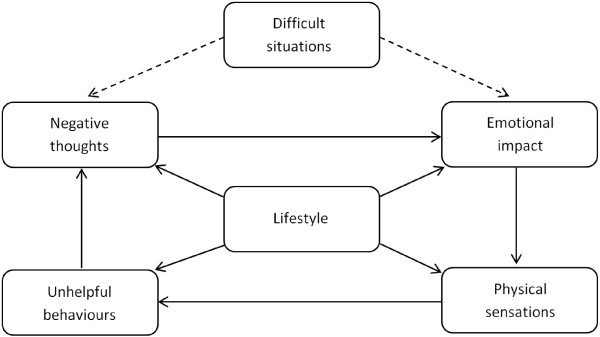
Conceptualizing aetiology underpinning an individual's substance use disorder (SUD) not only facilitates insight and understanding, but also serves to identify targets for treatment and aid practitioners in selecting the most appropriate interventions. There is now a wealth of literature on aetiology and treatment approaches, and in more recent years, also literature to support the concept of 'recovery' from a condition which was previously thought of as a chronic, relapsing condition. The burgeoning literature around research into recovery is revealing how recovery can best be defined and what factors might be associated with recovery from SUD. To add further to this growing body of literature, a new six-domain, explanatory biopsychosocial model of substance dependence and recovery, the Lifestyle Balance Model (LBM) is proposed. Based on research findings and theory reported in the literature, the LBM is a generic model depicting six domains of biopsychosocial functioning and includes within it the role of lifestyle. The LBM has been constructed as a domain model, allowing conceptualisation of the relationships between the six domain areas that perpetuate dependence and may also be associated with recovery from SUD, providing service users and clinicians with a tool for the delivery of case formulation and identification of target areas for intervention.
明确个体物质使用障碍(SUD)背后的病因,不仅有助于深入洞察和理解,还能确定治疗靶点,并帮助从业者选择最合适的干预措施。目前有大量关于病因和治疗方法的文献,近年来,也有文献支持从一种以前被认为是慢性复发性疾病的状态中“康复”的概念。围绕康复研究的新兴文献揭示了如何最好地定义康复,以及哪些因素可能与从物质使用障碍中康复相关。为了进一步丰富这一不断增长的文献,本文提出了一种新的、解释性的、涵盖六个领域的物质依赖与康复生物心理社会模型——生活方式平衡模型(LBM)。基于文献中报道的研究结果和理论,LBM是一个通用模型,描绘了生物心理社会功能的六个领域,并包含了生活方式的作用。LBM被构建为一个领域模型,允许对导致成瘾持续存在且可能也与从物质使用障碍中康复相关的六个领域之间的关系进行概念化,为服务使用者和临床医生提供了一个用于病例制定和确定干预目标领域的工具。