Li Rosa, Brannon Elizabeth M, Huettel Scott A
Department of Psychology and Neuroscience, Duke University Durham, NC, USA ; Center for Cognitive Neuroscience, Duke University Durham, NC, USA.
Department of Psychology and Neuroscience, Duke University Durham, NC, USA ; Center for Cognitive Neuroscience, Duke University Durham, NC, USA ; Center for Interdisciplinary Decision Sciences, Duke University Durham, NC, USA.
Front Psychol. 2015 Jan 5;5:1519. doi: 10.3389/fpsyg.2014.01519. eCollection 2014.
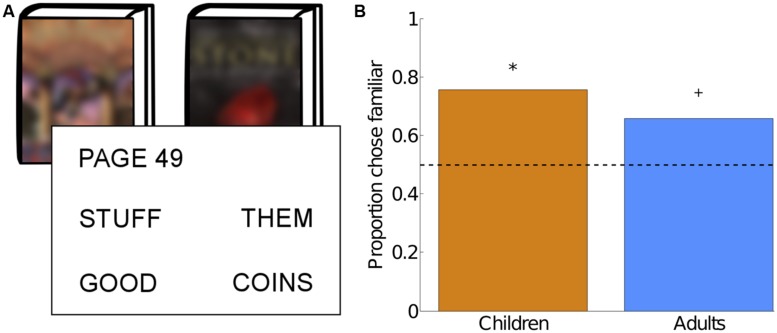
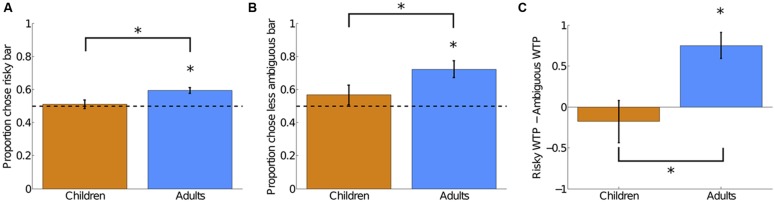
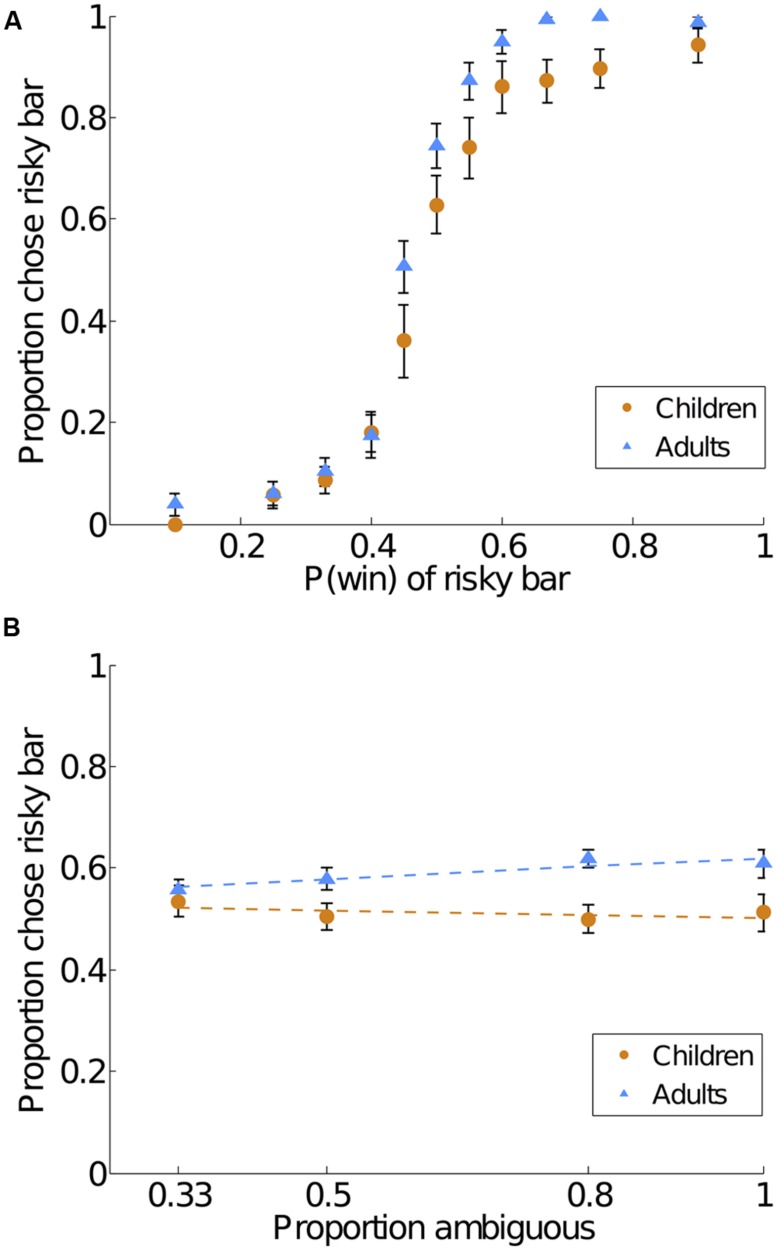
The phenomenon of ambiguity aversion, in which risky gambles with known probabilities are preferred over ambiguous gambles with unknown probabilities, has been thoroughly documented in adults but never measured in children. Here, we use two distinct tasks to investigate ambiguity preferences of children (8- to 9-year-olds) and a comparison group of adults (19- to 27-year-olds). Across three separate measures, we found evidence for significant ambiguity aversion in adults but not in children and for greater ambiguity aversion in adults compared to children. As ambiguity aversion in adults has been theorized to result from a preference to bet on the known and avoid the unfamiliar, we separately measured familiarity bias and found that children, like adults, are biased towards the familiar. Our findings indicate that ambiguity aversion emerges across the course of development between childhood and adolescence, while a familiarity bias is already present in childhood.
模糊厌恶现象是指,相比概率未知的模糊赌博,人们更倾向于概率已知的风险赌博。这一现象在成年人中已有详尽记录,但从未在儿童中进行过测量。在此,我们使用两项不同的任务来研究儿童(8至9岁)以及一组成年对照组(19至27岁)的模糊偏好。通过三项独立测量,我们发现,成年人存在显著的模糊厌恶,而儿童没有,并且成年人比儿童表现出更强的模糊厌恶。由于理论上认为成年人的模糊厌恶源于偏好已知事物并回避陌生事物,我们分别测量了熟悉度偏差,发现儿童和成年人一样,都偏向于熟悉的事物。我们的研究结果表明,模糊厌恶在儿童期到青春期的发展过程中出现,而熟悉度偏差在儿童期就已存在。