Ma Ying, Rajkumar Mani, Rocha Inês, Oliveira Rui S, Freitas Helena
Centre for Functional Ecology, Department of Life Sciences, University of Coimbra Coimbra, Portugal.
Department of Life Sciences, Central University of Tamil Nadu Thiruvarur, India.
Front Plant Sci. 2015 Jan 5;5:757. doi: 10.3389/fpls.2014.00757. eCollection 2014.
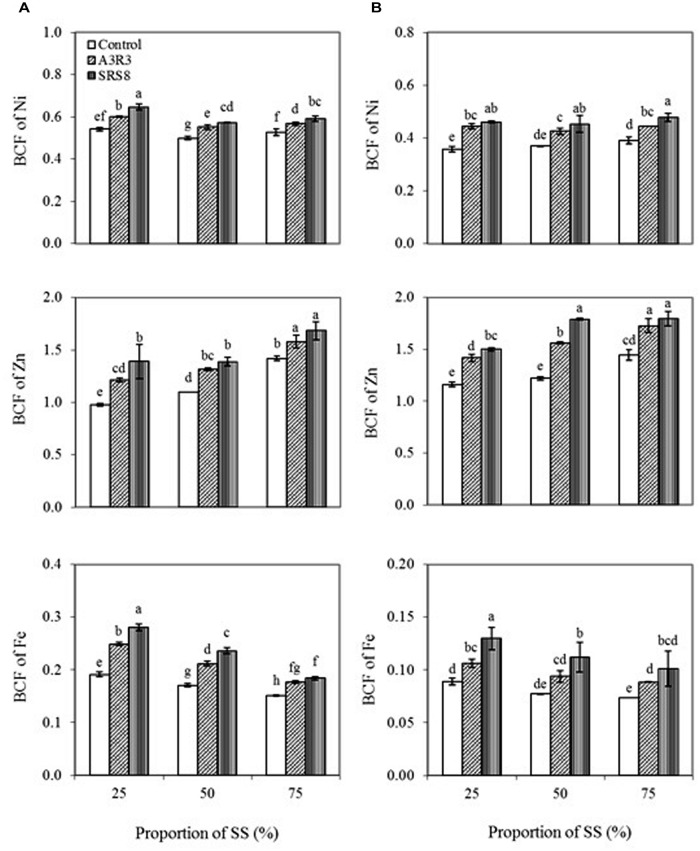
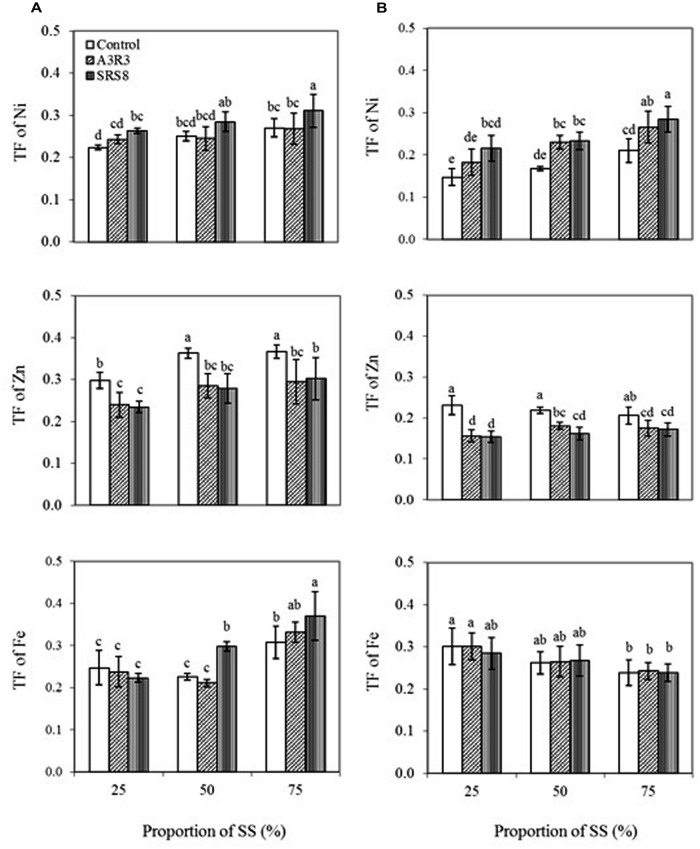
The aim of this study was to assess the effects of inoculation of rhizosphere or endophytic bacteria (Psychrobacter sp. SRS8 and Pseudomonas sp. A3R3, respectively) isolated from a serpentine environment on the plant growth and the translocation and accumulation of Ni, Zn, and Fe by Brassica juncea and Ricinus communis on a multi-metal polluted serpentine soil (SS). Field collected SS was diluted to 0, 25, 50, and 75% with pristine soil in order to obtain a range of heavy metal concentrations and used in microcosm experiments. Regardless of inoculation with bacteria, the biomass of both plant species decreased with increase of the proportion of SS. Inoculation of plants with bacteria significantly increased the plant biomass and the heavy metal accumulation compared with non-inoculated control in the presence of different proportion of SS, which was attributed to the production of plant growth promoting and/or metal mobilizing metabolites by bacteria. However, SRS8 showed a maximum increase in the biomass of the test plants grown even in the treatment of 75% SS. In turn, A3R3 showed maximum effects on the accumulation of heavy metals in both plants. Regardless of inoculation of bacteria and proportion of SS, both plant species exhibited low values of bioconcentration factor (<1) for Ni and Fe. The inoculation of both bacterial strains significantly increased the translocation factor (TF) of Ni while decreasing the TF of Zn in both plant species. Besides this contrasting effect, the TFs of all metals were <1, indicating that all studied bacteria-plant combinations are suitable for phytostabilization. This study demonstrates that the bacterial isolates A3R3 and SRS8 improved the growth of B. juncea and R. communis in SS soils and have a great potential to be used as inoculants in phytostabilization scenarios of multi-metal contaminated soils.
本研究的目的是评估接种从蛇纹石环境中分离出的根际细菌或内生细菌(分别为嗜冷杆菌属SRS8和假单胞菌属A3R3)对芥菜和蓖麻在多金属污染蛇纹石土壤(SS)上的植物生长以及镍、锌和铁的转运与积累的影响。将田间采集的SS与原始土壤按0%、25%、50%和75%的比例稀释,以获得一系列重金属浓度,并用于微观实验。无论是否接种细菌,两种植物的生物量均随SS比例的增加而降低。在存在不同比例SS的情况下,与未接种的对照相比,接种细菌显著增加了植物生物量和重金属积累,这归因于细菌产生促进植物生长和/或活化金属的代谢产物。然而,即使在75% SS处理下,SRS8对受试植物生物量的增加也最为显著。相应地,A3R3对两种植物中重金属的积累影响最大。无论是否接种细菌以及SS的比例如何,两种植物对镍和铁的生物富集系数均较低(<1)。接种两种细菌菌株均显著增加了两种植物中镍的转运系数(TF),同时降低了锌的TF。除了这种对比效应外,所有金属的TF均<1,表明所有研究的细菌 - 植物组合均适用于植物稳定化。本研究表明,分离出的细菌A3R3和SRS8改善了芥菜和蓖麻在SS土壤中的生长,并且在多金属污染土壤的植物稳定化方案中具有作为接种剂使用的巨大潜力。