Wessel Stefan W, van der Mei Henny C, Morando David, Slomp Anje M, van de Belt-Gritter Betsy, Maitra Amarnath, Busscher Henk J
University of Groningen and University Medical Center Groningen, Department of Biomedical Engineering, Groningen, The Netherlands.
William Wrigley, Jr. Company, Chicago, Illinois, United States of America.
PLoS One. 2015 Jan 20;10(1):e0117191. doi: 10.1371/journal.pone.0117191. eCollection 2015.
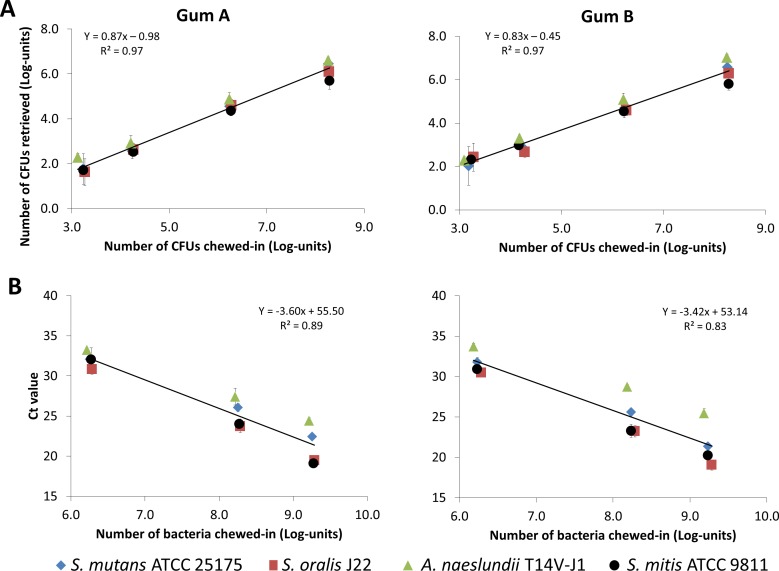
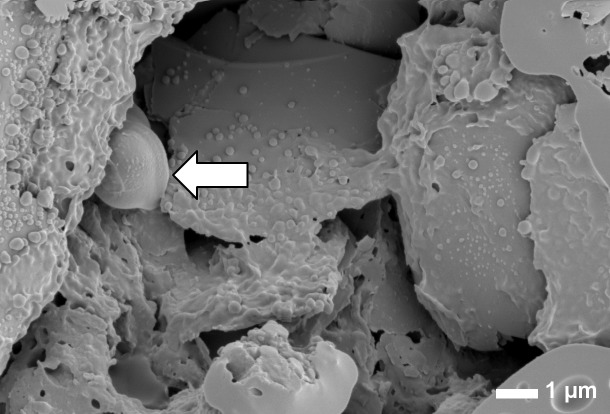
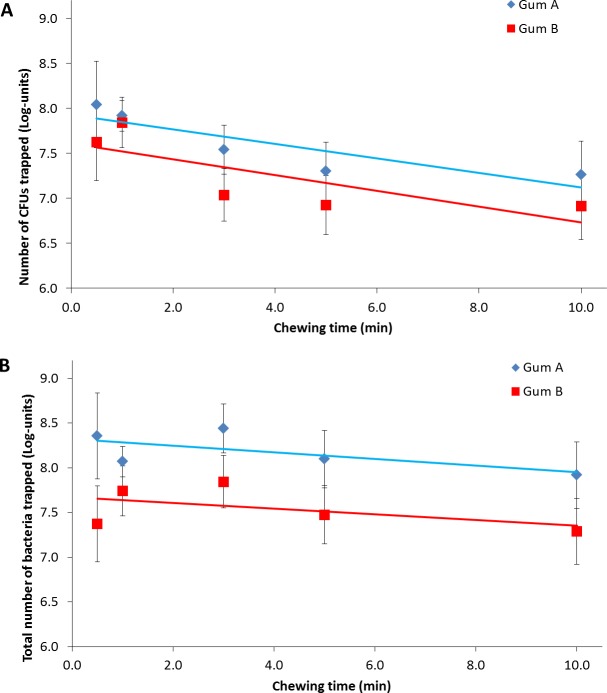
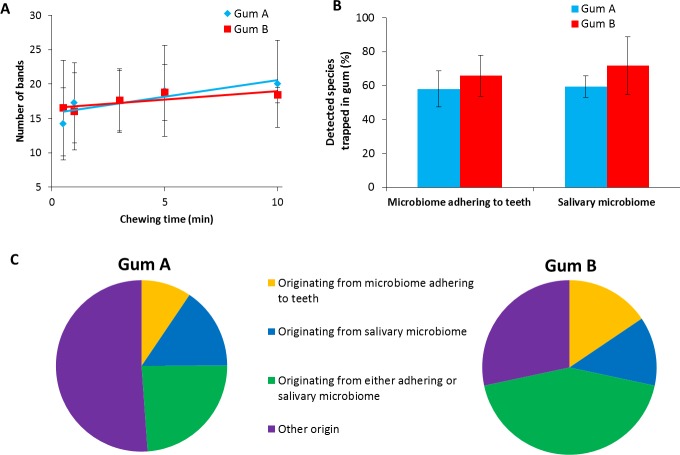
Chewing of gum contributes to the maintenance of oral health. Many oral diseases, including caries and periodontal disease, are caused by bacteria. However, it is unknown whether chewing of gum can remove bacteria from the oral cavity. Here, we hypothesize that chewing of gum can trap bacteria and remove them from the oral cavity. To test this hypothesis, we developed two methods to quantify numbers of bacteria trapped in chewed gum. In the first method, known numbers of bacteria were finger-chewed into gum and chewed gums were molded to standard dimensions, sonicated and plated to determine numbers of colony-forming-units incorporated, yielding calibration curves of colony-forming-units retrieved versus finger-chewed in. In a second method, calibration curves were created by finger-chewing known numbers of bacteria into gum and subsequently dissolving the gum in a mixture of chloroform and tris-ethylenediaminetetraacetic-acid (TE)-buffer. The TE-buffer was analyzed using quantitative Polymerase-Chain-Reaction (qPCR), yielding calibration curves of total numbers of bacteria versus finger-chewed in. Next, five volunteers were requested to chew gum up to 10 min after which numbers of colony-forming-units and total numbers of bacteria trapped in chewed gum were determined using the above methods. The qPCR method, involving both dead and live bacteria yielded higher numbers of retrieved bacteria than plating, involving only viable bacteria. Numbers of trapped bacteria were maximal during initial chewing after which a slow decrease over time up to 10 min was observed. Around 10(8) bacteria were detected per gum piece depending on the method and gum considered. The number of species trapped in chewed gum increased with chewing time. Trapped bacteria were clearly visualized in chewed gum using scanning-electron-microscopy. Summarizing, using novel methods to quantify and qualify oral bacteria trapped in chewed gum, the hypothesis is confirmed that chewing of gum can trap and remove bacteria from the oral cavity.
咀嚼口香糖有助于维持口腔健康。许多口腔疾病,包括龋齿和牙周病,都是由细菌引起的。然而,尚不清楚咀嚼口香糖是否能从口腔中清除细菌。在此,我们假设咀嚼口香糖可以捕获细菌并将其从口腔中清除。为了验证这一假设,我们开发了两种方法来量化咀嚼口香糖中捕获的细菌数量。在第一种方法中,将已知数量的细菌用手指嚼入口香糖中,然后将咀嚼后的口香糖塑造成标准尺寸,进行超声处理并接种培养,以确定掺入的菌落形成单位数量,从而得出回收的菌落形成单位与手指嚼入细菌数量的校准曲线。在第二种方法中,通过将已知数量的细菌用手指嚼入口香糖中,随后将口香糖溶解在氯仿和三羟甲基氨基甲烷 - 乙二胺四乙酸(TE)缓冲液的混合物中,创建校准曲线。使用定量聚合酶链反应(qPCR)分析TE缓冲液,得出细菌总数与手指嚼入细菌数量的校准曲线。接下来,要求五名志愿者咀嚼口香糖长达10分钟,之后使用上述方法确定咀嚼口香糖中捕获的菌落形成单位数量和细菌总数。qPCR方法涉及死菌和活菌,回收的细菌数量比仅涉及活菌的平板接种法更高。捕获的细菌数量在最初咀嚼时最多,之后随着时间的推移缓慢下降,直至10分钟。根据所考虑的方法和口香糖不同,每片口香糖中检测到约10⁸个细菌。咀嚼口香糖中捕获的细菌种类数量随着咀嚼时间的增加而增加。使用扫描电子显微镜可以清晰地观察到咀嚼口香糖中捕获的细菌。总之,通过使用新方法来量化和鉴定咀嚼口香糖中捕获的口腔细菌,证实了咀嚼口香糖可以捕获并从口腔中清除细菌这一假设。