Pérez-Pascual David, Gaudu Philippe, Fleuchot Betty, Besset Colette, Rosinski-Chupin Isabelle, Guillot Alain, Monnet Véronique, Gardan Rozenn
INRA, UMR1319 MICALIS, Jouy-en-Josas, France AgroParistech, UMR MICALIS, Jouy-en-Josas, France
INRA, UMR1319 MICALIS, Jouy-en-Josas, France AgroParistech, UMR MICALIS, Jouy-en-Josas, France.
mBio. 2015 Jan 20;6(1):e02306-14. doi: 10.1128/mBio.02306-14.
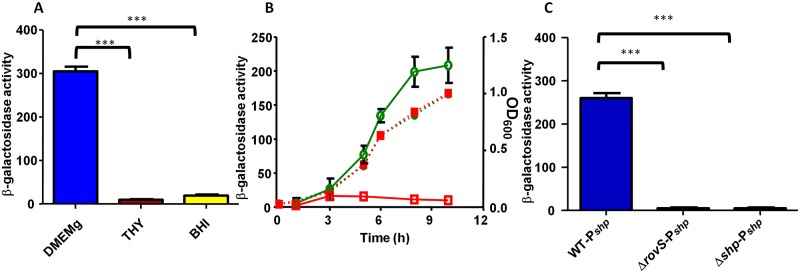
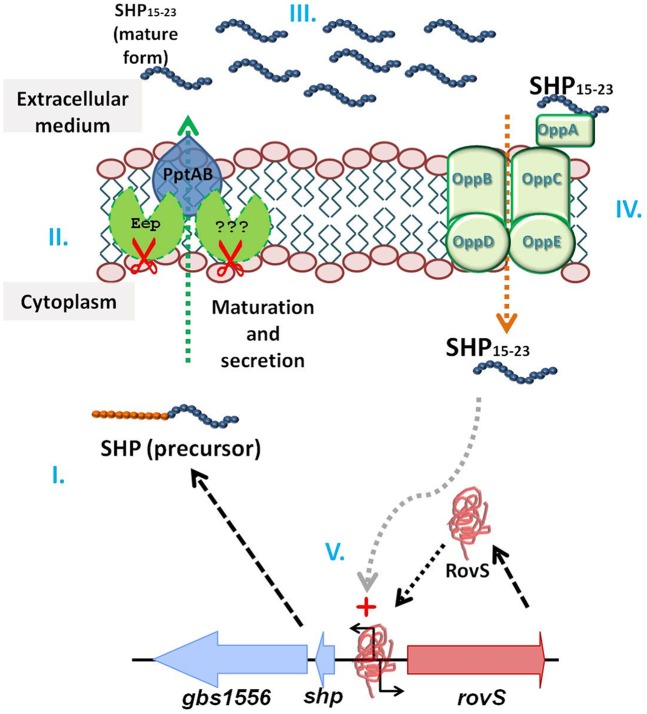
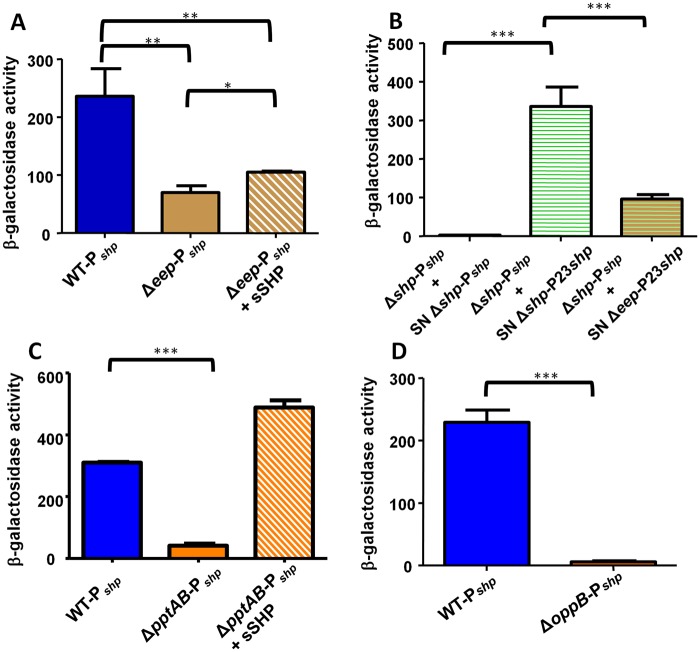
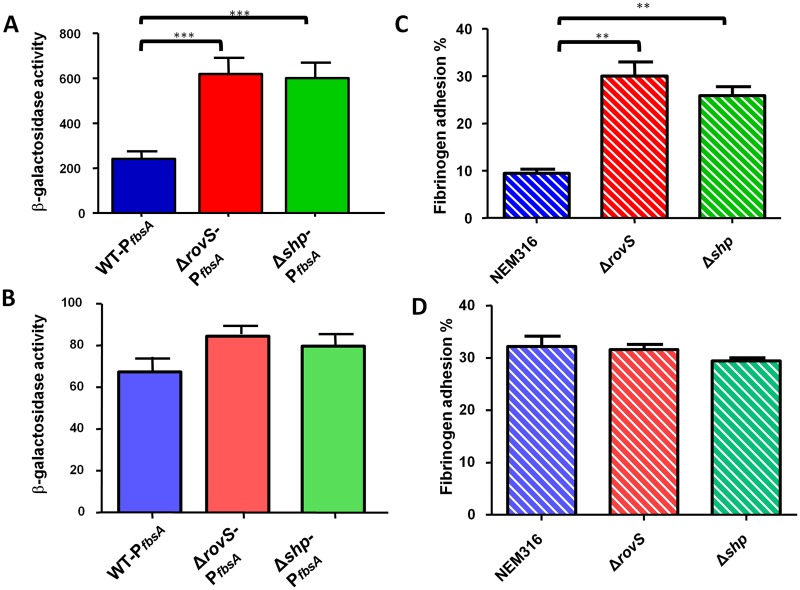
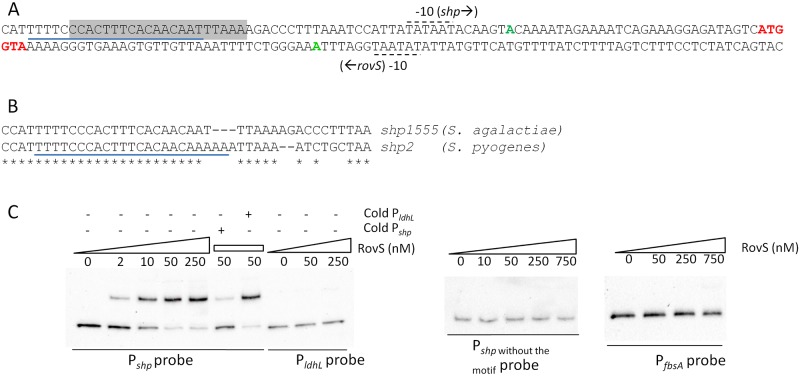
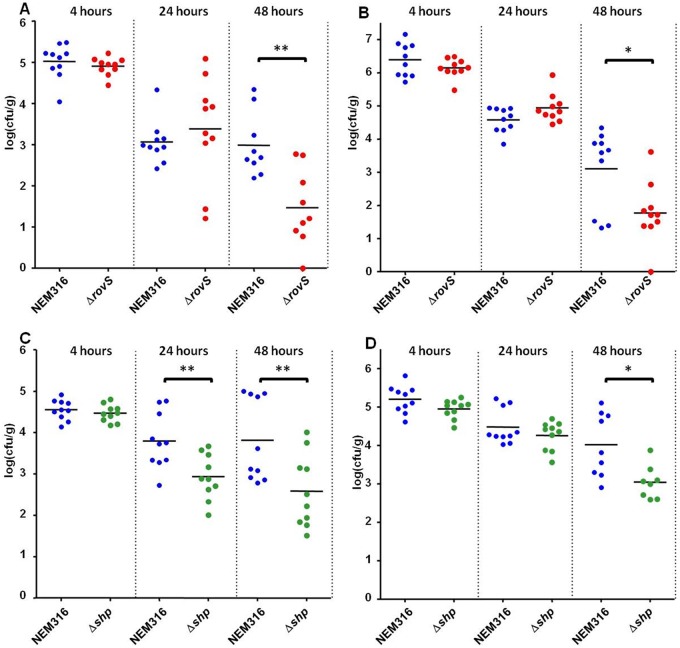
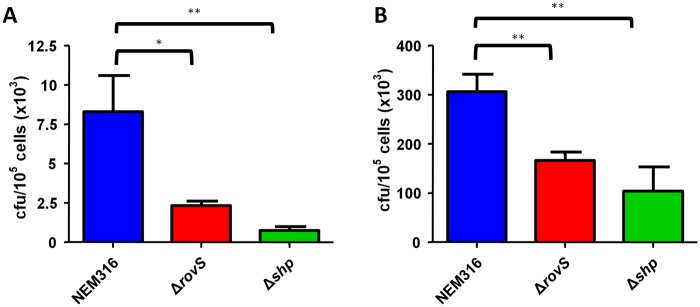
Bacteria can communicate with each other to coordinate their biological functions at the population level. In a previous study, we described a cell-to-cell communication system in streptococci that involves a transcriptional regulator belonging to the Rgg family and short hydrophobic peptides (SHPs) that act as signaling molecules. Streptococcus agalactiae, an opportunistic pathogenic bacterium responsible for fatal infections in neonates and immunocompromised adults, has one copy of the shp/rgg locus. The SHP-associated Rgg is called RovS in S. agalactiae. In this study, we found that the SHP/RovS cell-to-cell communication system is active in the strain NEM316 of S. agalactiae, and we identified different partners that are involved in this system, such as the Eep peptidase, the PptAB, and the OppA1-F oligopeptide transporters. We also identified a new target gene controlled by this system and reexamined the regulation of a previously proposed target gene, fbsA, in the context of the SHP-associated RovS system. Furthermore, our results are the first to indicate the SHP/RovS system specificity to host liver and spleen using a murine model, which demonstrates its implication in streptococci virulence. Finally, we observed that SHP/RovS regulation influences S. agalactiae's ability to adhere to and invade HepG2 hepatic cells. Hence, the SHP/RovS cell-to-cell communication system appears to be an essential mechanism that regulates pathogenicity in S. agalactiae and represents an attractive target for the development of new therapeutic strategies.
Rgg regulators and their cognate pheromones, called small hydrophobic peptides (SHPs), are present in nearly all streptococcal species. The general pathways of the cell-to-cell communication system in which Rgg and SHP take part are well understood. However, many other players remain unidentified, and the direct targets of the system, as well as its link to virulence, remain unclear. Here, we identified the different players involved in the SHP/Rgg system in S. agalactiae, which is the leading agent of severe infections in human newborns. We have identified a direct target of the Rgg regulator in S. agalactiae (called RovS) and examined a previously proposed target, all in the context of associated SHP. For the first time, we have also demonstrated the implication of the SHP/RovS mechanism in virulence, as well as its host organ specificity. Thus, this cell-to-cell communication system may represent a future target for S. agalactiae disease treatment.
细菌能够相互交流,以在群体水平上协调其生物学功能。在之前的一项研究中,我们描述了链球菌中的一种细胞间通讯系统,该系统涉及一个属于Rgg家族的转录调节因子和作为信号分子的短疏水肽(SHP)。无乳链球菌是一种机会致病菌,可导致新生儿和免疫功能低下的成年人发生致命感染,它有一个拷贝的shp/rgg基因座。与SHP相关的Rgg在无乳链球菌中被称为RovS。在本研究中,我们发现SHP/RovS细胞间通讯系统在无乳链球菌NEM316菌株中是活跃的,并且我们鉴定出了参与该系统的不同伙伴,如Eep肽酶、PptAB和OppA1-F寡肽转运体。我们还鉴定出了受该系统控制的一个新靶基因,并在与SHP相关的RovS系统背景下重新审视了之前提出的一个靶基因fbsA的调控。此外,我们的结果首次使用小鼠模型表明了SHP/RovS系统对宿主肝脏和脾脏的特异性,这证明了其在链球菌毒力中的作用。最后,我们观察到SHP/RovS调控影响无乳链球菌黏附和侵袭HepG2肝细胞的能力。因此,SHP/RovS细胞间通讯系统似乎是调节无乳链球菌致病性的一种重要机制,并且是开发新治疗策略的一个有吸引力的靶点。
Rgg调节因子及其同源信息素,即小疏水肽(SHP),几乎存在于所有链球菌物种中。Rgg和SHP参与的细胞间通讯系统的一般途径已得到充分了解。然而,许多其他参与者仍未被鉴定出来,该系统的直接靶点及其与毒力的联系仍不清楚。在这里,我们鉴定出了无乳链球菌中参与SHP/Rgg系统的不同参与者,无乳链球菌是人类新生儿严重感染的主要病原体。我们鉴定出了无乳链球菌中Rgg调节因子(称为RovS)的一个直接靶点,并在相关SHP的背景下研究了一个之前提出的靶点。我们还首次证明了SHP/RovS机制在毒力中的作用及其宿主器官特异性。因此,这种细胞间通讯系统可能代表了未来治疗无乳链球菌疾病的一个靶点。