Dagleish Mark P, Martin Stuart, Steele Philip, Finlayson Jeanie, Eaton Samantha L, Sisó Sílvia, Stewart Paula, Fernández-Borges Natalia, Hamilton Scott, Pang Yvonne, Chianini Francesca, Reid Hugh W, Goldmann Wilfred, González Lorenzo, Castilla Joaquín, Jeffrey Martin
Moredun Research Institute, Pentlands Science Park, Bush Loan, Penicuik, Near Edinburgh EH26 0PZ, United Kingdom.
Animal Health & Veterinary Laboratories Agency Lasswade, Pentlands Science Park, Bush Loan, Penicuik, Near Edinburgh EH26 0PZ, United Kingdom.
PLoS One. 2015 Jan 23;10(1):e0116094. doi: 10.1371/journal.pone.0116094. eCollection 2015.
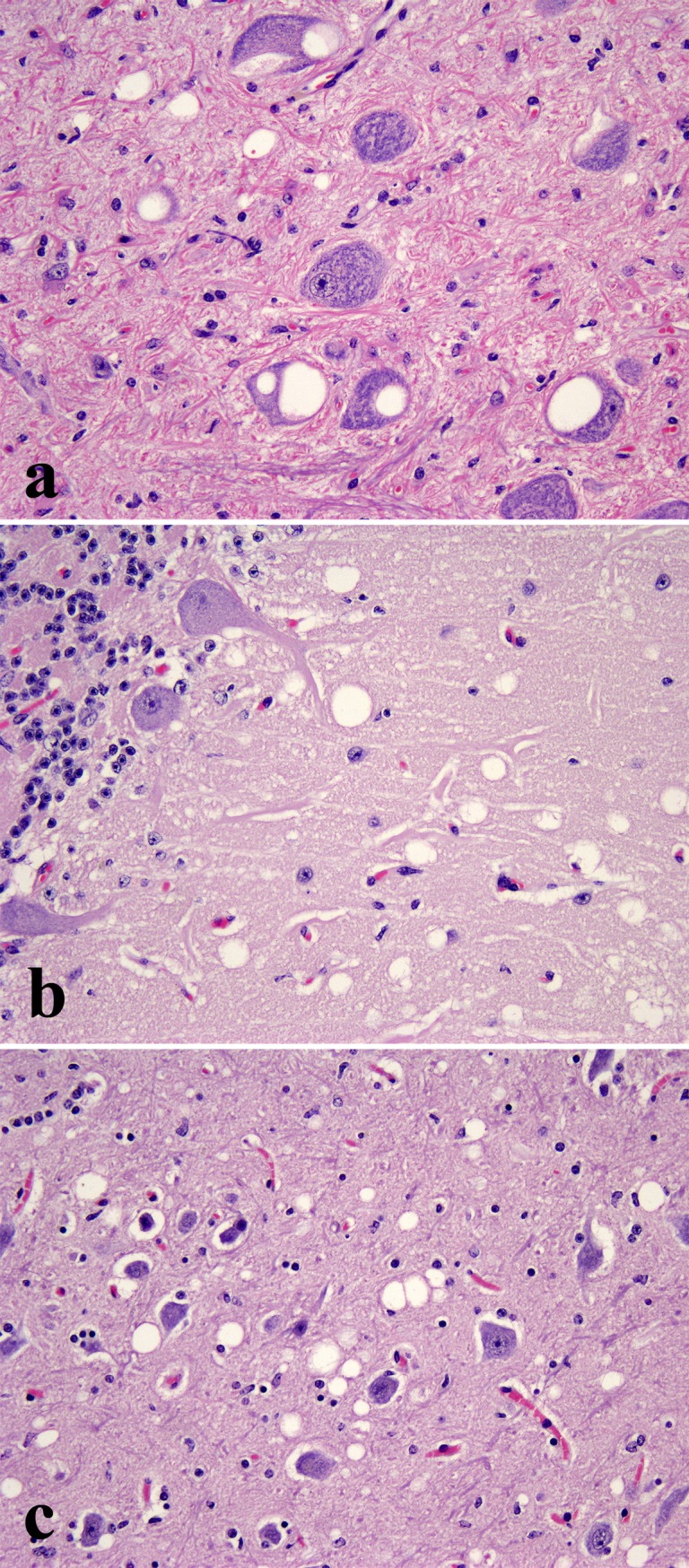
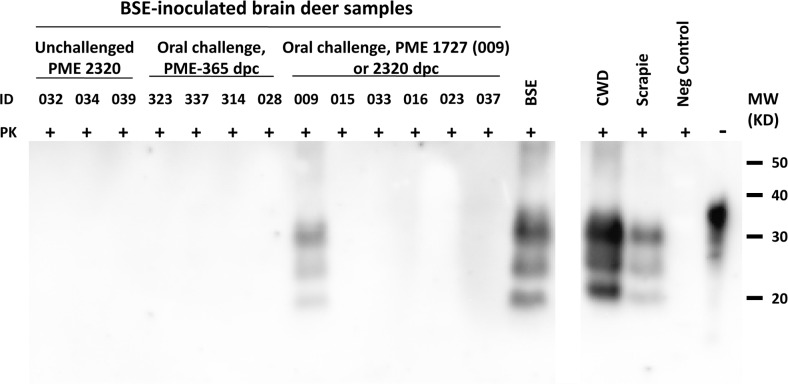
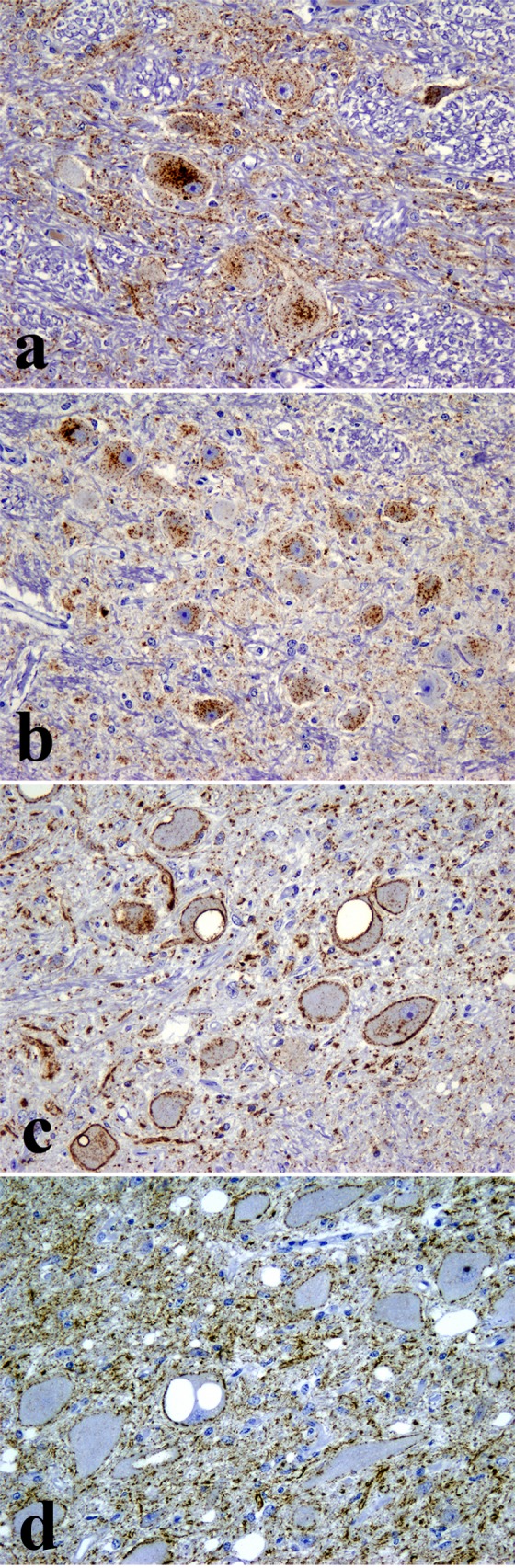
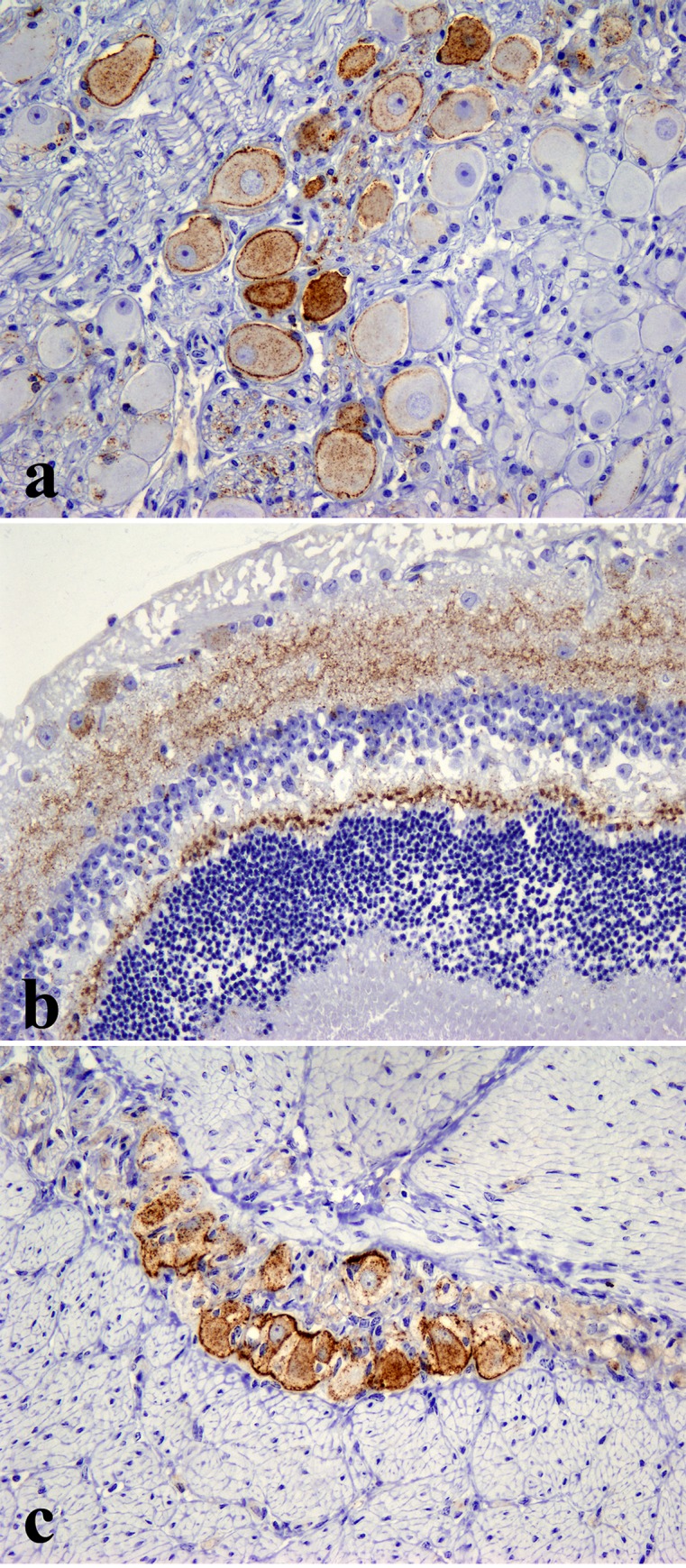
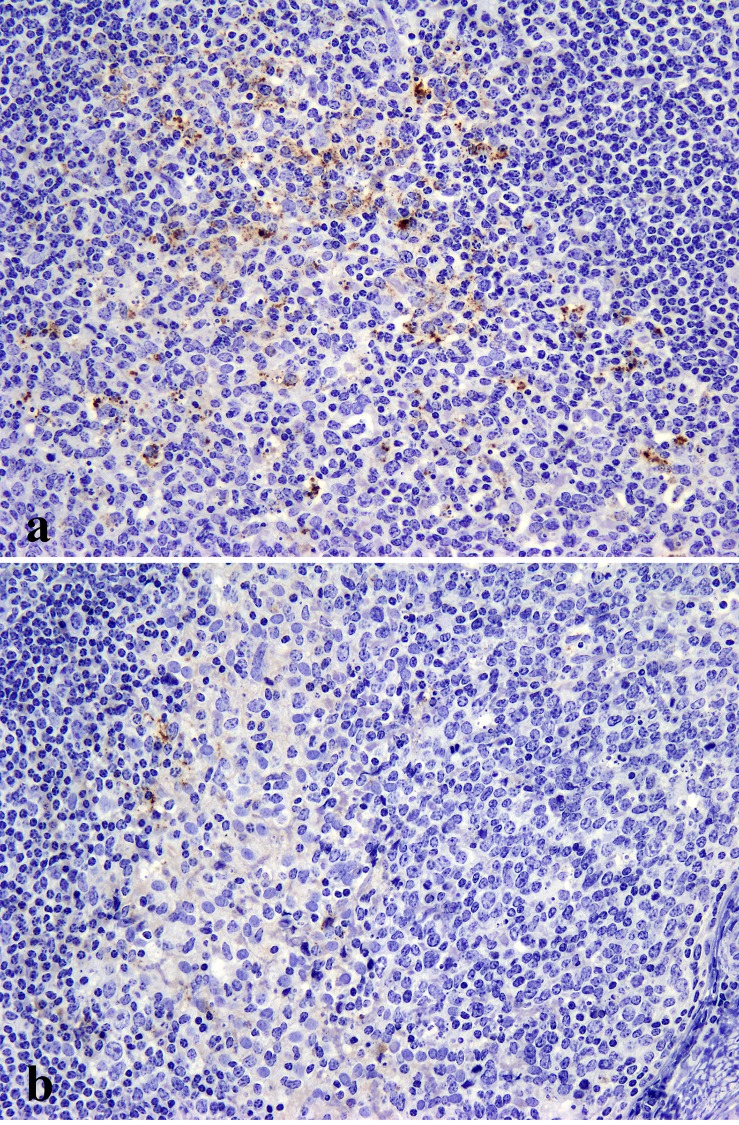
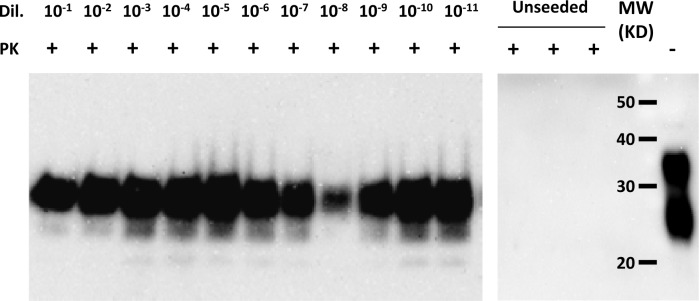
European red deer (Cervus elaphus elaphus) are susceptible to the agent of bovine spongiform encephalopathy, one of the transmissible spongiform encephalopathies, when challenged intracerebrally but their susceptibility to alimentary challenge, the presumed natural route of transmission, is unknown. To determine this, eighteen deer were challenged via stomach tube with a large dose of the bovine spongiform encephalopathy agent and clinical signs, gross and histological lesions, presence and distribution of abnormal prion protein and the attack rate recorded. Only a single animal developed clinical disease, and this was acute with both neurological and respiratory signs, at 1726 days post challenge although there was significant (27.6%) weight loss in the preceding 141 days. The clinically affected animal had histological lesions of vacuolation in the neuronal perikaryon and neuropil, typical of transmissible spongiform encephalopathies. Abnormal prion protein, the diagnostic marker of transmissible encephalopathies, was primarily restricted to the central and peripheral nervous systems although a very small amount was present in tingible body macrophages in the lymphoid patches of the caecum and colon. Serial protein misfolding cyclical amplification, an in vitro ultra-sensitive diagnostic technique, was positive for neurological tissue from the single clinically diseased deer. All other alimentary challenged deer failed to develop clinical disease and were negative for all other investigations. These findings show that transmission of bovine spongiform encephalopathy to European red deer via the alimentary route is possible but the transmission rate is low. Additionally, when deer carcases are subjected to the same regulations that ruminants in Europe with respect to the removal of specified offal from the human food chain, the zoonotic risk of bovine spongiform encephalopathy, the cause of variant Creutzfeldt-Jakob disease, from consumption of venison is probably very low.
欧洲马鹿(Cervus elaphus elaphus)在脑内接种时,对牛海绵状脑病病原体(一种可传播的海绵状脑病病原体)易感,但它们对经消化道感染(推测的自然传播途径)的易感性尚不清楚。为了确定这一点,通过胃管给18只鹿大剂量接种牛海绵状脑病病原体,并记录临床症状、大体和组织学病变、异常朊病毒蛋白的存在和分布以及发病率。只有一只动物出现临床疾病,且在接种后1726天出现急性神经和呼吸症状,不过在之前的141天体重显著减轻(27.6%)。临床患病动物具有神经元胞体和神经纤维网空泡化的组织学病变,这是可传播海绵状脑病的典型特征。异常朊病毒蛋白是可传播脑病的诊断标志物,主要局限于中枢和外周神经系统,尽管在盲肠和结肠淋巴小结的噬血细胞中有极少量存在。连续蛋白质错误折叠循环扩增(一种体外超灵敏诊断技术)对这只临床患病鹿的神经组织呈阳性。所有其他经消化道接种的鹿均未出现临床疾病,且所有其他检查均为阴性。这些发现表明,牛海绵状脑病通过消化道途径传播给欧洲马鹿是可能的,但传播率很低。此外,当鹿 carcasses 遵循与欧洲反刍动物相同的规定,即从人类食物链中去除特定内脏时,食用鹿肉感染作为变异型克雅氏病病因的牛海绵状脑病的人畜共患病风险可能非常低。