Cottier Fabien, Tan Alrina Shin Min, Chen Jinmiao, Lum Josephine, Zolezzi Francesca, Poidinger Michael, Pavelka Norman
Singapore Immunology Network (SIgN), Agency for Science, Technology and Research (A*STAR), Singapore 138648, Singapore.
Singapore Immunology Network (SIgN), Agency for Science, Technology and Research (A*STAR), Singapore 138648, Singapore Department of Biological Sciences, National University of Singapore, Singapore 117543, Singapore.
G3 (Bethesda). 2015 Jan 29;5(4):497-505. doi: 10.1534/g3.114.015941.
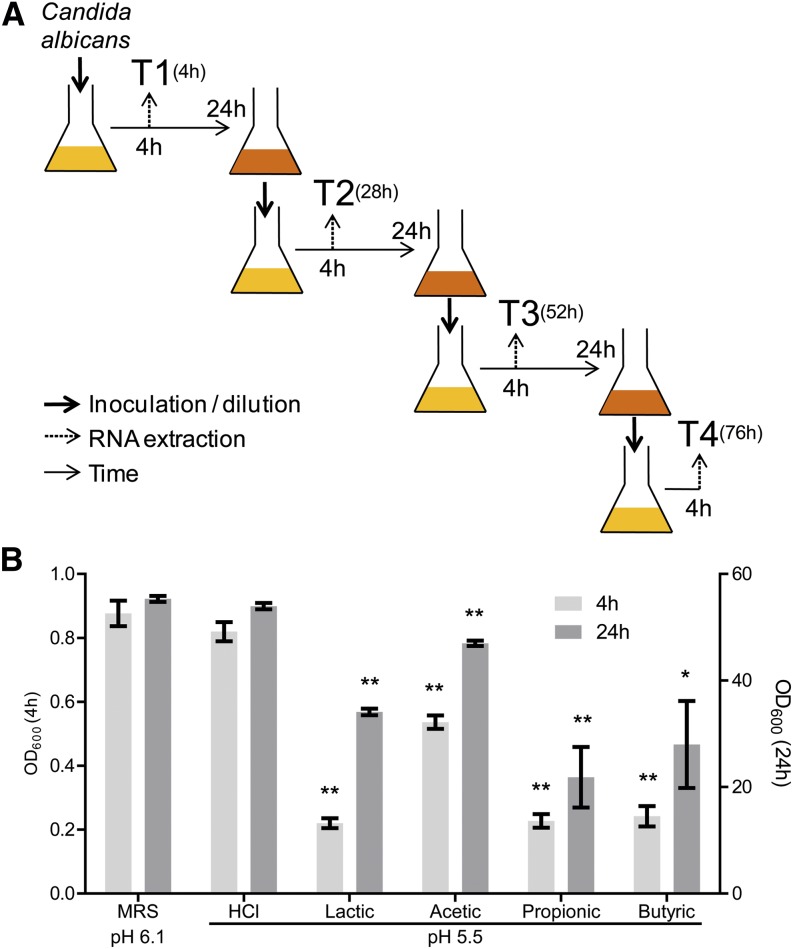
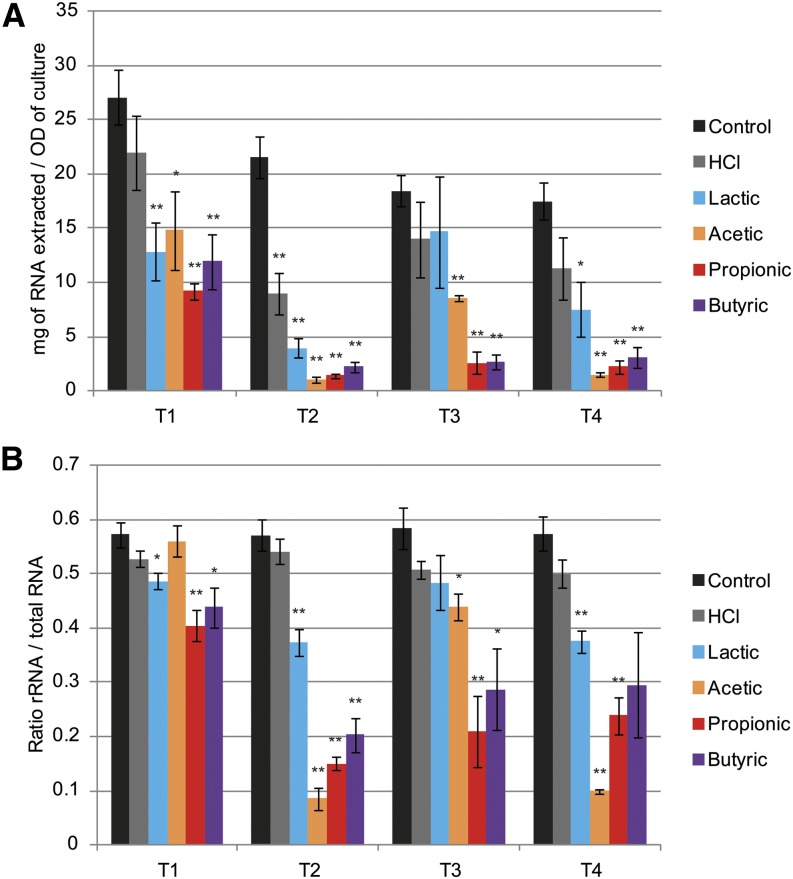
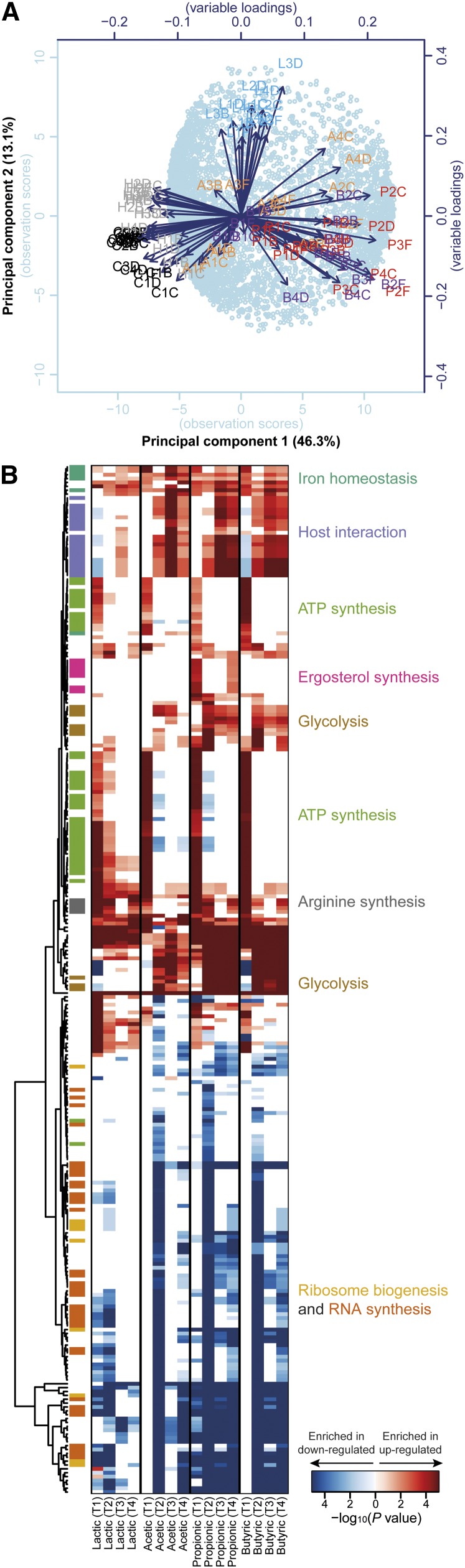
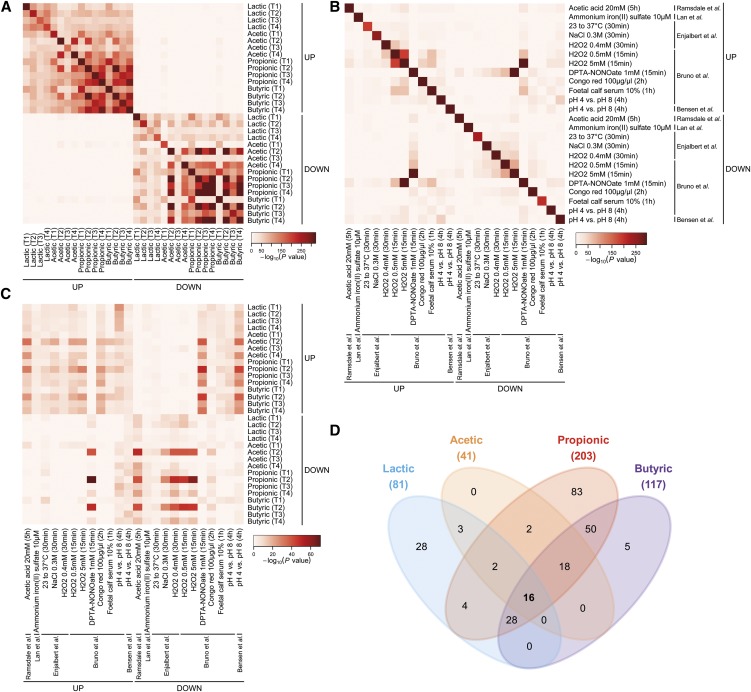
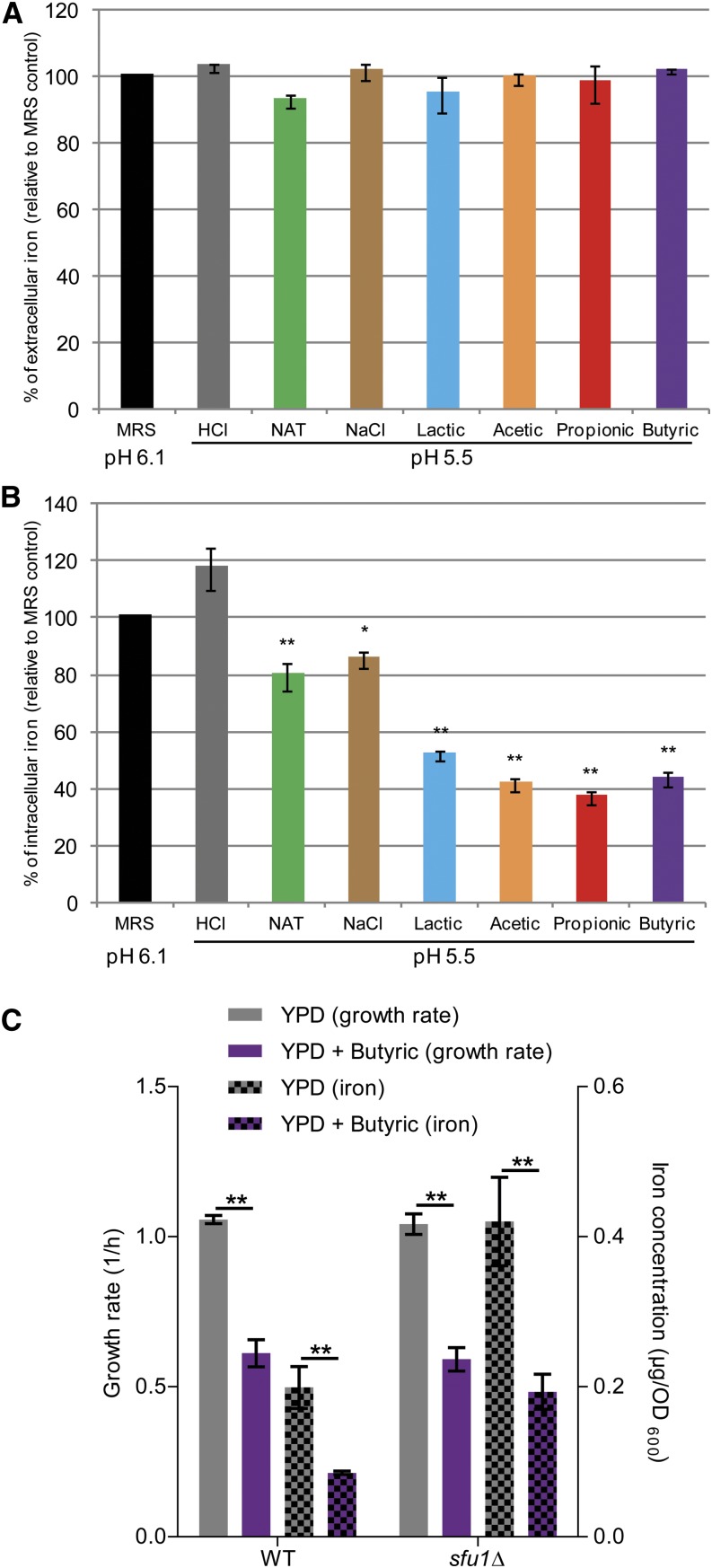
Candida albicans is the most important fungal pathogen of humans, causing severe infections, especially in nosocomial and immunocompromised settings. However, it is also the most prevalent fungus of the normal human microbiome, where it shares its habitat with hundreds of trillions of other microbial cells. Despite weak organic acids (WOAs) being among the most abundant metabolites produced by bacterial microbiota, little is known about their effect on C. albicans. Here we used a sequencing-based profiling strategy to systematically investigate the transcriptional stress response of C. albicans to lactic, acetic, propionic, and butyric acid at several time points after treatment. Our data reveal a complex transcriptional response, with individual WOAs triggering unique gene expression profiles and with important differences between acute and chronic exposure. Despite these dissimilarities, we found significant overlaps between the gene expression changes induced by each WOA, which led us to uncover a core transcriptional response that was largely unrelated to other previously published C. albicans transcriptional stress responses. Genes commonly up-regulated by WOAs were enriched in several iron transporters, which was associated with an overall decrease in intracellular iron concentrations. Moreover, chronic exposure to any WOA lead to down-regulation of RNA synthesis and ribosome biogenesis genes, which resulted in significant reduction of total RNA levels and of ribosomal RNA in particular. In conclusion, this study suggests that gastrointestinal microbiota might directly influence C. albicans physiology via production of WOAs, with possible implications of how this fungus interacts with its host in both health and disease.
白色念珠菌是人类最重要的真菌病原体,可引发严重感染,尤其是在医院环境和免疫功能低下的情况下。然而,它也是正常人类微生物群中最普遍的真菌,与数万亿其他微生物细胞共同栖息。尽管弱酸(WOAs)是细菌微生物群产生的最丰富的代谢产物之一,但人们对它们对白色念珠菌的影响知之甚少。在这里,我们使用基于测序的分析策略,系统地研究了白色念珠菌在处理后几个时间点对乳酸、乙酸、丙酸和丁酸的转录应激反应。我们的数据揭示了一种复杂的转录反应,每种弱酸都会触发独特的基因表达谱,急性和慢性暴露之间存在重要差异。尽管存在这些差异,但我们发现每种弱酸诱导的基因表达变化之间存在显著重叠,这使我们发现了一种核心转录反应,该反应在很大程度上与之前发表的其他白色念珠菌转录应激反应无关。弱酸通常上调的基因在几种铁转运蛋白中富集,这与细胞内铁浓度的总体下降有关。此外,长期暴露于任何一种弱酸都会导致RNA合成和核糖体生物发生基因的下调,从而导致总RNA水平尤其是核糖体RNA的显著降低。总之,这项研究表明,胃肠道微生物群可能通过产生弱酸直接影响白色念珠菌的生理功能,这可能对这种真菌在健康和疾病状态下与宿主的相互作用方式产生影响。