Youngstrom Daniel W, Rajpar Ibtesam, Kaplan David L, Barrett Jennifer G
Program in Biomedical and Veterinary Sciences, Marion duPont Scott Equine Medical Center, Virginia-Maryland College of Veterinary Medicine, Virginia Tech, Leesburg, Virginia.
J Orthop Res. 2015 Jun;33(6):911-8. doi: 10.1002/jor.22848. Epub 2015 Apr 28.
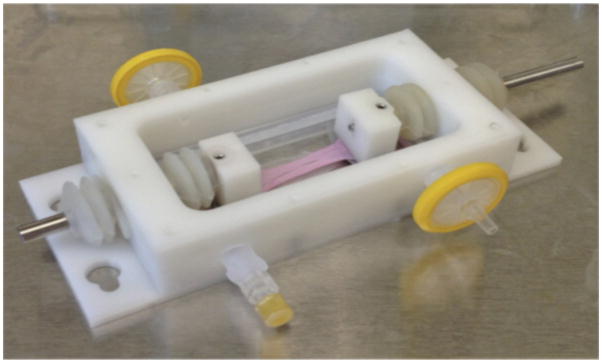
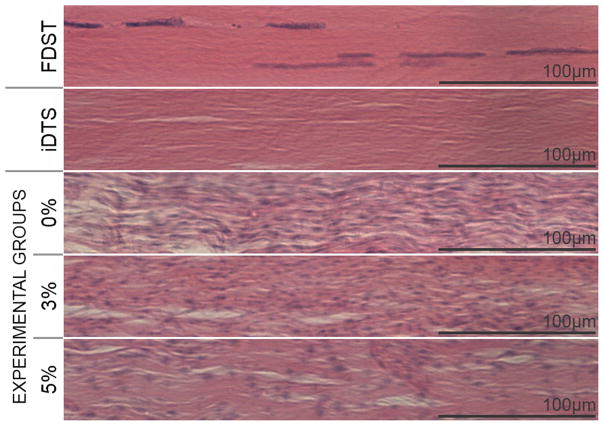
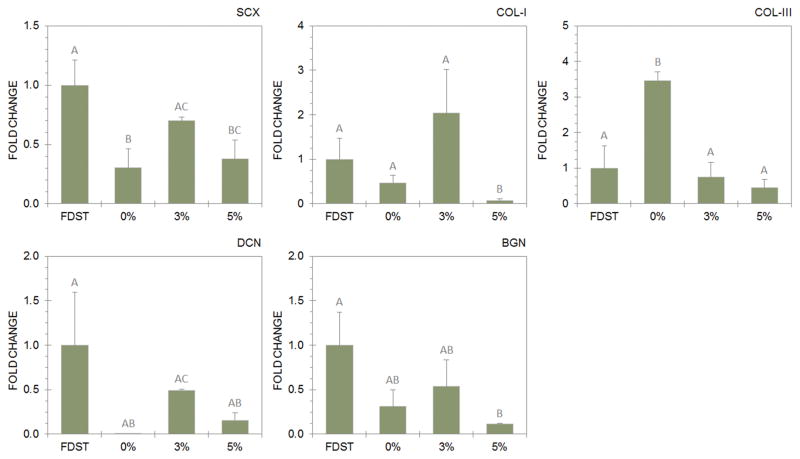
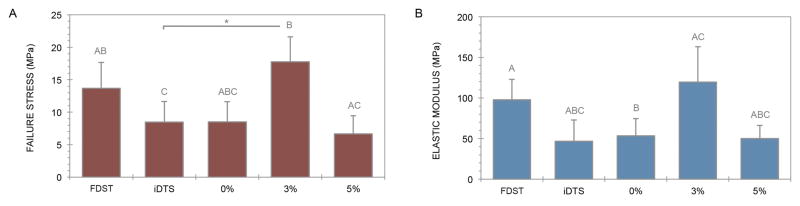
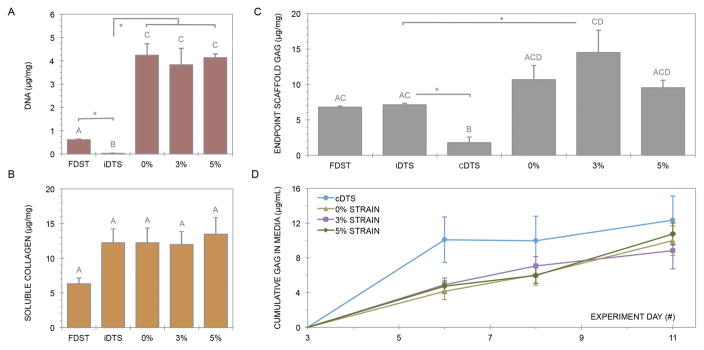
There is significant clinical demand for functional tendon grafts in human and veterinary medicine. Tissue engineering techniques combining cells, scaffolds, and environmental stimuli may circumvent the shortcomings of traditional transplantation processes. In this study, the influence of cyclic mechanical stimulation on graft maturation and cellular phenotype was assessed in an equine model. Decellularized tendon scaffolds from four equine sources were seeded with syngeneic bone marrow-derived mesenchymal stem cells and subjected to 0%, 3%, or 5% strain at 0.33 Hz for up to 1 h daily for 11 days. Cells cultured at 3% strain integrated deep into their scaffolds, altered extracellular matrix composition, adopted tendon-like gene expression profiles, and increased construct elastic modulus and ultimate tensile strength to native levels. This bioreactor protocol is therefore suitable for cultivating replacement tendon material or as an in vitro model for studying differentiation of stem cells toward tendon.
在人类和兽医学中,功能性肌腱移植物存在着巨大的临床需求。结合细胞、支架和环境刺激的组织工程技术可能会规避传统移植过程的缺点。在本研究中,在马模型中评估了周期性机械刺激对移植物成熟和细胞表型的影响。从四个马源获取的脱细胞肌腱支架接种同基因骨髓间充质干细胞,并在0.33Hz频率下分别施加0%、3%或5%的应变,每天最多1小时,持续11天。在3%应变下培养的细胞深入整合到其支架中,改变了细胞外基质组成,呈现出肌腱样基因表达谱,并将构建体的弹性模量和极限拉伸强度提高到天然水平。因此,这种生物反应器方案适用于培养替代肌腱材料或作为研究干细胞向肌腱分化的体外模型。