Schmidt Nathan W, Agak George W, Deshayes Stephanie, Yu Yang, Blacker Alyssa, Champer Jackson, Xian Wujing, Kasko Andrea M, Kim Jenny, Wong Gerard C L
Department of Bioengineering, University of California, Los Angeles, California, USA; Department of Chemistry and Biochemistry, University of California, Los Angeles, California, USA.
Division of Dermatology, David Geffen School of Medicine at UCLA, Los Angeles, California, USA.
J Invest Dermatol. 2015 Jun;135(6):1581-1589. doi: 10.1038/jid.2015.40. Epub 2015 Feb 10.
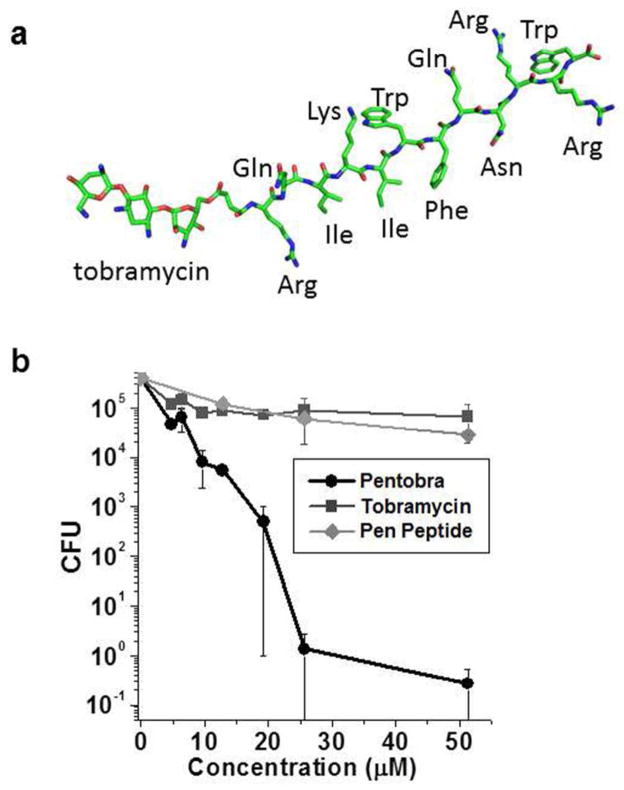
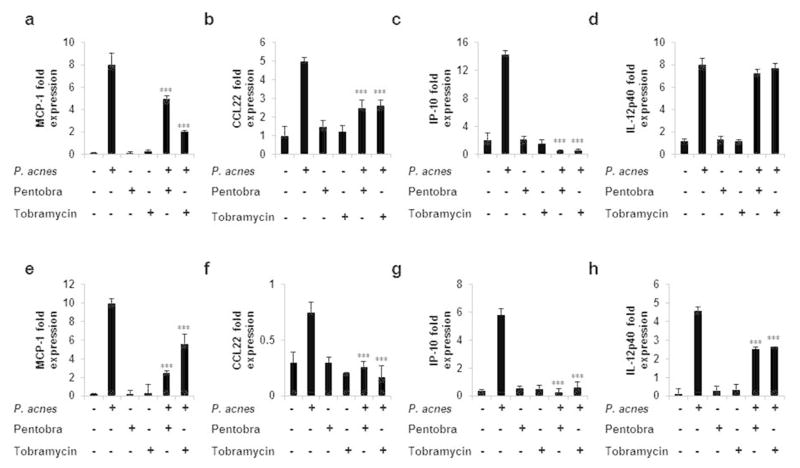
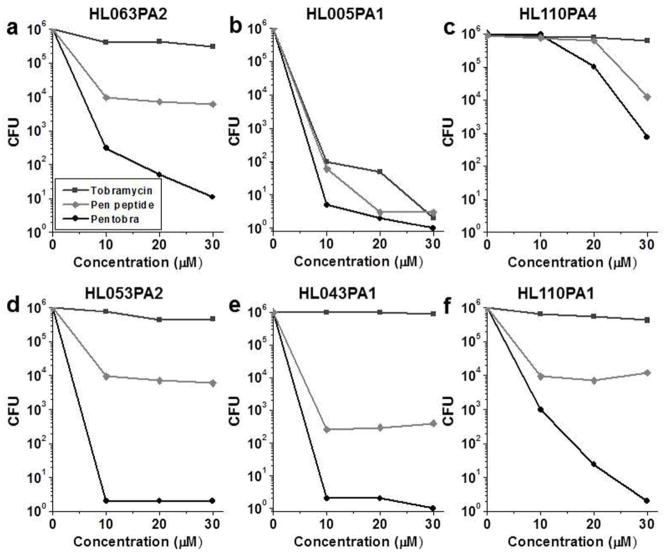
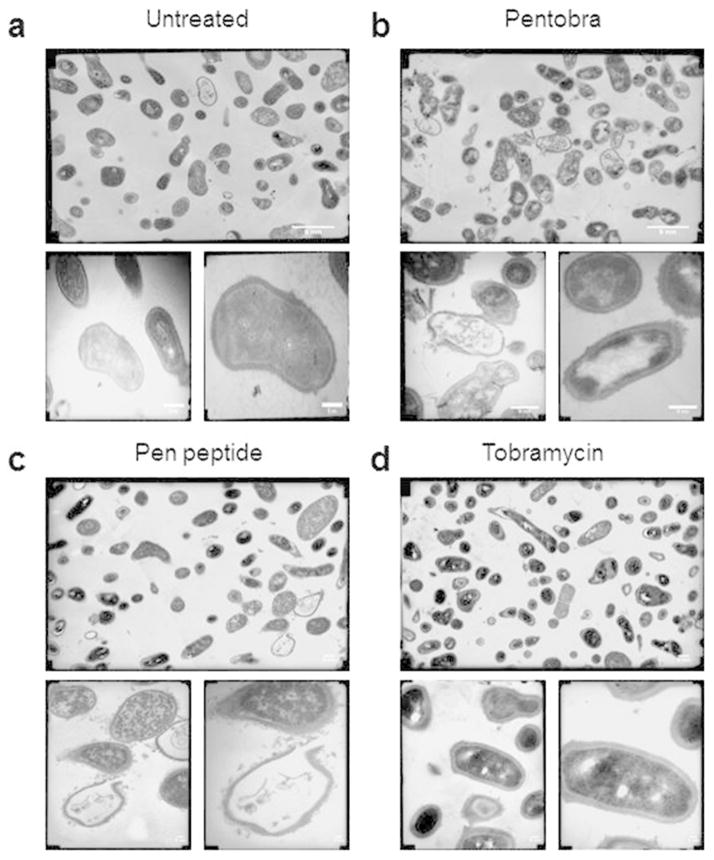
Although antibiotics are a common treatment for acne, the difficulties inherent to effective antimicrobial penetration in sebum and selective antimicrobial action in the skin are compounded by increasing resistance of Propionibacterium acnes clinical isolates. To address these problems, we engineered Pentobra, a peptide-aminoglycoside molecule that has multiple mechanisms of antibacterial action and investigated whether it can be a potential candidate for the treatment of acne. Pentobra combines the potent ribosomal activity of aminoglycosides with the bacteria-selective membrane-permeabilizing abilities of antimicrobial peptides. Pentobra demonstrated potent and selective killing of P. acnes but not against human skin cells in vitro. In direct comparison, Pentobra demonstrated bactericidal activity and drastically outperformed free tobramycin (by 5-7 logs) against multiple P. acnes clinical strains. Moreover, electron microscopic studies showed that Pentobra had robust membrane activity, as treatment with Pentobra killed P. acnes cells and caused leakage of intracellular contents. Pentobra may also have potential anti-inflammatory effects as demonstrated by suppression of some P. acnes-induced chemokines. Importantly, the killing activity was maintained in sebaceous environments as Pentobra was bactericidal against clinical isolates in comedones extracts isolated from human donors. Our work demonstrates that equipping aminoglycosides with selective membrane activity is a viable approach for developing antibiotics against P. acnes that are effective in cutaneous environments.
尽管抗生素是治疗痤疮的常用药物,但由于痤疮丙酸杆菌临床分离株的耐药性不断增加,皮脂中有效抗菌渗透和皮肤中选择性抗菌作用所固有的困难更加复杂。为了解决这些问题,我们设计了一种具有多种抗菌作用机制的肽 - 氨基糖苷分子Pentobra,并研究了它是否可能成为治疗痤疮的潜在候选药物。Pentobra将氨基糖苷类的强大核糖体活性与抗菌肽的细菌选择性膜通透能力结合在一起。Pentobra在体外对痤疮丙酸杆菌表现出强大且选择性的杀伤作用,但对人皮肤细胞无此作用。直接比较表明,Pentobra对多种痤疮丙酸杆菌临床菌株具有杀菌活性,并且大大优于游离妥布霉素(高出5至7个对数)。此外,电子显微镜研究表明Pentobra具有强大的膜活性,因为用Pentobra处理会杀死痤疮丙酸杆菌细胞并导致细胞内内容物泄漏。如对一些痤疮丙酸杆菌诱导的趋化因子的抑制所示,Pentobra可能还具有潜在的抗炎作用。重要的是,在皮脂腺环境中仍保持杀伤活性,因为Pentobra对从人类供体分离的粉刺提取物中的临床分离株具有杀菌作用。我们的工作表明,赋予氨基糖苷类选择性膜活性是开发在皮肤环境中有效的抗痤疮丙酸杆菌抗生素的可行方法。