Palma Angelina S, Liu Yan, Zhang Hongtao, Zhang Yibing, McCleary Barry V, Yu Guangli, Huang Qilin, Guidolin Leticia S, Ciocchini Andres E, Torosantucci Antonella, Wang Denong, Carvalho Ana Luísa, Fontes Carlos M G A, Mulloy Barbara, Childs Robert A, Feizi Ten, Chai Wengang
From the ‡Glycosciences Laboratory, Department of Medicine, Imperial College London, United Kingdom; §UCIBIO-REQUIMTE, Department of Chemistry, Faculty of Science and Technology, NOVA University of Lisbon;
From the ‡Glycosciences Laboratory, Department of Medicine, Imperial College London, United Kingdom;
Mol Cell Proteomics. 2015 Apr;14(4):974-88. doi: 10.1074/mcp.M115.048272. Epub 2015 Feb 10.
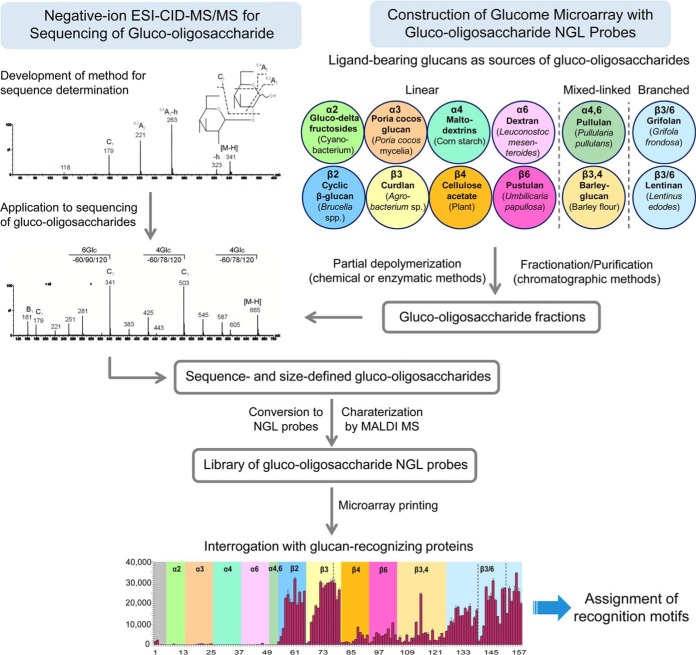
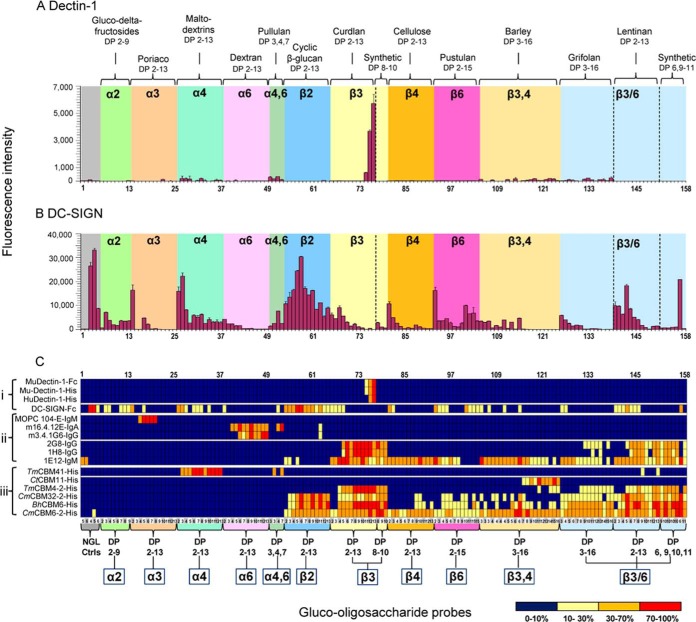
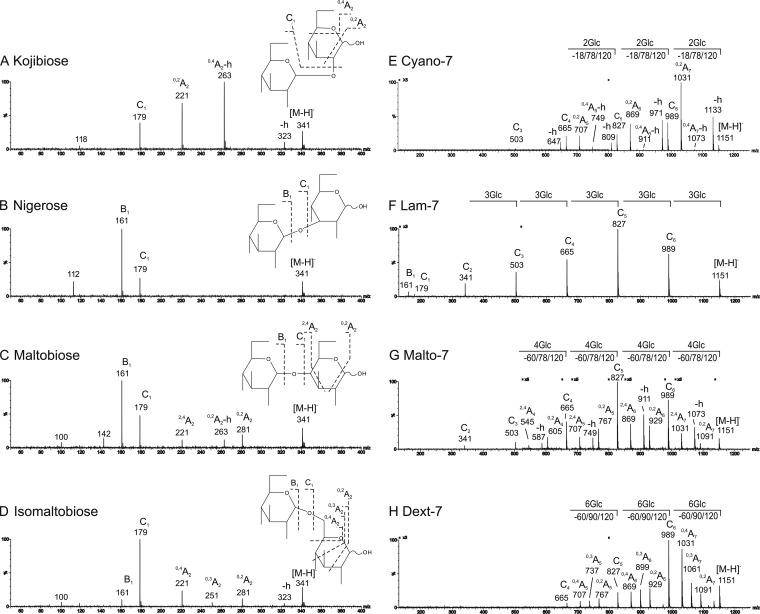
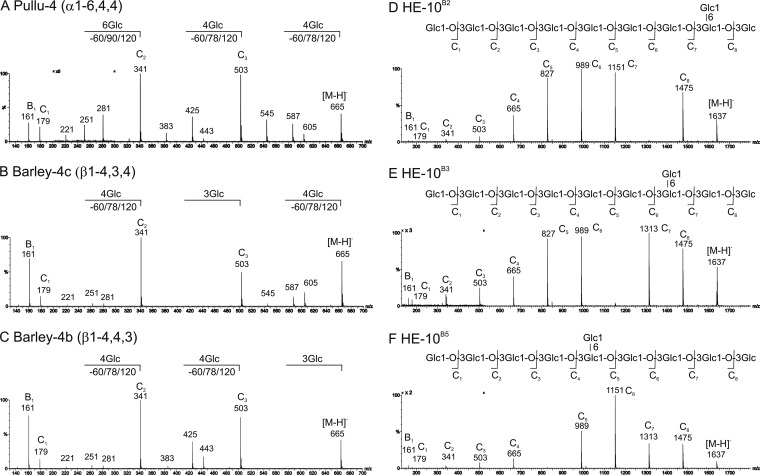
Glucans are polymers of d-glucose with differing linkages in linear or branched sequences. They are constituents of microbial and plant cell-walls and involved in important bio-recognition processes, including immunomodulation, anticancer activities, pathogen virulence, and plant cell-wall biodegradation. Translational possibilities for these activities in medicine and biotechnology are considerable. High-throughput micro-methods are needed to screen proteins for recognition of specific glucan sequences as a lead to structure-function studies and their exploitation. We describe construction of a "glucome" microarray, the first sequence-defined glycome-scale microarray, using a "designer" approach from targeted ligand-bearing glucans in conjunction with a novel high-sensitivity mass spectrometric sequencing method, as a screening tool to assign glucan recognition motifs. The glucome microarray comprises 153 oligosaccharide probes with high purity, representing major sequences in glucans. Negative-ion electrospray tandem mass spectrometry with collision-induced dissociation was used for complete linkage analysis of gluco-oligosaccharides in linear "homo" and "hetero" and branched sequences. The system is validated using antibodies and carbohydrate-binding modules known to target α- or β-glucans in different biological contexts, extending knowledge on their specificities, and applied to reveal new information on glucan recognition by two signaling molecules of the immune system against pathogens: Dectin-1 and DC-SIGN. The sequencing of the glucan oligosaccharides by the MS method and their interrogation on the microarrays provides detailed information on linkage, sequence and chain length requirements of glucan-recognizing proteins, and are a sensitive means of revealing unsuspected sequences in the polysaccharides.
葡聚糖是由d-葡萄糖通过线性或分支序列中的不同连接方式形成的聚合物。它们是微生物和植物细胞壁的组成成分,并参与重要的生物识别过程,包括免疫调节、抗癌活性、病原体毒力和植物细胞壁生物降解。这些活性在医学和生物技术中的转化潜力巨大。需要高通量微方法来筛选蛋白质,以识别特定的葡聚糖序列,从而开展结构-功能研究及其应用。我们描述了一种“葡聚糖组”微阵列的构建,这是首个序列定义的糖组规模微阵列,采用了一种“设计”方法,从带有靶向配体的葡聚糖出发,结合一种新型高灵敏度质谱测序方法,作为一种筛选工具来确定葡聚糖识别基序。该葡聚糖组微阵列包含153个高纯度寡糖探针,代表了葡聚糖中的主要序列。采用负离子电喷雾串联质谱结合碰撞诱导解离技术,对线性“同型”和“异型”以及分支序列中的葡糖寡糖进行完整的连接分析。使用已知在不同生物学背景下靶向α-或β-葡聚糖的抗体和碳水化合物结合模块对该系统进行了验证,扩展了对它们特异性的认识,并将其应用于揭示免疫系统针对病原体的两种信号分子:Dectin-1和DC-SIGN对葡聚糖识别的新信息。通过质谱方法对葡聚糖寡糖进行测序,并在微阵列上对其进行检测,可提供有关葡聚糖识别蛋白的连接、序列和链长要求的详细信息,并且是揭示多糖中未被怀疑序列的灵敏手段。