Casas-Agustench Patricia, Fernandes Flavia S, Tavares do Carmo Maria G, Visioli Francesco, Herrera Emilio, Dávalos Alberto
Laboratory of Disorders of Lipid Metabolism and Molecular Nutrition, Madrid Institute for Advanced Studies (IMDEA)-Food, CEI UAM+CSIC, Madrid, Spain.
Instituto de Nutrição Josué de Castro, Universidade Federal do Rio de Janeiro, Rio de Janeiro, Brazil.
PLoS One. 2015 Feb 11;10(2):e0117858. doi: 10.1371/journal.pone.0117858. eCollection 2015.
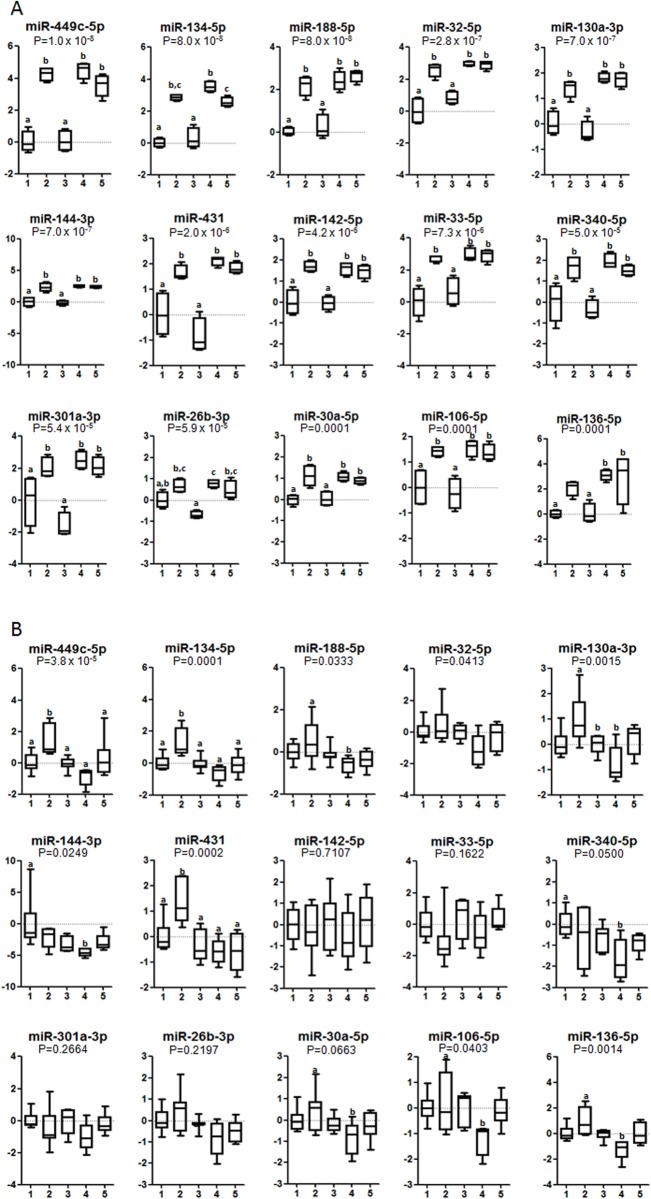
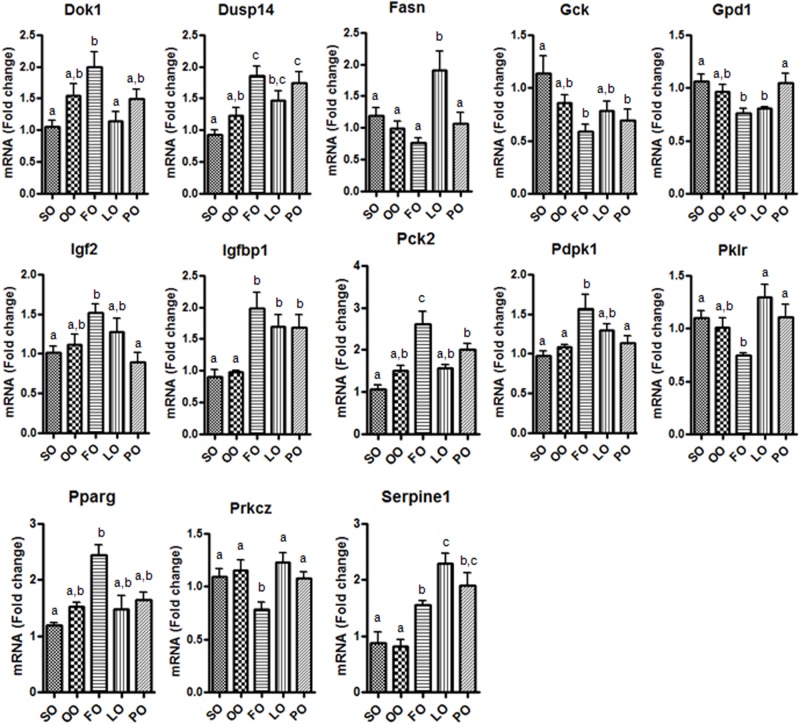
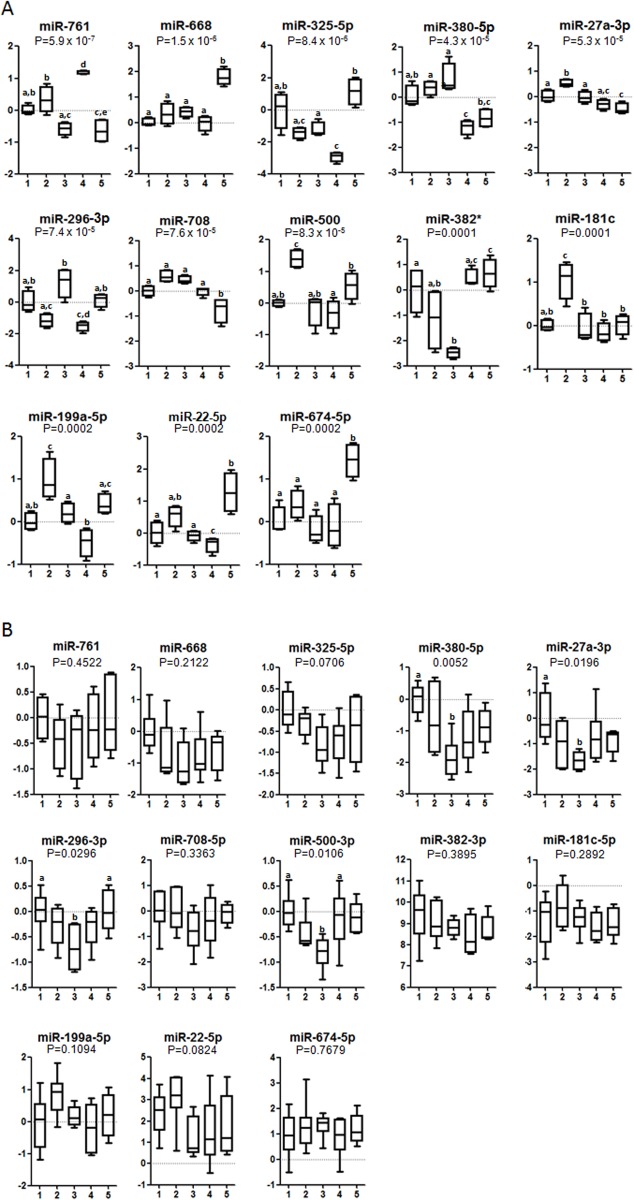
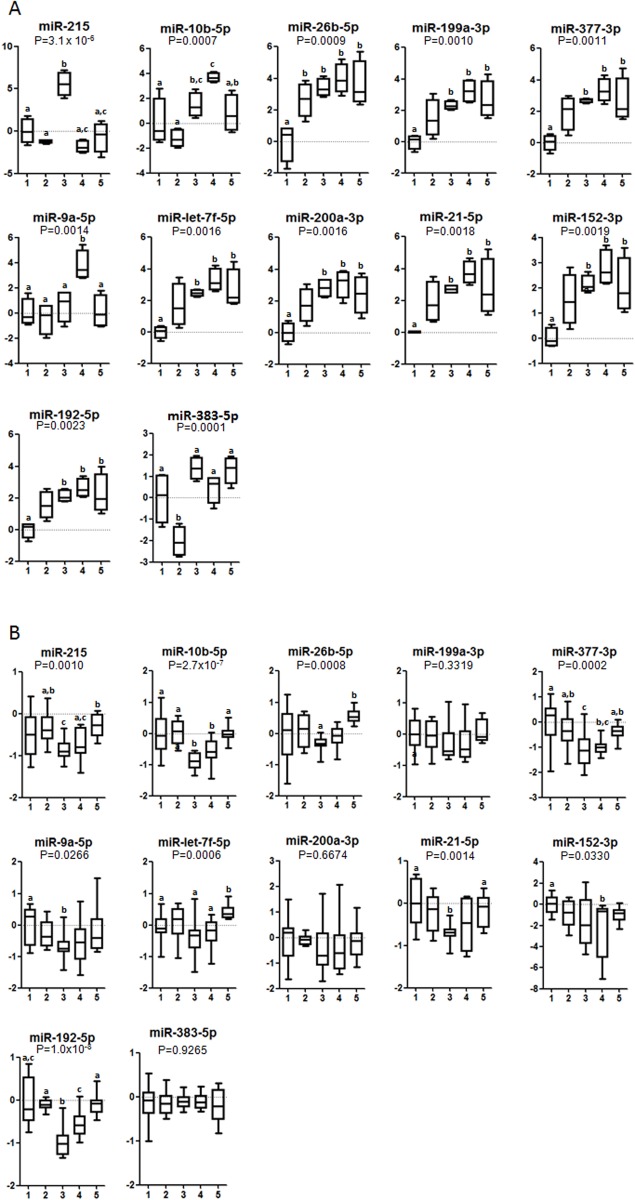
Diet during pregnancy and lactation influences the offspring's health in the long-term. Indeed, human epidemiological studies and animal experiments suggest that different type of fatty acids consumption during pregnancy affect offspring development and susceptibility to metabolic disorders. Epigenetic changes are thought to be elicited by dietary factors during critical timing of development. microRNAs (miRNAs) are versatile regulators of gene expression. Thus, we aimed to determine the influence of different fatty acids on miRNA expression in offspring when given during early pregnancy. We fed pregnant either soybean (SO), olive (OO), fish (FO), linseed (LO), or palm-oil (PO) diets from conception to day 12 of gestation; and standard diet thereafter. miRNA expression was assessed in liver an adipose tissue of pregnant rats and their virgin counterparts. While liver concentrations of fatty acids in pregnant or virgin rats replicated those of the diets consumed during early pregnancy, their pups' liver tissue marginally reflected those of the respective experimental feeds. By contrast, the liver fatty acid profile of adult offsprings was similar, regardless of the diet fed during gestation. Different parental miRNAs were modulated by the different type of fatty acid: in adult offspring, miR-215, miR-10b, miR-26, miR-377-3p, miR-21, and miR-192 among others, were differentially modulated by the different fatty acids fed during early pregnancy. Overall, our results show that maternal consumption of different types of fatty acids during early pregnancy influences miRNA expression in both maternal and offspring tissues, which may epigenetically explain the long-term phenotypic changes of the offspring.
孕期和哺乳期的饮食会长期影响后代的健康。事实上,人类流行病学研究和动物实验表明,孕期摄入不同类型的脂肪酸会影响后代的发育以及对代谢紊乱的易感性。人们认为,在发育的关键时期,饮食因素会引发表观遗传变化。微小RNA(miRNA)是基因表达的多功能调节因子。因此,我们旨在确定孕早期给予不同脂肪酸对后代miRNA表达的影响。我们在受孕至妊娠第12天期间,给怀孕大鼠喂食大豆(SO)、橄榄油(OO)、鱼类(FO)、亚麻籽(LO)或棕榈油(PO)饮食;之后喂食标准饮食。对怀孕大鼠及其未孕同窝大鼠的肝脏和脂肪组织中的miRNA表达进行了评估。虽然怀孕或未孕大鼠肝脏中的脂肪酸浓度与孕早期所摄入饮食中的脂肪酸浓度一致,但其幼崽肝脏组织仅略微反映了各自实验饲料中的脂肪酸浓度。相比之下,成年后代的肝脏脂肪酸谱相似,无论孕期喂食何种饮食。不同类型的脂肪酸对不同的亲本miRNA有调节作用:在成年后代中,miR-215、miR-10b、miR-26、miR-377-3p、miR-21和miR-192等,在孕早期喂食不同脂肪酸后受到了不同的调节。总体而言,我们的结果表明,孕早期母体摄入不同类型的脂肪酸会影响母体和后代组织中的miRNA表达,这可能从表观遗传学角度解释后代的长期表型变化。