Departments of Medicine ; Microbiology and Molecular Genetics.
Chemistry , University of California, Irvine.
Open Forum Infect Dis. 2014 Sep 18;1(2):ofu085. doi: 10.1093/ofid/ofu085. eCollection 2014 Sep.
Analysis of volatile organic chemicals in breath holds promise for noninvasive diagnosis and monitoring of patients, but investigation of this in experimental mouse models has been limited. Of particular interest is endogenous production of carbon monoxide as a biomarker of inflammation and, more particularly, during sepsis.
Using a nose-only collection procedure for unanesthetized individual adult mice and sensitive gas chromatography of carbon monoxide (CO) and carbon dioxide (CO2) of sampled breath, we investigated the responses of mice to one-time injections with different doses of purified Escherichia coli lipopolysaccharide. Two strains of mice were examined: BALB/c and C3H, including an endotoxin-resistant mutant (HeJ) as well as the wild type (HOuJ).
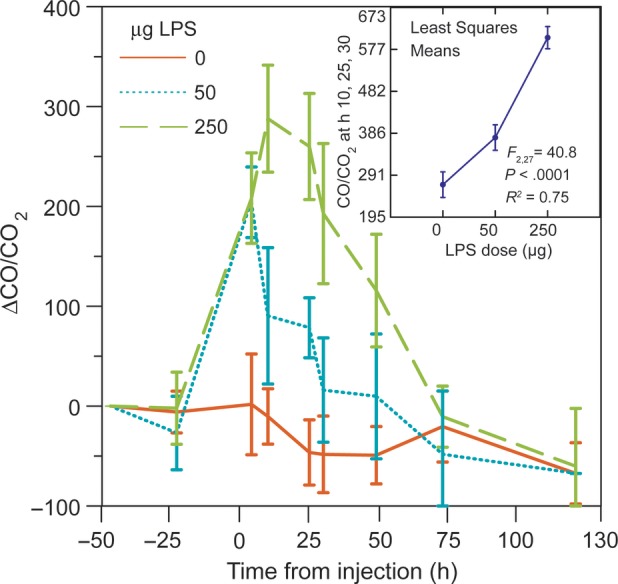
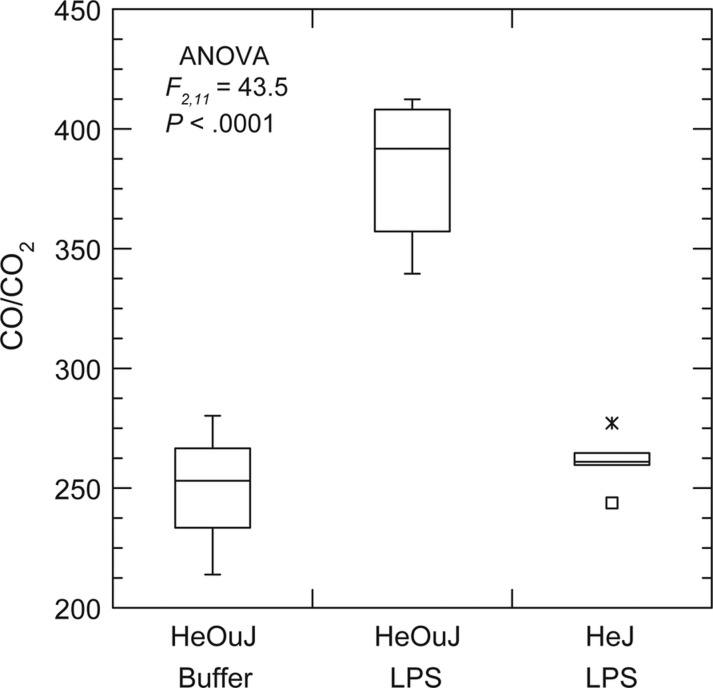
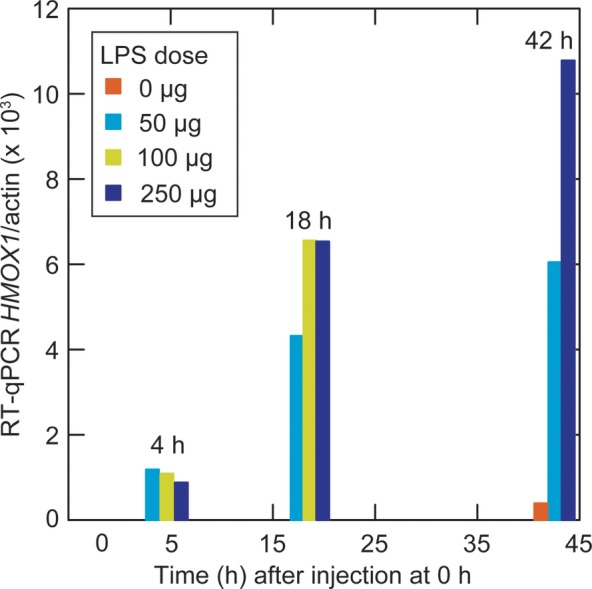
The CO to CO2 ratio increased in a dose-responsive manner within hours in treated BALC/c mice but not control mice. The CO/CO2 values declined to the range of control mice within 48-72 h after the injection of lipopolysaccharide. Breath CO/CO2 values correlated with systemic inflammation biomarkers in serum and heme oxygenase-1 gene expression in blood. C3H/HOuJ mice, but not the HeJ mice, had similar increases of the CO/CO2 ratio in response to the endotoxin.
Carbon monoxide concentrations in exhaled breath of at least 2 strains of mice increase in response to single injections of endotoxin. The magnitude of increase was similar to what was observed with a bacteremia model. These findings with an experimental model provide a rationale for further studies of normalized CO concentrations in human breath as an informative biomarker for staging and monitoring of sepsis.
分析呼出气中的挥发性有机化合物有望实现对患者的非侵入性诊断和监测,但在实验性小鼠模型中对此进行的研究有限。特别感兴趣的是内源性一氧化碳的产生作为炎症的生物标志物,更具体地说是在脓毒症期间。
使用一种针对未麻醉的成年小鼠的仅鼻采集程序,并对采样呼出气中的一氧化碳(CO)和二氧化碳(CO2)进行灵敏的气相色谱分析,我们研究了小鼠对不同剂量纯化大肠杆菌脂多糖一次性注射的反应。检查了两种品系的小鼠:BALB/c 和 C3H,包括内毒素抗性突变体(HeJ)以及野生型(HOuJ)。
在处理的 BALC/c 小鼠中,CO 与 CO2 的比值在数小时内呈剂量依赖性增加,但在对照小鼠中则没有。在注射脂多糖后 48-72 小时内,CO/CO2 值下降到对照小鼠的范围内。呼吸 CO/CO2 值与血清中的全身炎症生物标志物和血液中的血红素加氧酶-1 基因表达相关。C3H/HOuJ 小鼠,而不是 HeJ 小鼠,对内毒素的反应具有相似的 CO/CO2 比值增加。
至少两种小鼠品系的呼出气体中的一氧化碳浓度在单次注射内毒素后增加。增加的幅度与菌血症模型相似。这些实验模型的发现为进一步研究归一化 CO 浓度作为脓毒症分期和监测的有意义的生物标志物提供了依据。