Stavenhagen Kathrin, Kolarich Daniel, Wuhrer Manfred
Division of BioAnalytical Chemistry, VU University Amsterdam, De Boelelaan 1083, 1081 HV Amsterdam, The Netherlands.
Department of Biomolecular Systems, Max Planck Institute of Colloids and Interfaces, Wissenschaftspark Potsdam-Golm, Am Mühlenberg 1 OT Golm, 14242 Potsdam, Germany.
Chromatographia. 2015;78(5-6):307-320. doi: 10.1007/s10337-014-2813-7. Epub 2014 Dec 9.
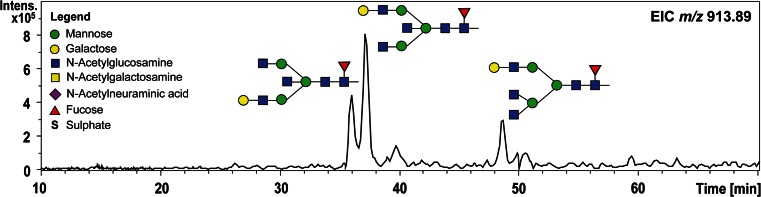
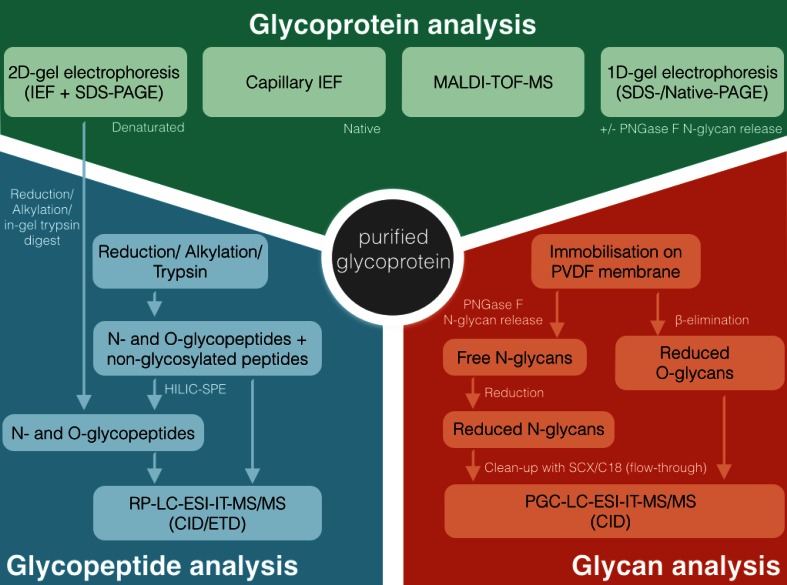
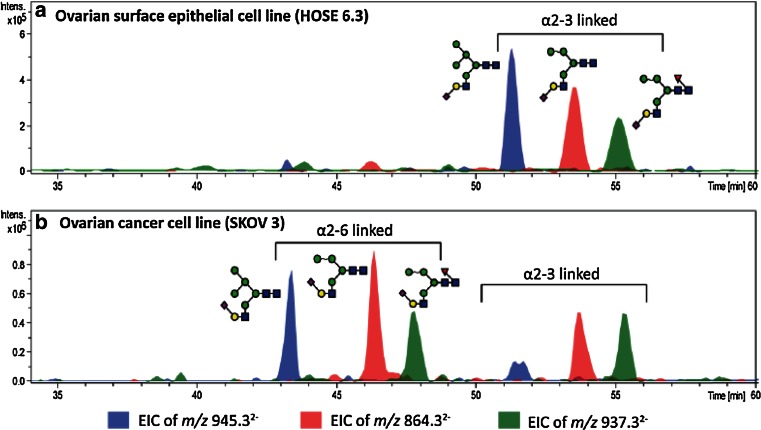
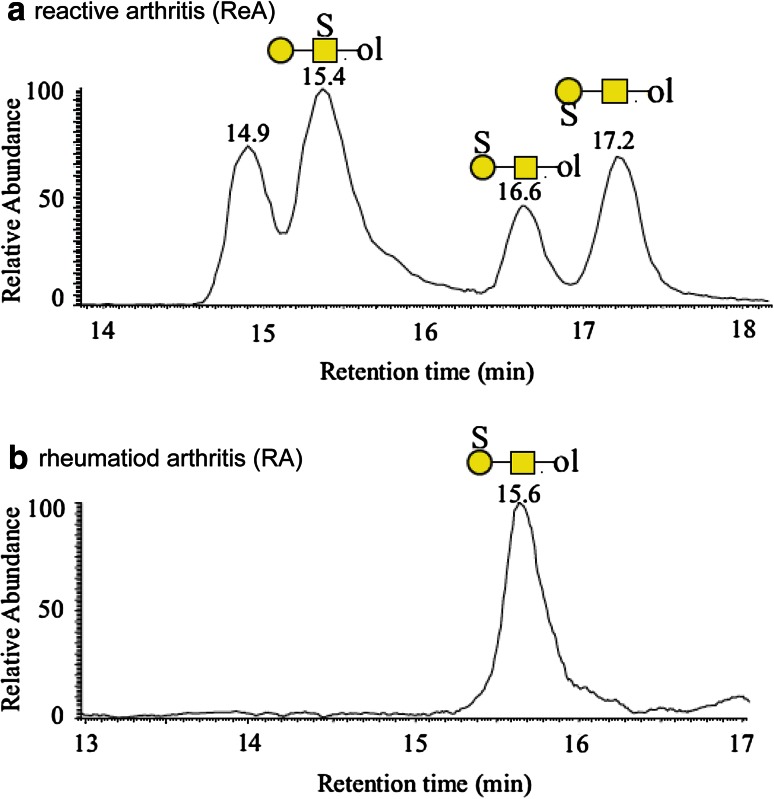
Glycoconjugates and free glycan are involved in a variety of biological processes such as cell-cell interaction and cell trafficking. Alterations in the complex glycosylation machinery have been correlated with various pathological processes including cancer progression and metastasis. Mass Spectrometry (MS) has evolved as one of the most powerful tools in glycomics and glycoproteomics and in combination with porous graphitized carbon-liquid chromatography (PGC-LC) it is a versatile and sensitive technique for the analysis of glycans and to some extent also glycopeptides. PGC-LC-ESI-MS analysis is characterized by a high isomer separation power enabling a specific glycan compound analysis on the level of individual structures. This allows the investigation of the biological relevance of particular glycan structures and glycan features. Consequently, this strategy is a very powerful technique suitable for clinical research, such as cancer biomarker discovery, as well as in-depth analysis of recombinant glycoproteins. In this review, we will focus on how PGC in conjunction with MS detection can deliver specific structural information for clinical research on protein-bound N-glycans and mucin-type O-glycans. In addition, we will briefly review PGC analysis approaches for glycopeptides, glycosaminoglycans (GAGs) and human milk oligosaccharides (HMOs). The presented applications cover systems that vary vastly with regard to complexity such as purified glycoproteins, cells, tissue or body fluids revealing specific glycosylation changes associated with various biological processes including cancer and inflammation.
糖缀合物和游离聚糖参与多种生物过程,如细胞间相互作用和细胞运输。复杂糖基化机制的改变与包括癌症进展和转移在内的各种病理过程相关。质谱(MS)已发展成为糖组学和糖蛋白质组学中最强大的工具之一,与多孔石墨化碳液相色谱(PGC-LC)相结合,它是一种用于分析聚糖以及在一定程度上也用于分析糖肽的通用且灵敏的技术。PGC-LC-ESI-MS分析的特点是具有高异构体分离能力,能够在单个结构水平上对特定聚糖化合物进行分析。这使得能够研究特定聚糖结构和聚糖特征的生物学相关性。因此,该策略是一种非常强大的技术,适用于临床研究,如癌症生物标志物的发现,以及对重组糖蛋白的深入分析。在本综述中,我们将重点关注PGC与MS检测相结合如何为蛋白质结合型N-聚糖和粘蛋白型O-聚糖的临床研究提供特定的结构信息。此外,我们将简要回顾糖肽、糖胺聚糖(GAGs)和人乳寡糖(HMOs)的PGC分析方法。所展示的应用涵盖了复杂性差异极大的系统,如纯化的糖蛋白、细胞、组织或体液,揭示了与包括癌症和炎症在内的各种生物过程相关的特定糖基化变化。