Laboratory for Genetics and Genomics, Centre of Microbial and Plant Genetics (CMPG), KU Leuven, Kasteelpark Arenberg 22, 3001 Leuven, Belgium.
Laboratory for Systems Biology, VIB, Bio-Incubator, Gaston Geenslaan 1, 3001 Leuven, Belgium.
Biotechnol Biofuels. 2015 Feb 26;8:32. doi: 10.1186/s13068-015-0216-0. eCollection 2015.
During the final phases of bioethanol fermentation, yeast cells face high ethanol concentrations. This stress results in slower or arrested fermentations and limits ethanol production. Novel Saccharomyces cerevisiae strains with superior ethanol tolerance may therefore allow increased yield and efficiency. Genome shuffling has emerged as a powerful approach to rapidly enhance complex traits including ethanol tolerance, yet previous efforts have mostly relied on a mutagenized pool of a single strain, which can potentially limit the effectiveness. Here, we explore novel robot-assisted strategies that allow to shuffle the genomes of multiple parental yeasts on an unprecedented scale.
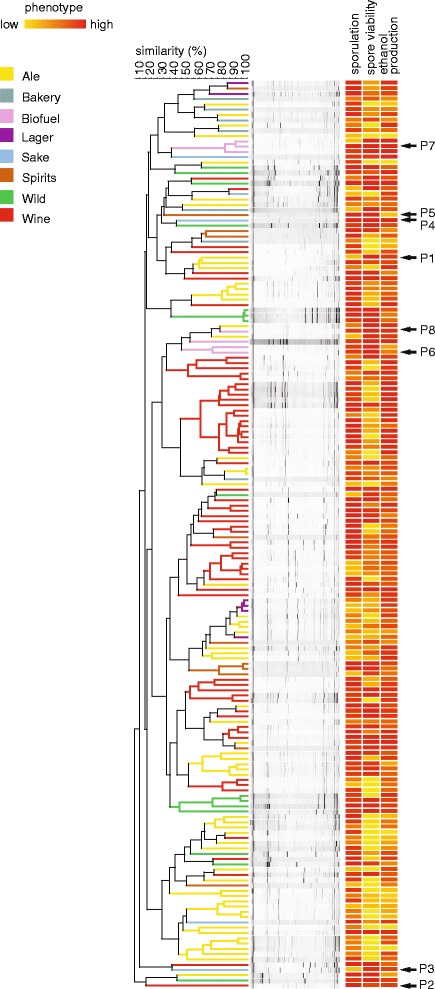
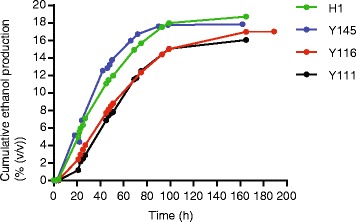
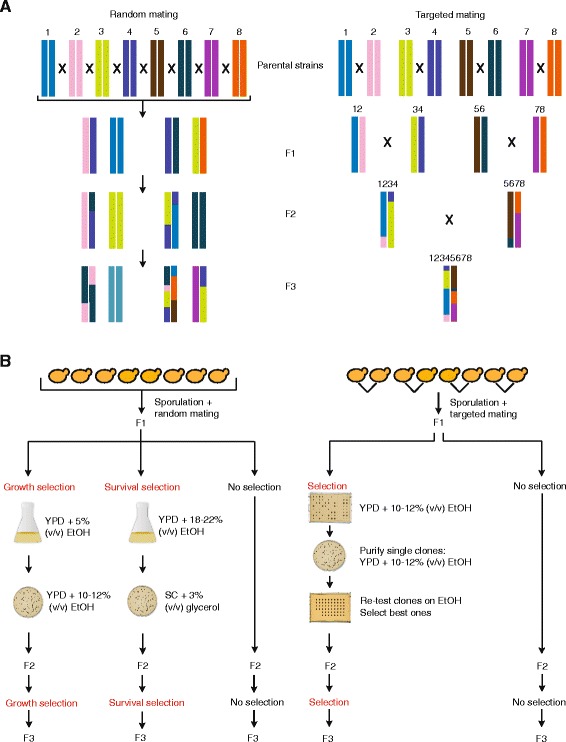
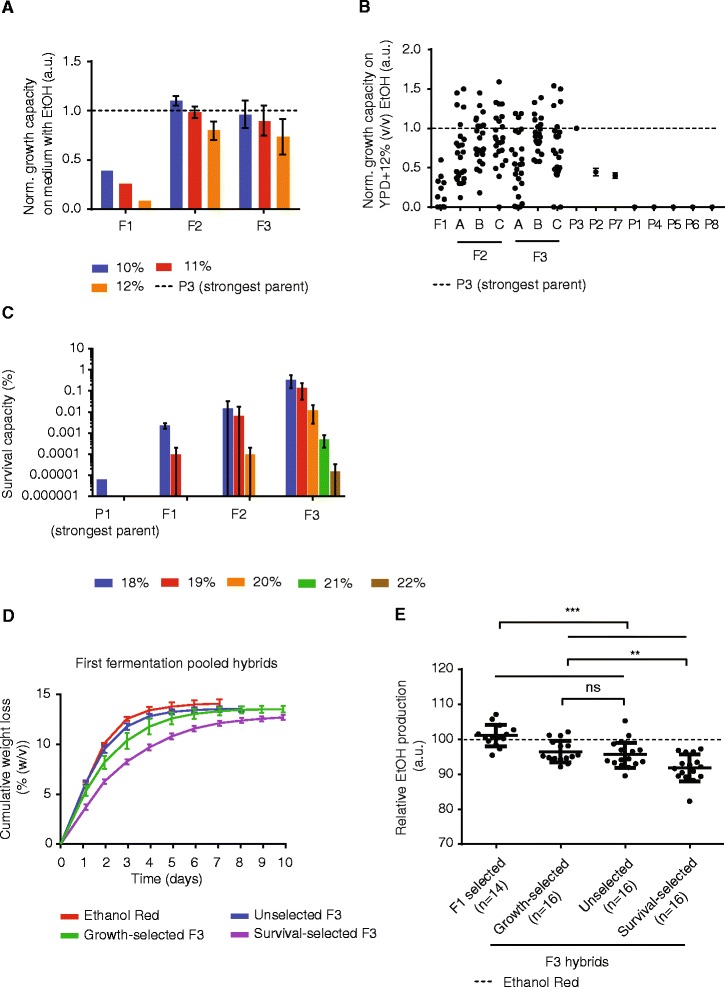
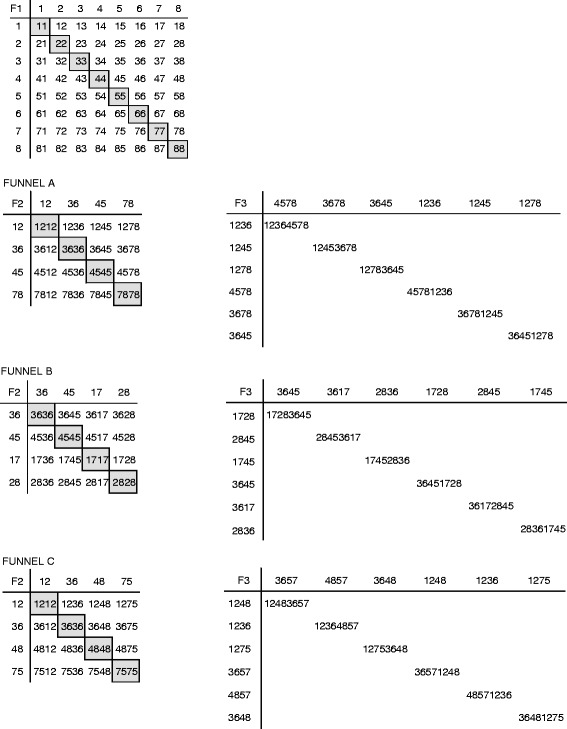
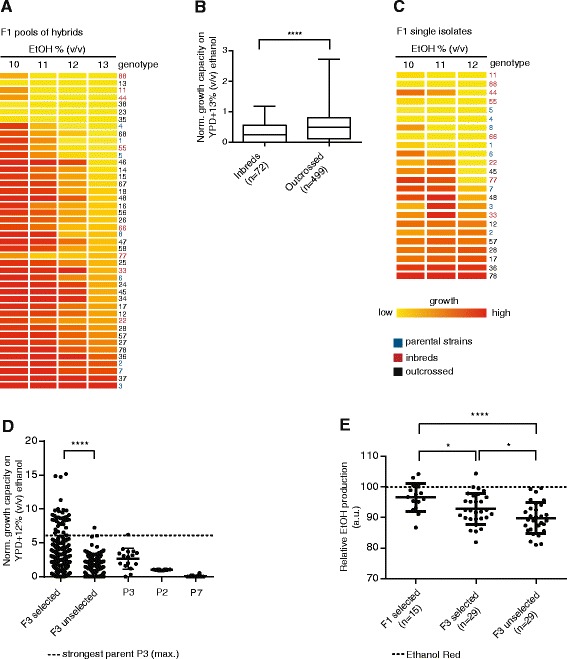
Screening of 318 different yeasts for ethanol accumulation, sporulation efficiency, and genetic relatedness yielded eight heterothallic strains that served as parents for genome shuffling. In a first approach, the parental strains were subjected to multiple consecutive rounds of random genome shuffling with different selection methods, yielding several hybrids that showed increased ethanol tolerance. Interestingly, on average, hybrids from the first generation (F1) showed higher ethanol production than hybrids from the third generation (F3). In a second approach, we applied several successive rounds of robot-assisted targeted genome shuffling, yielding more than 3,000 targeted crosses. Hybrids selected for ethanol tolerance showed increased ethanol tolerance and production as compared to unselected hybrids, and F1 hybrids were on average superior to F3 hybrids. In total, 135 individual F1 and F3 hybrids were tested in small-scale very high gravity fermentations. Eight hybrids demonstrated superior fermentation performance over the commercial biofuel strain Ethanol Red, showing a 2 to 7% increase in maximal ethanol accumulation. In an 8-l pilot-scale test, the best-performing hybrid fermented medium containing 32% (w/v) glucose to dryness, yielding 18.7% (v/v) ethanol with a productivity of 0.90 g ethanol/l/h and a yield of 0.45 g ethanol/g glucose.
We report the use of several different large-scale genome shuffling strategies to obtain novel hybrids with increased ethanol tolerance and fermentation capacity. Several of the novel hybrids show best-parent heterosis and outperform the commonly used bioethanol strain Ethanol Red, making them interesting candidate strains for industrial production.
在生物乙醇发酵的最后阶段,酵母细胞面临高浓度的乙醇。这种压力会导致发酵速度变慢或停止,从而限制乙醇的产量。因此,具有更高乙醇耐受性的新型酿酒酵母菌株可能会提高产量和效率。基因组改组已成为快速增强包括乙醇耐受性在内的复杂性状的有效方法,但以前的研究大多依赖于单一菌株的诱变池,这可能会限制其效果。在这里,我们探索了新颖的机器人辅助策略,这些策略可以以前所未有的规模对多个亲本酵母的基因组进行改组。
对 318 种不同的酵母进行乙醇积累、孢子形成效率和遗传相关性筛选,得到了 8 种异宗配合酵母,作为基因组改组的亲本。在第一种方法中,对亲本菌株进行了多次连续的随机基因组改组,并采用不同的选择方法,得到了一些具有更高乙醇耐受性的杂种。有趣的是,第一代(F1)杂种的平均乙醇产量高于第三代(F3)杂种。在第二种方法中,我们采用了多个连续的机器人辅助靶向基因组改组,得到了 3000 多个靶向杂交。选择用于乙醇耐受性的杂种表现出比未选择的杂种更高的乙醇耐受性和产量,并且 F1 杂种的平均表现优于 F3 杂种。总共对 135 个单独的 F1 和 F3 杂种进行了小尺度超高重力发酵测试。有 8 个杂种在发酵性能方面优于商业生物燃料菌株 Ethanol Red,最大乙醇积累量提高了 2%至 7%。在 8 升的中试规模测试中,表现最好的杂种发酵含有 32%(w/v)葡萄糖的培养基,发酵至干重,得到 18.7%(v/v)乙醇,生产率为 0.90 g 乙醇/l/h,产率为 0.45 g 乙醇/g 葡萄糖。
我们报告了使用几种不同的大规模基因组改组策略来获得具有更高乙醇耐受性和发酵能力的新型杂种。一些新型杂种表现出最好的杂种优势,优于常用的生物乙醇菌株 Ethanol Red,因此它们是工业生产的有前途的候选菌株。