Brown Stephen P, Smith Amos B
Department of Chemistry, University of Pennsylvania, Philadelphia, Pennsylvania 19104, United States.
J Am Chem Soc. 2015 Apr 1;137(12):4034-7. doi: 10.1021/ja512880g. Epub 2015 Mar 20.
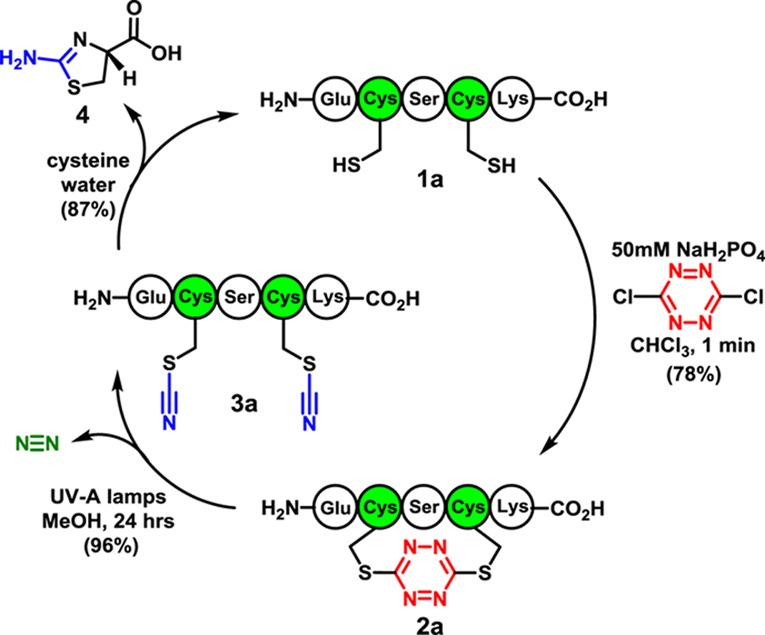
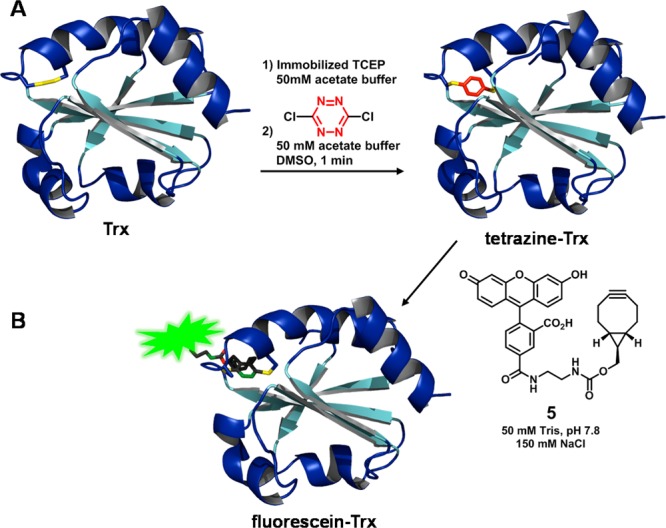
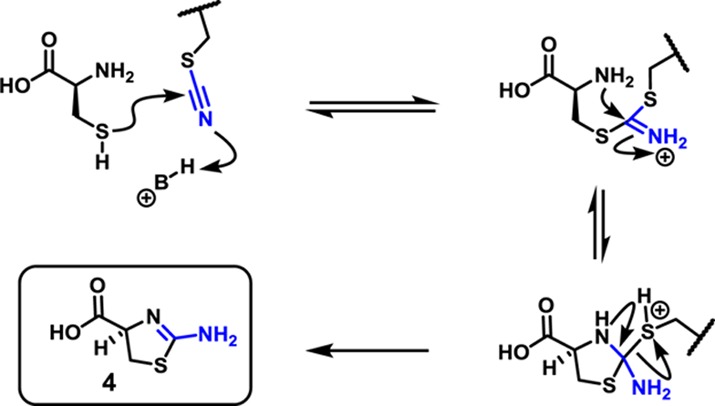
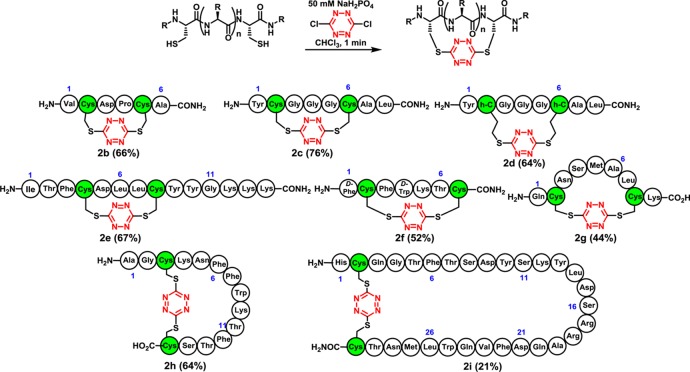
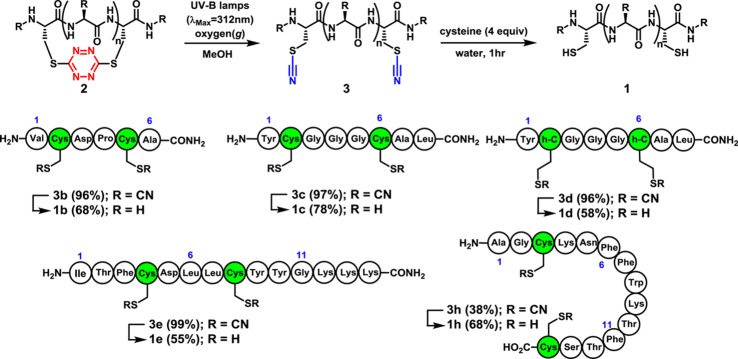
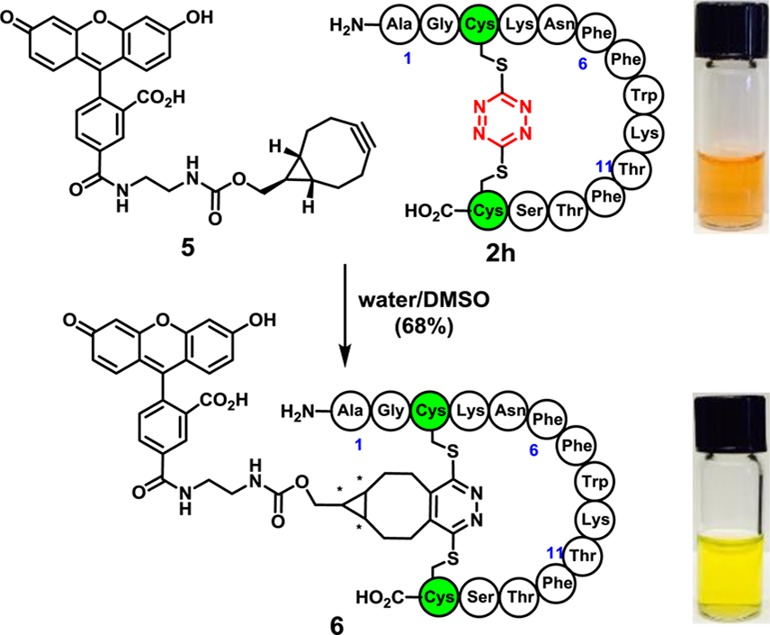
Protocols have been achieved that permit facile introduction of s-tetrazine into unprotected peptides and the protein, thioredoxin, between two cysteine sulfhydryl groups (i.e., staple), followed by photochemical release (i.e., unstaple) and regeneration of the peptide/protein upon removal of the cyano groups from the derived bisthiocyanate. The S,S-tetrazine macrocycles in turn provide a convenient handle for probe introduction by exploiting the inverse electron demand Diels-Alder reactivity of the tetrazine.
已经实现了一些方案,这些方案允许将 s-四嗪轻松引入未保护的肽和蛋白质硫氧还蛋白中,在两个半胱氨酸巯基之间(即形成“订书钉”结构),随后通过光化学释放(即“解开订书钉”),并在从衍生的双硫氰酸盐中去除氰基后使肽/蛋白质再生。反过来,S,S-四嗪大环通过利用四嗪的逆电子需求狄尔斯-阿尔德反应性,为探针引入提供了一个方便的途径。