Hong Michelle, Sandalova Elena, Low Diana, Gehring Adam J, Fieni Stefania, Amadei Barbara, Urbani Simonetta, Chong Yap-Seng, Guccione Ernesto, Bertoletti Antonio
1] Singapore Institute for Clinical Sciences, Agency for Science, Technology and Research (A*STAR), 30 Medical Drive, Singapore 117609, Singapore [2] Emerging Infectious Diseases (EID) Program, Duke-NUS Graduate Medical School, 8 College Road, Singapore 169857, Singapore.
Singapore Institute for Clinical Sciences, Agency for Science, Technology and Research (A*STAR), 30 Medical Drive, Singapore 117609, Singapore.
Nat Commun. 2015 Mar 25;6:6588. doi: 10.1038/ncomms7588.
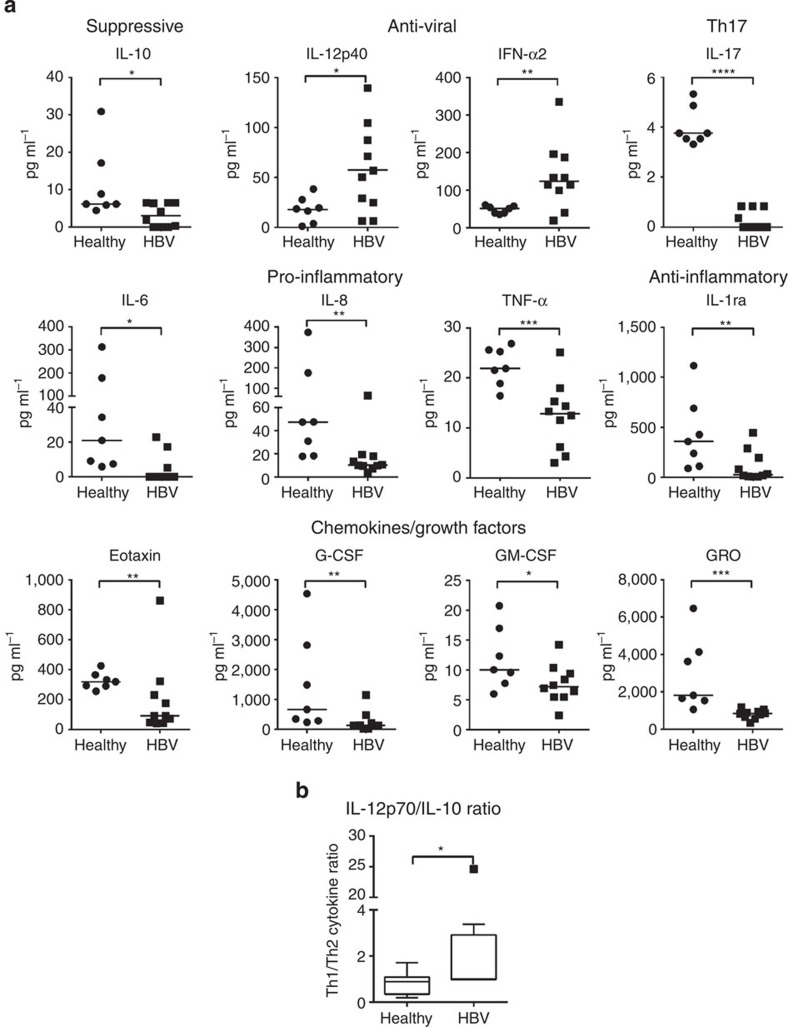
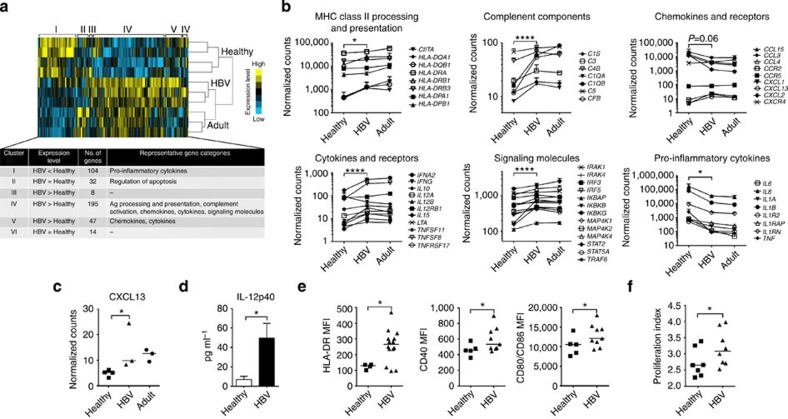
The newborn immune system is characterized by an impaired Th1-associated immune response. Hepatitis B virus (HBV) transmitted from infected mothers to newborns is thought to exploit the newborns' immune system immaturity by inducing a state of immune tolerance that facilitates HBV persistence. Contrary to this hypothesis, we demonstrate here that HBV exposure in utero triggers a state of trained immunity, characterized by innate immune cell maturation and Th1 development, which in turn enhances the ability of cord blood immune cells to respond to bacterial infection in vitro. These training effects are associated with an alteration of the cytokine environment characterized by low IL-10 and, in most cases, high IL-12p40 and IFN-α2. Our data uncover a potentially symbiotic relationship between HBV and its natural host, and highlight the plasticity of the fetal immune system following viral exposure in utero.
新生儿免疫系统的特点是与Th1相关的免疫反应受损。从感染母亲传播给新生儿的乙型肝炎病毒(HBV)被认为通过诱导免疫耐受状态来利用新生儿免疫系统的不成熟,这种免疫耐受状态有利于HBV持续存在。与这一假设相反,我们在此证明,子宫内暴露于HBV会引发一种训练有素的免疫状态,其特征是先天免疫细胞成熟和Th1发育,这反过来又增强了脐带血免疫细胞在体外对细菌感染作出反应的能力。这些训练效应与细胞因子环境的改变有关,其特征是低水平的IL-10,在大多数情况下,还有高水平的IL-12p40和IFN-α2。我们的数据揭示了HBV与其天然宿主之间潜在的共生关系,并突出了子宫内病毒暴露后胎儿免疫系统的可塑性。