Oliveras-López María-Jesús, Ruiz-Prieto Inmaculada, Bolaños-Ríos Patricia, De la Cerda Francisco, Martín Franz, Jáuregui-Lobera Ignacio
Department of Molecular Biology and Biochemical Engineering, University of Pablo de Olavide of Seville, Ctra Utrera km 1, Seville 41013, Spain.
Behavioral Sciences Institute, Seville 41011, Spain.
Nutrients. 2015 Mar 30;7(4):2193-208. doi: 10.3390/nu7042193.
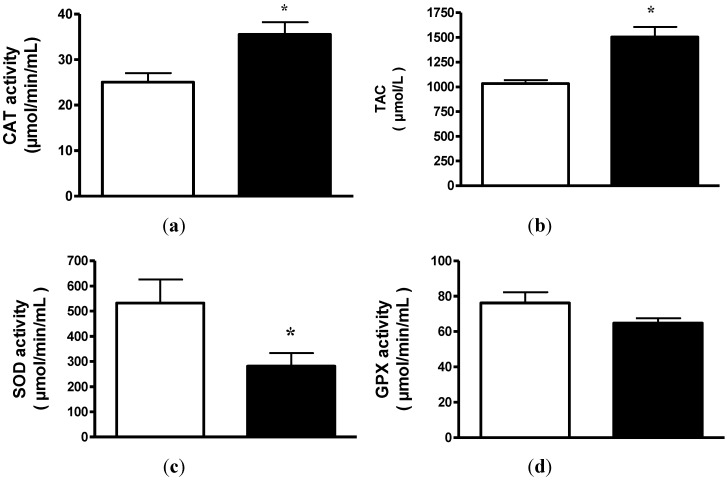
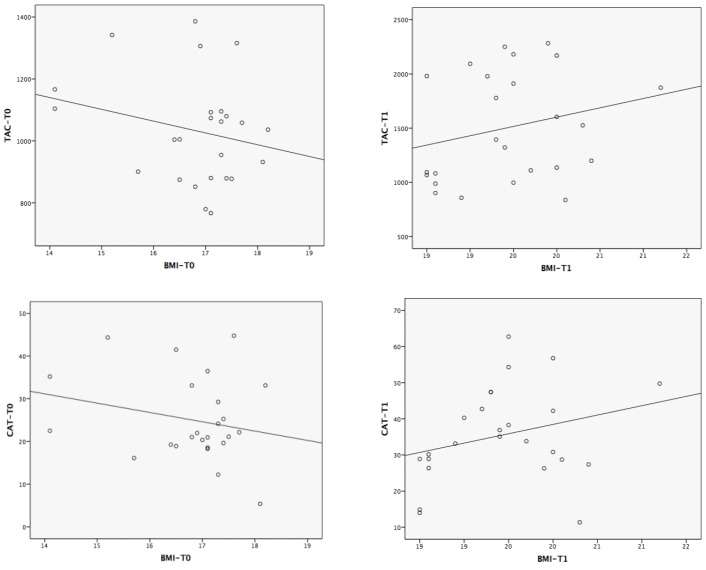
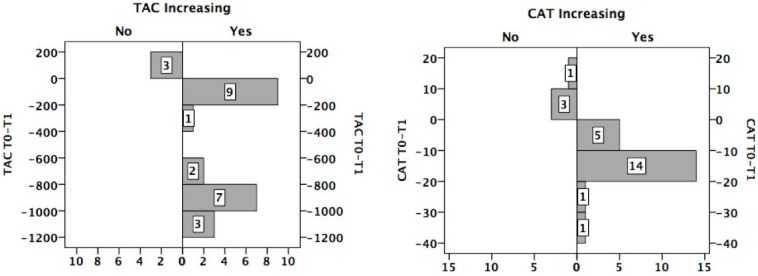
Few studies are focused on the antioxidant status and its changes in anorexia nervosa (AN). Based on the hypothesis that renutrition improves that status, the aim was to determine the plasma antioxidant status and the antioxidant enzymes activity at the beginning of a personalized nutritional program (T0) and after recovering normal body mass index (BMI) (T1). The relationship between changes in BMI and biochemical parameters was determined. Nutritional intake, body composition, anthropometric, hematological and biochemical parameters were studied in 25 women with AN (19.20 ± 6.07 years). Plasma antioxidant capacity and antioxidant enzymes activity were measured. Mean time to recover normal weight was 4.1 ± 2.44 months. Energy, macronutrients and micronutrients intake improved. Catalase activity was significantly modified after dietary intake improvement and weight recovery (T0 = 25.04 ± 1.97 vs. T1 = 35.54 ± 2.60 μmol/min/mL; p < 0.01). Total antioxidant capacity increased significantly after gaining weight (T0 = 1033.03 ± 34.38 vs. T1 = 1504.61 ± 99.73 μmol/L; p < 0.01). Superoxide dismutase activity decreased (p < 0.05) and glutathione peroxidase did not change. Our results support an association between nutrition improvement and weight gain in patients with AN, followed by an enhancement of antioxidant capacity and catalase antioxidant system.
很少有研究关注神经性厌食症(AN)患者的抗氧化状态及其变化。基于营养恢复可改善该状态的假设,本研究旨在确定个性化营养计划开始时(T0)以及恢复正常体重指数(BMI)后(T1)的血浆抗氧化状态和抗氧化酶活性。同时确定BMI变化与生化参数之间的关系。对25名患有AN的女性(年龄19.20±6.07岁)的营养摄入、身体成分、人体测量学、血液学和生化参数进行了研究。测量了血浆抗氧化能力和抗氧化酶活性。恢复正常体重的平均时间为4.1±2.44个月。能量、常量营养素和微量营养素的摄入量有所改善。饮食摄入改善和体重恢复后,过氧化氢酶活性发生了显著变化(T0=25.04±1.97 vs. T1=35.54±2.60μmol/min/mL;p<0.01)。体重增加后,总抗氧化能力显著增加(T0=1033.03±34.38 vs. T1=1504.61±99.73μmol/L;p<0.01)。超氧化物歧化酶活性降低(p<0.05),而谷胱甘肽过氧化物酶活性未发生变化。我们的结果支持AN患者营养改善与体重增加之间存在关联,随后抗氧化能力和过氧化氢酶抗氧化系统得到增强。