Caddy Sarah L, de Rougemont Alexis, Emmott Edward, El-Attar Laila, Mitchell Judy A, Hollinshead Michael, Belliot Gael, Brownlie Joe, Le Pendu Jacques, Goodfellow Ian
Division of Virology, Department of Pathology, University of Cambridge, Addenbrookes Hospital, Cambridge, United Kingdom Section of Virology, Faculty of Medicine, Imperial College London, London, United Kingdom
National Reference Centre for Enteric Viruses, Laboratory of Virology, University Hospital of Dijon, University of Bourgogne, Dijon, France.
J Clin Microbiol. 2015 Jun;53(6):1873-83. doi: 10.1128/JCM.02778-14. Epub 2015 Apr 1.
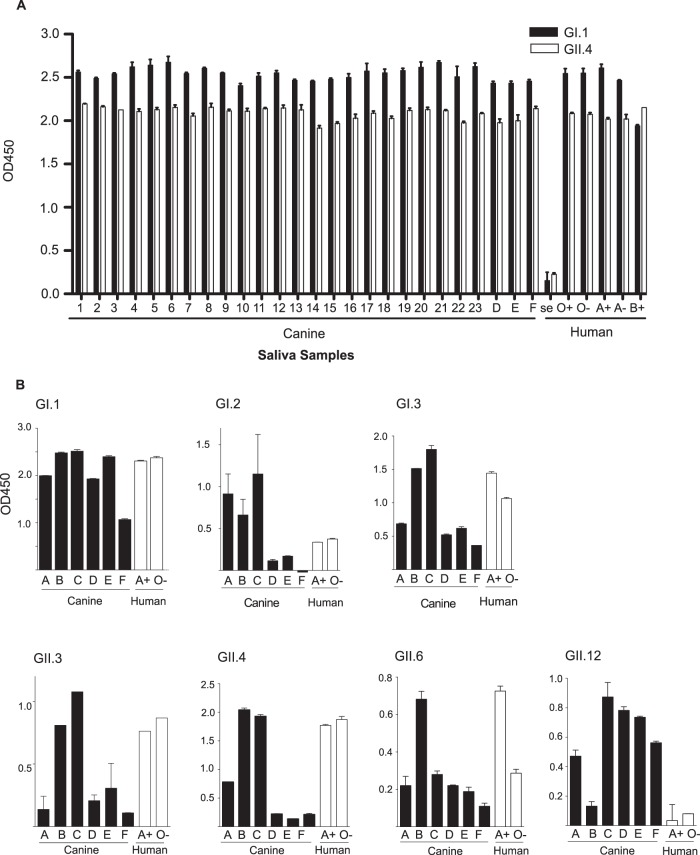
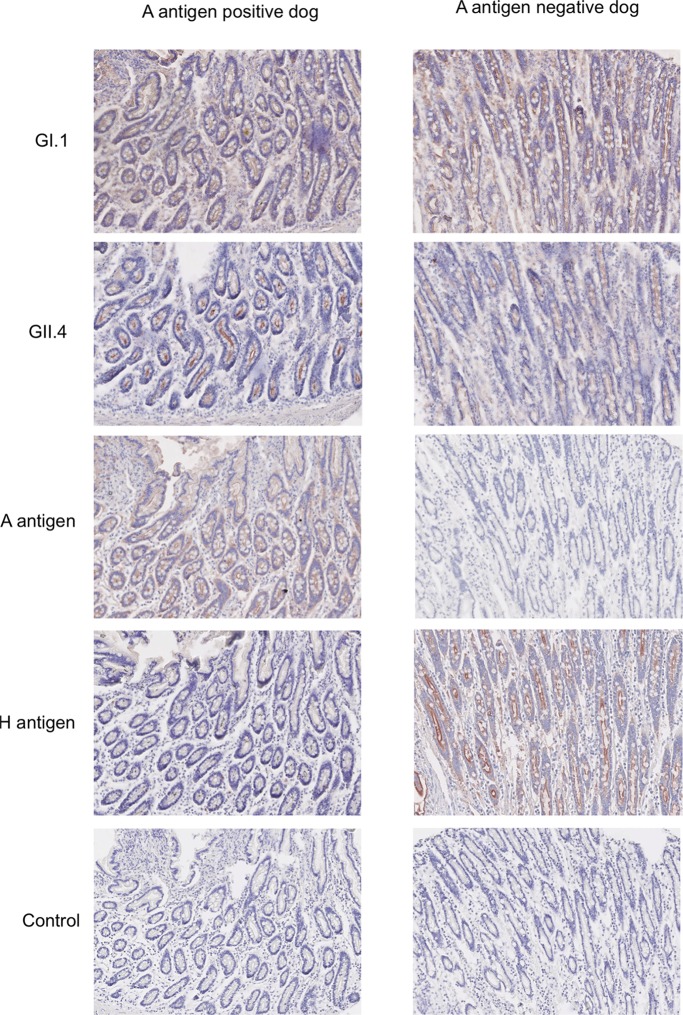
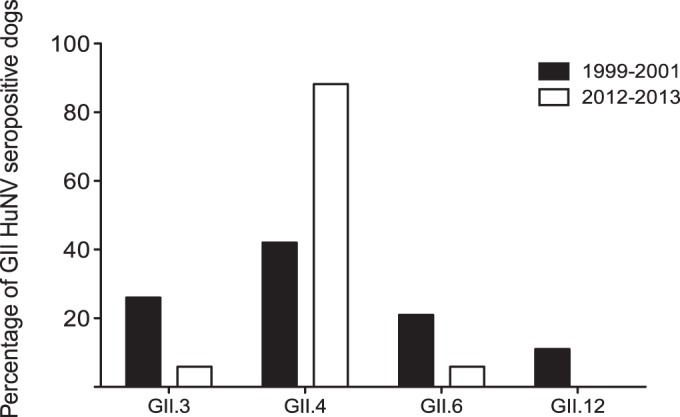
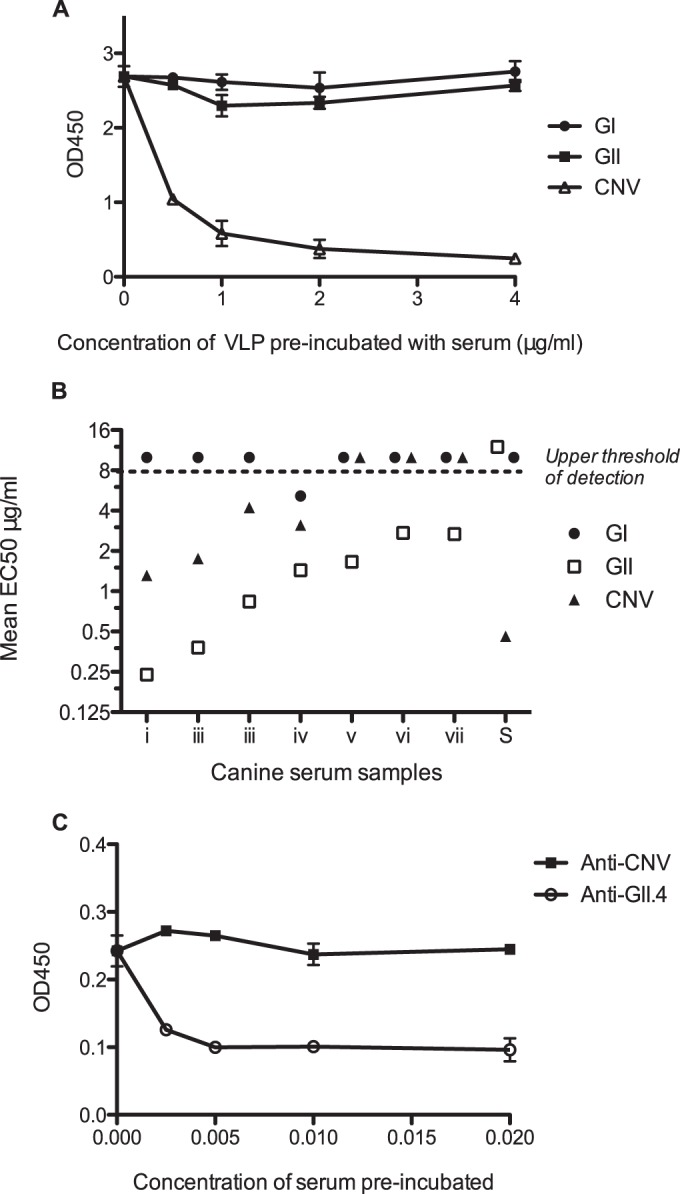
Human noroviruses (HuNoVs) are a major cause of viral gastroenteritis, with an estimated 3 million cases per year in the United Kingdom. HuNoVs have recently been isolated from pet dogs in Europe (M. Summa, C.-H. von Bonsdorff, and L. Maunula, J Clin Virol 53:244-247, 2012, http://dx.doi.org/10.1016/j.jcv.2011.12.014), raising concerns about potential zoonotic infections. With 31% of United Kingdom households owning a dog, this could prove to be an important transmission route. To examine this risk, canine tissues were studied for their ability to bind to HuNoV in vitro. In addition, canine stool samples were analyzed for the presence of viral nucleic acid, and canine serum samples were tested for the presence of anti-HuNoV antibodies. The results showed that seven different genotypes of HuNoV virus-like particles (VLPs) can bind to canine gastrointestinal tissue, suggesting that infection is at least theoretically possible. Although HuNoV RNA was not identified in stool samples from 248 dogs, serological evidence of previous exposure to HuNoV was obtained in 43/325 canine serum samples. Remarkably, canine seroprevalence for different HuNoV genotypes mirrored the seroprevalence in the human population. Though entry and replication within cells have not been demonstrated, the canine serological data indicate that dogs produce an immune response to HuNoV, implying productive infection. In conclusion, this study reveals zoonotic implications for HuNoV, and to elucidate the significance of this finding, further epidemiological and molecular investigations will be essential.
人诺如病毒(HuNoVs)是病毒性肠胃炎的主要病因,在英国估计每年有300万例病例。最近在欧洲从宠物狗中分离出了HuNoVs(M. Summa、C.-H. von Bonsdorff和L. Maunula,《临床病毒学杂志》53:244 - 247,2012年,http://dx.doi.org/10.1016/j.jcv.2011.12.014),这引发了对潜在人畜共患感染的担忧。英国31%的家庭养狗,这可能被证明是一条重要的传播途径。为了研究这种风险,对犬类组织进行了体外结合HuNoV能力的研究。此外,分析了犬类粪便样本中病毒核酸的存在情况,并检测了犬类血清样本中抗HuNoV抗体的存在情况。结果表明,七种不同基因型的HuNoV病毒样颗粒(VLPs)能够结合犬类胃肠道组织,这表明至少在理论上感染是可能的。虽然在248只狗的粪便样本中未检测到HuNoV RNA,但在325份犬类血清样本中有43份获得了既往接触HuNoV的血清学证据。值得注意的是,不同HuNoV基因型的犬类血清阳性率与人群中的血清阳性率相似。尽管尚未证明病毒在细胞内的进入和复制,但犬类血清学数据表明狗对HuNoV产生了免疫反应,这意味着发生了有成效的感染。总之,本研究揭示了HuNoV的人畜共患意义,为阐明这一发现의重要性,进一步的流行病学和分子研究至关重要。 (最后一句中“의”疑似原文错误,不影响整体理解,故保留原文错误并翻译)