Park Sun Hee
Division of Infectious Diseases, Department of Internal Medicine, College of Medicine, The Catholic University of Korea, Seoul, Korea.
Infect Chemother. 2015 Mar;47(1):1-11. doi: 10.3947/ic.2015.47.1.1. Epub 2015 Mar 30.
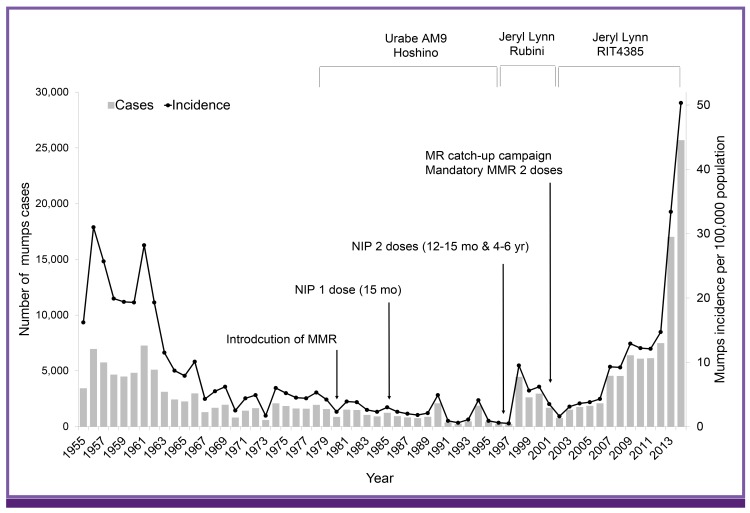
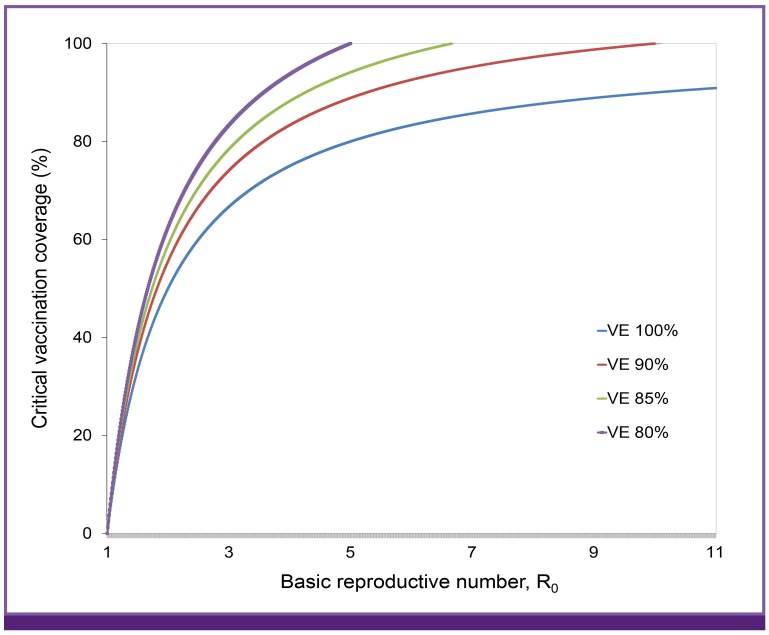
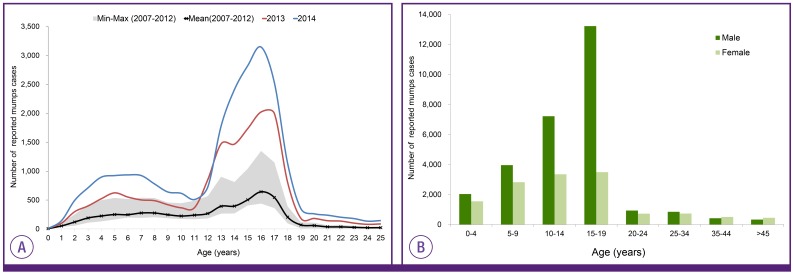
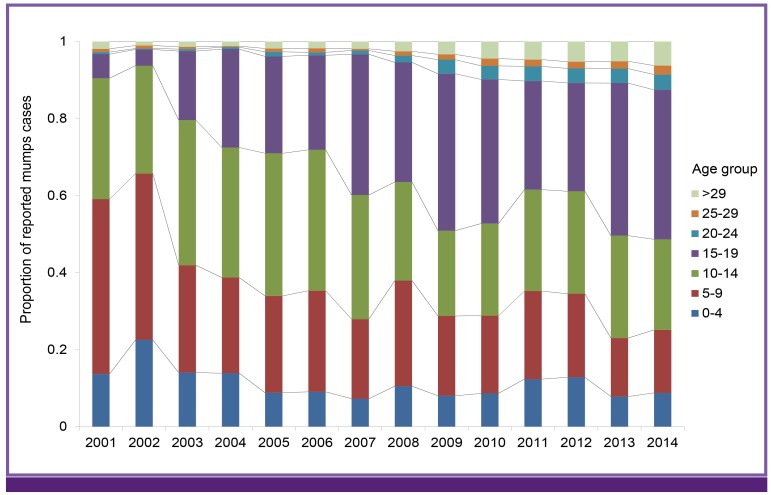
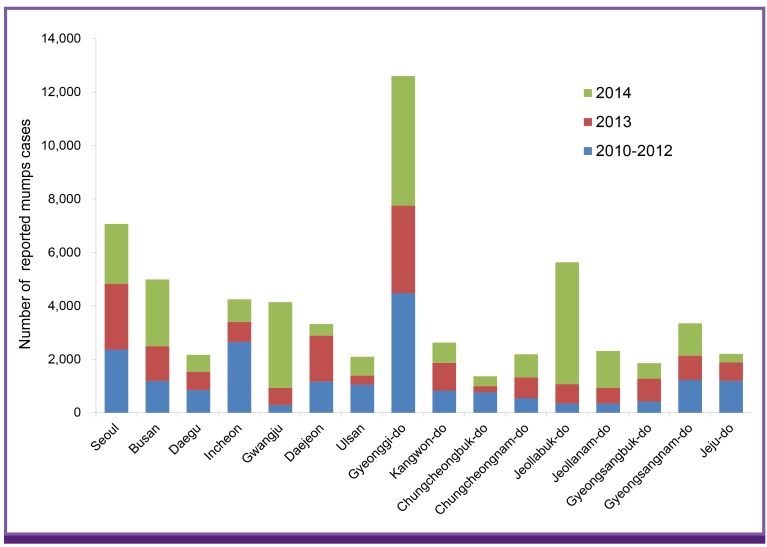
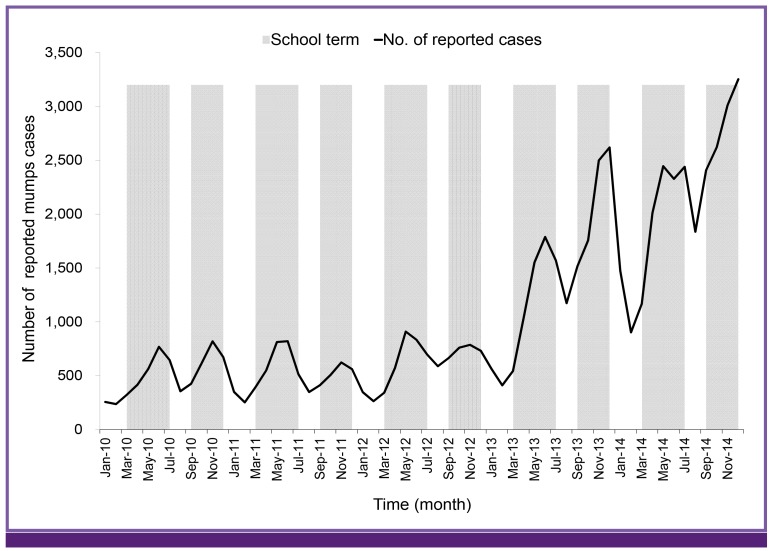
Routine vaccination against mumps has markedly reduced its incidence. However, the incidence of mumps continuously has increased since 2007. In 2013, a large mumps epidemic occurred in Korea, and this epidemic is still an ongoing problem. This epidemic occurred primarily in school settings and affected vaccinated adolescents, predominantly male students. The recent resurgence of mumps is caused by multiple factors: suboptimal effectiveness of the current mumps vaccines, use of the Rubini strain vaccine, waning immunity in the absence of natural boosting due to the marked reduction in the mumps incidence, genotype mismatch between the vaccine and circulating mumps virus strains, and environmental conditions that foster intense exposures. Containment of mumps outbreaks is challenging because the sensitivity of diagnostic tests is low among vaccinees and control measures are less efficient because of the inherent nature of the mumps virus. Despite the suboptimal vaccine effectiveness in outbreak settings, maintaining the high vaccine coverage is an important strategy to prevent mumps outbreaks, given that the routine use of mumps vaccines has substantially reduced the incidence of mumps and its complications as compared with that in the pre-vaccine era. In order to control the current mumps epidemic and prevent further outbreaks, we need to better understand the dynamics of mumps among vaccinated populations and the changing epidemiology in Korea. Concerted efforts should be made to systematically monitor the immunization status of the Korean population and to improve diagnosis efficiency. Furthermore, more effective mumps vaccines need to be developed in the future.
常规的腮腺炎疫苗接种已显著降低了其发病率。然而,自2007年以来,腮腺炎的发病率持续上升。2013年,韩国发生了大规模的腮腺炎疫情,且这一疫情至今仍是一个持续存在的问题。此次疫情主要发生在学校环境中,受影响的是已接种疫苗的青少年,以男学生为主。近期腮腺炎疫情的复发是由多种因素导致的:当前腮腺炎疫苗的效果欠佳、使用鲁宾尼株疫苗、由于腮腺炎发病率显著下降缺乏自然强化导致免疫力减弱、疫苗与流行的腮腺炎病毒株之间的基因型不匹配,以及促使密切接触的环境条件。控制腮腺炎疫情具有挑战性,因为诊断检测在接种疫苗者中的敏感性较低且由于腮腺炎病毒的固有特性控制措施效率较低。尽管在疫情环境中疫苗效果欠佳,但鉴于与疫苗接种前时代相比,常规使用腮腺炎疫苗已大幅降低了腮腺炎及其并发症的发病率,维持高疫苗接种覆盖率仍是预防腮腺炎疫情的一项重要策略。为了控制当前的腮腺炎疫情并防止进一步爆发,我们需要更好地了解接种疫苗人群中腮腺炎的动态变化以及韩国不断变化的流行病学情况。应共同努力系统监测韩国人群的免疫状况并提高诊断效率。此外,未来需要研发更有效的腮腺炎疫苗。