Alkatout Ibrahim, Schubert Melanie, Garbrecht Nele, Weigel Marion Tina, Jonat Walter, Mundhenke Christoph, Günther Veronika
Department of Gynecology and Obstetrics, University Hospitals Schleswig-Holstein, Campus Kiel, Kiel, Germany.
Institute for Pathology, University Hospitals Schleswig-Holstein, Campus Kiel, Kiel, Germany.
Int J Womens Health. 2015 Mar 20;7:305-13. doi: 10.2147/IJWH.S68979. eCollection 2015.
Vulvar cancer can be classified into two groups according to predisposing factors: the first type correlates with a HPV infection and occurs mostly in younger patients. The second group is not HPV associated and occurs often in elderly women without neoplastic epithelial disorders.
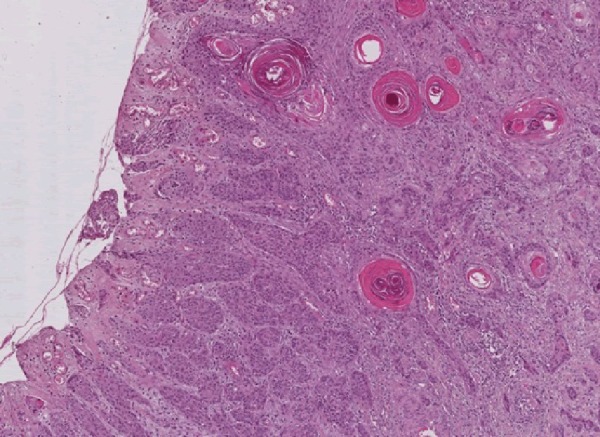
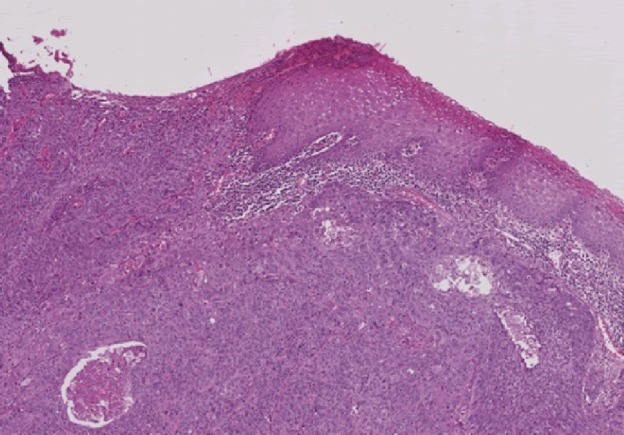
Squamous cell carcinoma (SCC) is the most common malignant tumor of the vulva (95%).
Pruritus is the most common and long-lasting reported symptom of vulvar cancer, followed by vulvar bleeding, discharge, dysuria, and pain.
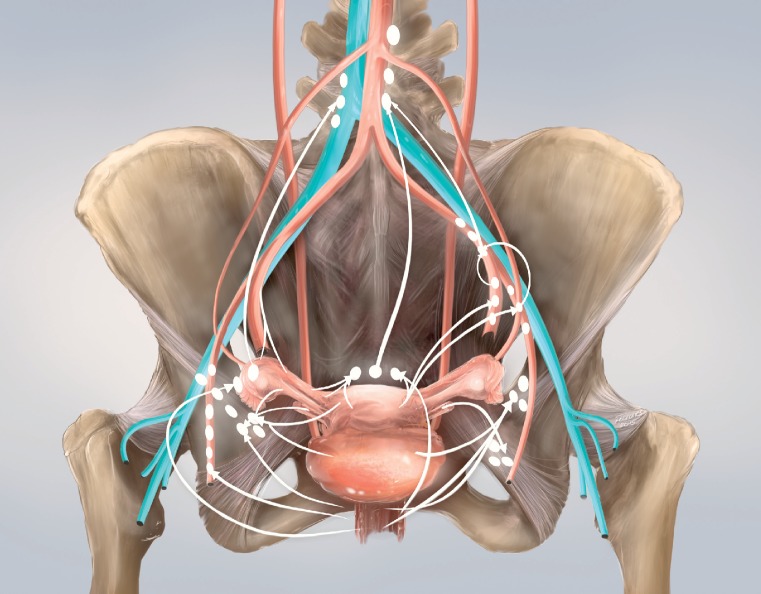
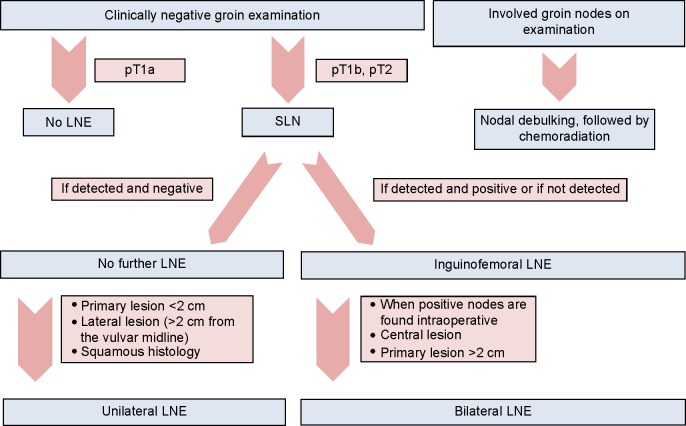
The gold standard for even a small invasive carcinoma of the vulva was historically radical vulvectomy with removal of the tumor with a wide margin followed by an en bloc resection of the inguinal and often the pelvic lymph nodes. Currently, a more individualized and less radical treatment is suggested: a radical wide local excision is possible in the case of localized lesions (T1). A sentinel lymph node (SLN) biopsy may be performed to reduce wound complications and lymphedema.
The survival of patients with vulvar cancer is good when convenient therapy is arranged quickly after initial diagnosis. Inguinal and/or femoral node involvement is the most significant prognostic factor for survival.
根据诱发因素,外阴癌可分为两组:第一类与HPV感染相关,主要发生在年轻患者中。第二类与HPV无关,常发生于无肿瘤性上皮疾病的老年女性。
鳞状细胞癌(SCC)是最常见的外阴恶性肿瘤(95%)。
瘙痒是外阴癌最常见且持续时间最长的症状,其次是外阴出血、分泌物、排尿困难和疼痛。
从历史上看,即使是小的浸润性外阴癌,金标准治疗方法也是根治性外阴切除术,即广泛切除肿瘤边缘组织,随后整块切除腹股沟淋巴结,通常还包括盆腔淋巴结。目前,建议采用更个体化、创伤更小的治疗方法:对于局限性病变(T1),可行根治性局部广泛切除。可进行前哨淋巴结(SLN)活检以减少伤口并发症和淋巴水肿。
如果在初次诊断后迅速安排合适的治疗,外阴癌患者的生存率良好。腹股沟和/或股淋巴结受累是生存的最重要预后因素。