Maestre-Reyna Manuel, Liu Wei-Chun, Jeng Wen-Yih, Lee Cheng-Chung, Hsu Chih-An, Wen Tuan-Nan, Wang Andrew H-J, Shyur Lie-Fen
Institute of Biological Chemistry, Academia Sinica, Taipei, Taiwan.
Agricultural Biotechnology Research Center, Academia Sinica, Taipei, Taiwan.
PLoS One. 2015 Apr 7;10(4):e0120601. doi: 10.1371/journal.pone.0120601. eCollection 2015.
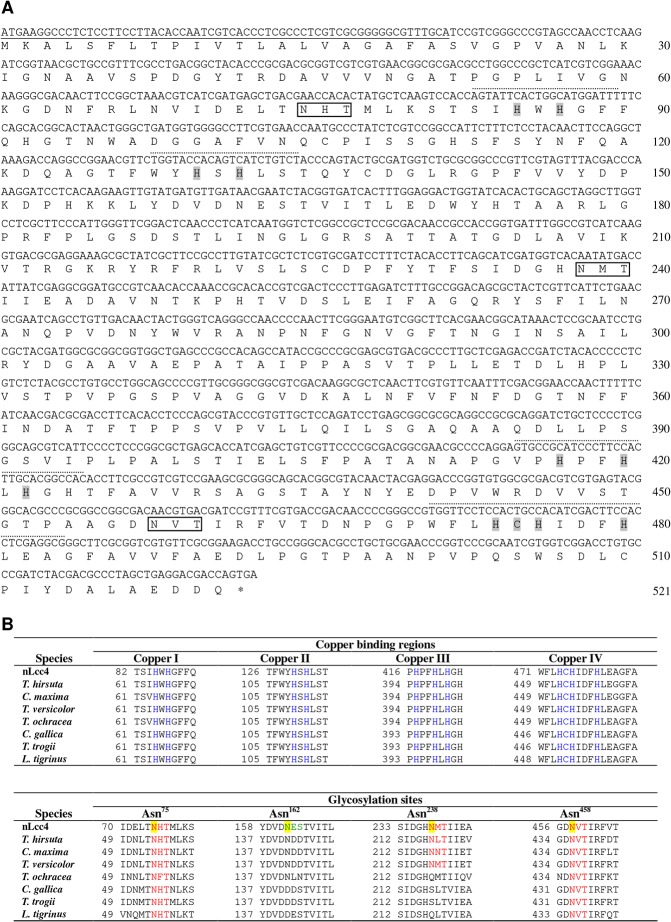
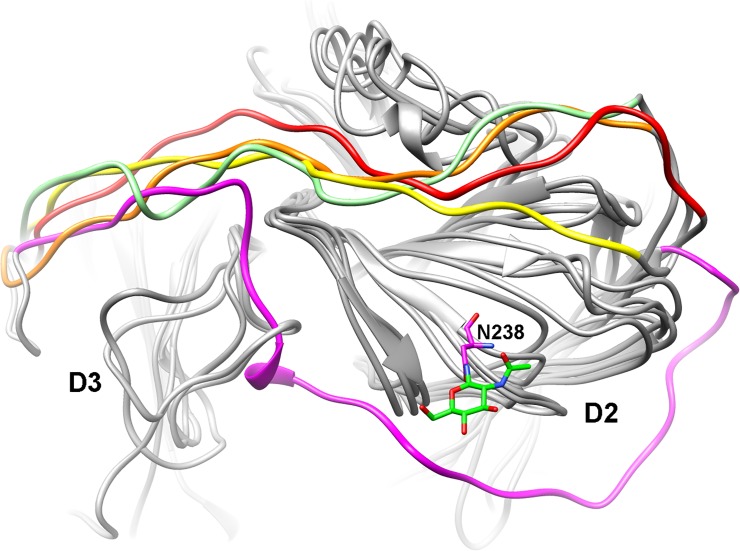
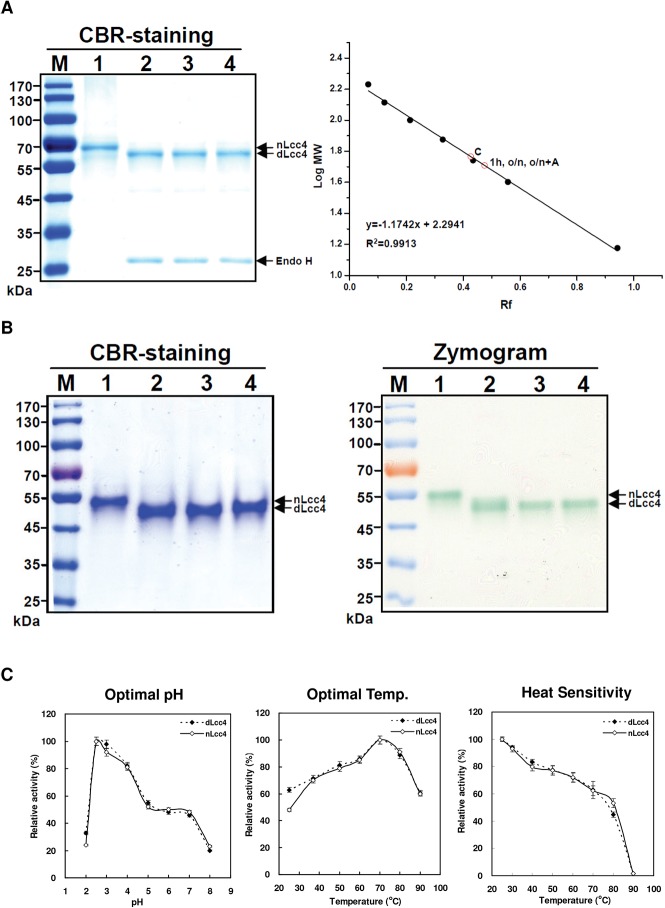
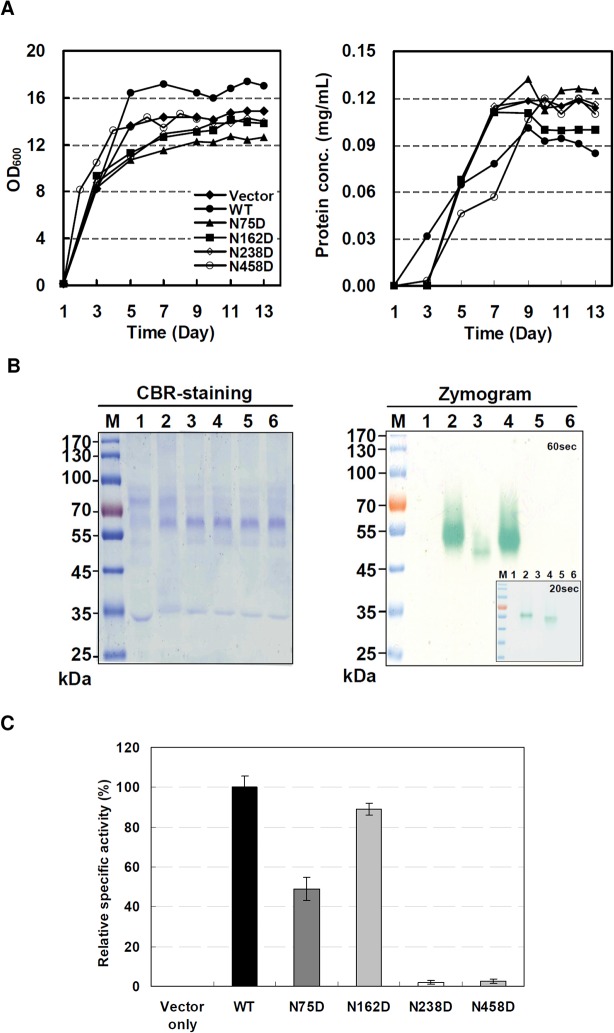
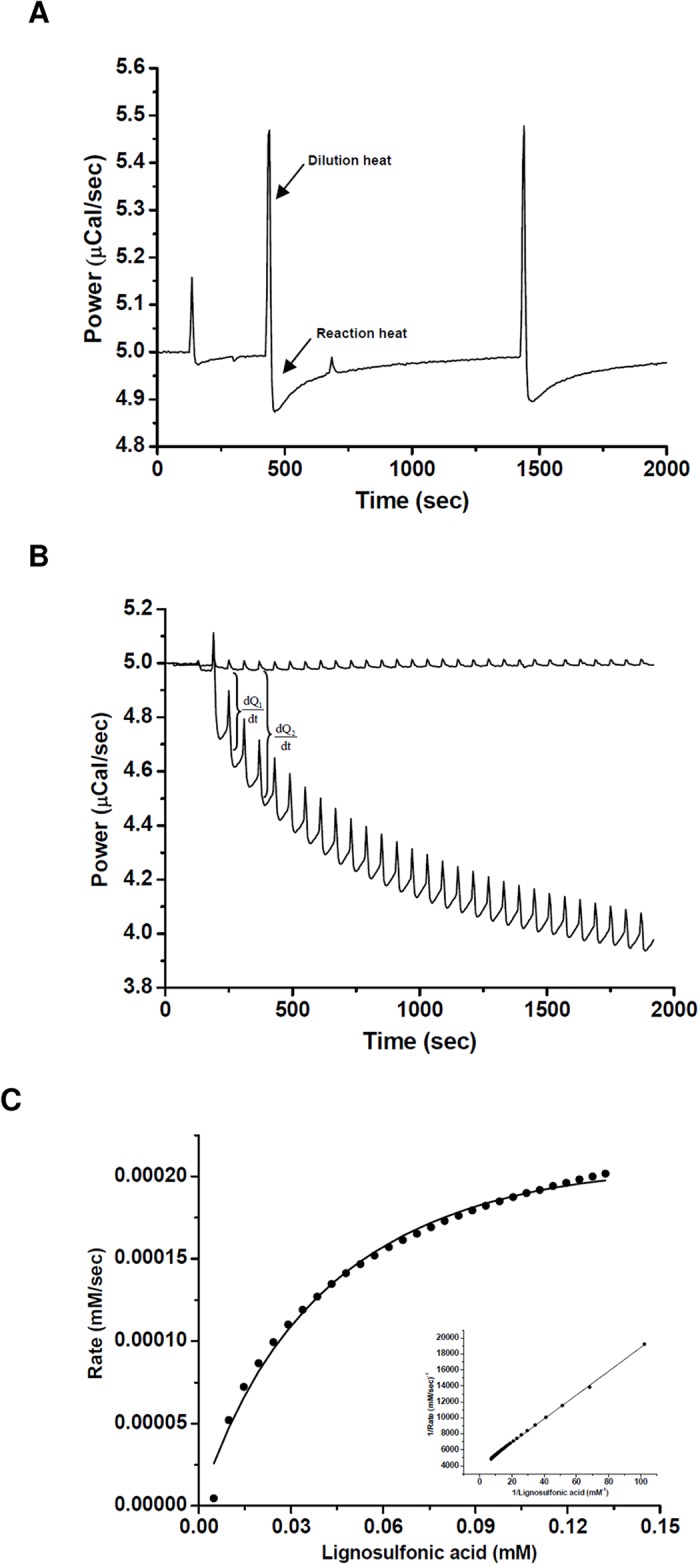
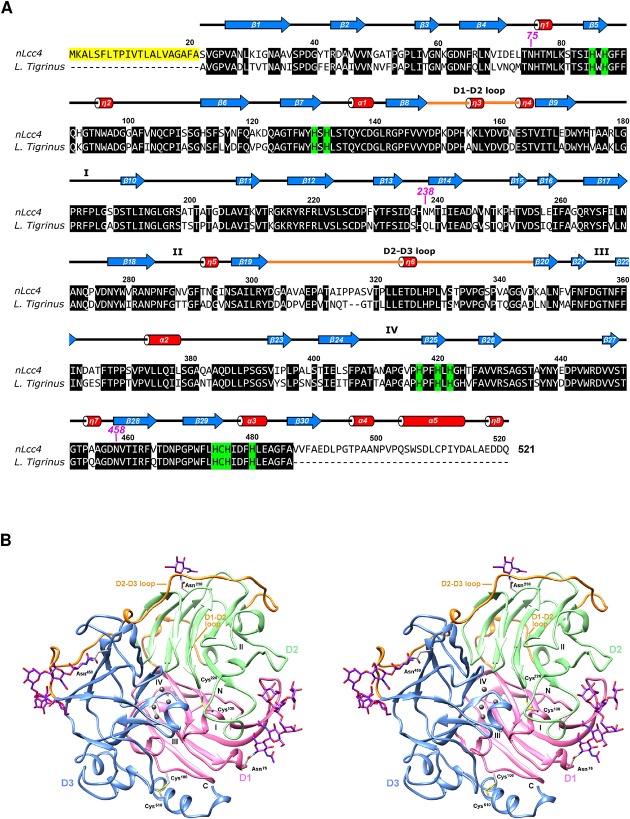
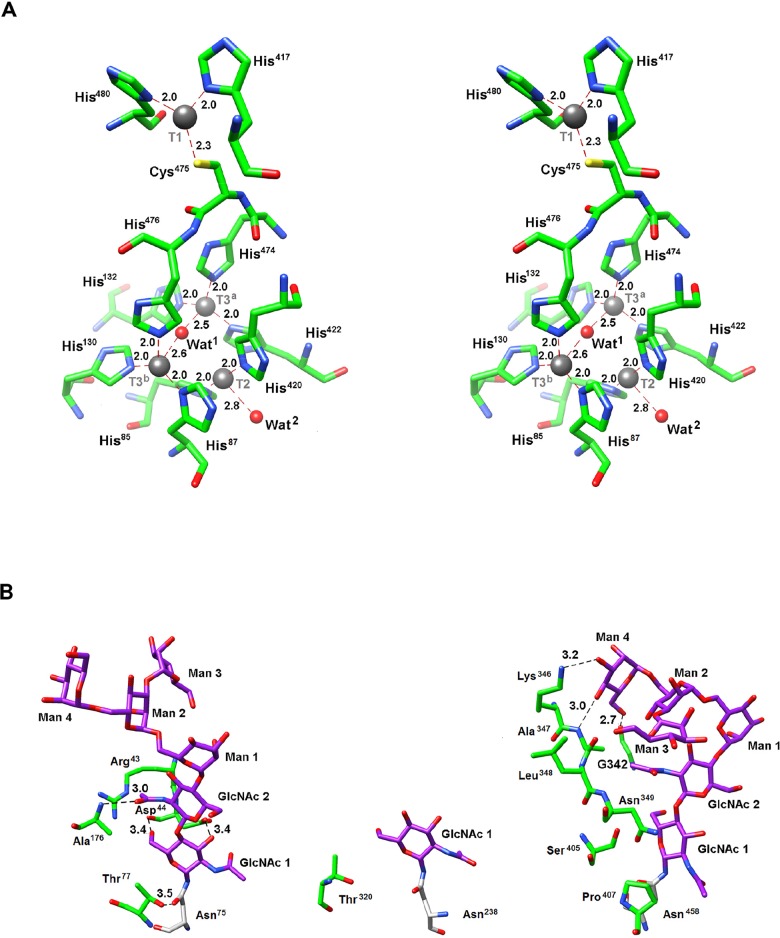
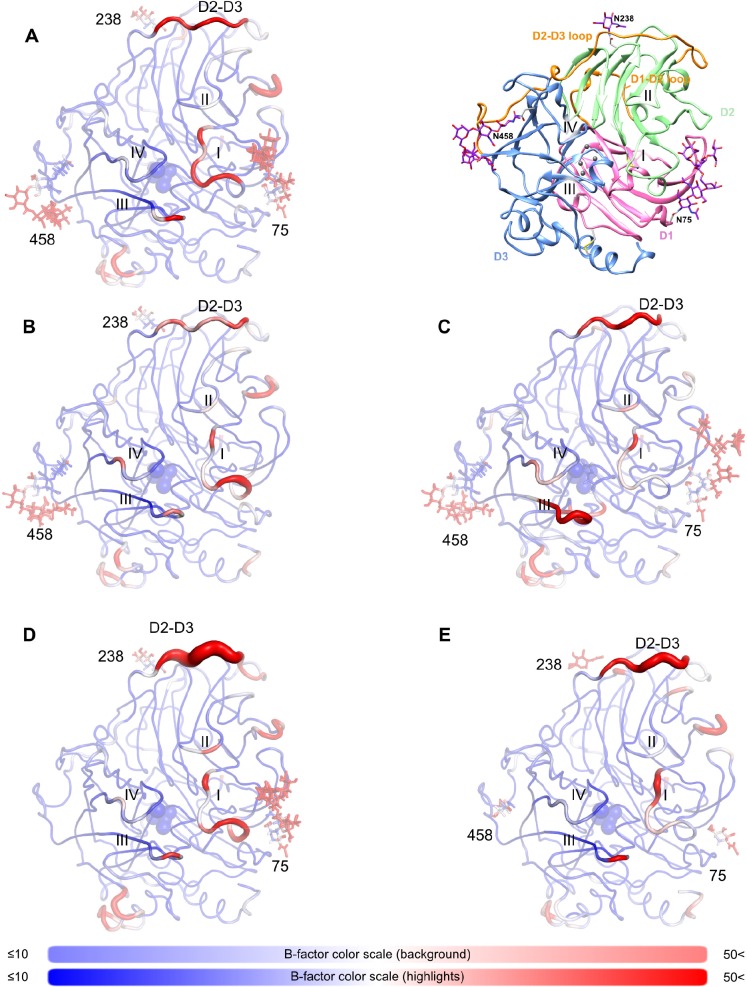
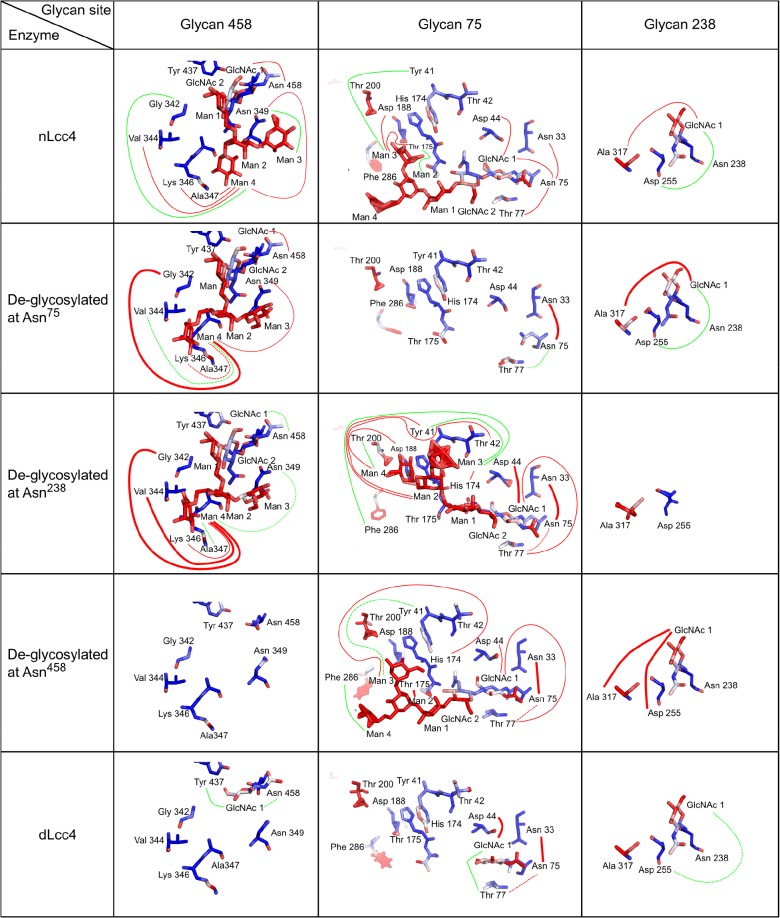
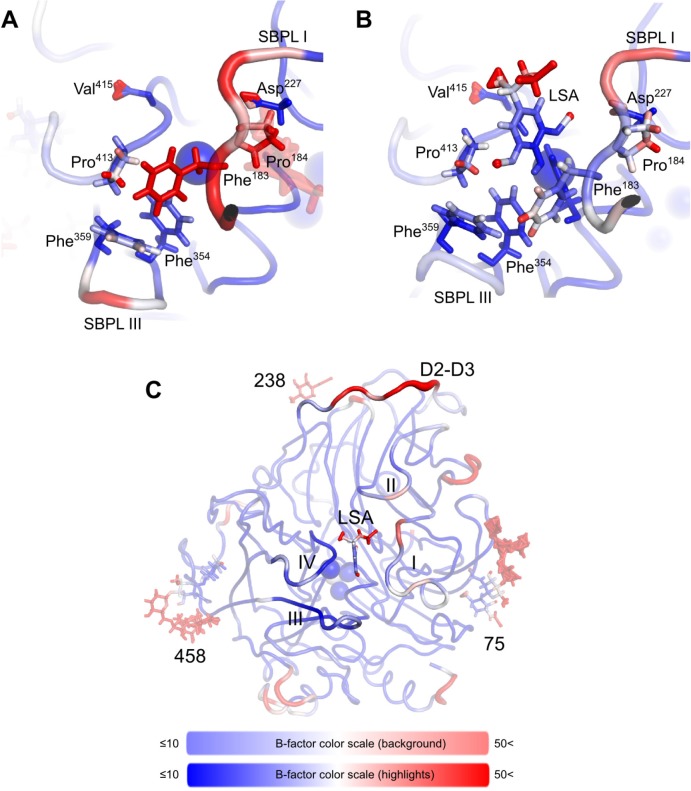
Laccases are multi-copper oxidases that catalyze the oxidation of various organic and inorganic compounds by reducing O2 to water. Here we report the crystal structure at 1.8 Å resolution of a native laccase (designated nLcc4) isolated from a white-rot fungus Lentinus sp. nLcc4 is composed of three cupredoxin-like domains D1-D3 each folded into a Greek key β-barrel topology. T1 and T2/T3 copper binding sites and three N-glycosylated sites at Asn75, Asn238, and Asn458 were elucidated. Initial rate kinetic analysis revealed that the kcat, Km, and kcat/Km of nLcc4 with substrate ABTS were 3,382 s-1, 65.0 ± 6.5 μM, and 52 s-1μM-1, respectively; and the values with lignosulfonic acid determined using isothermal titration calorimetry were 0.234 s-1, 56.7 ± 3.2 μM, and 0.004 s-1μM-1, respectively. Endo H-deglycosylated nLcc4 (dLcc4), with only one GlcNAc residue remaining at each of the three N-glycosylation sites in the enzyme, exhibited similar kinetic efficiency and thermal stability to that of nLcc4. The isolated Lcc4 gene contains an open reading frame of 1563 bp with a deduced polypeptide of 521 amino acid residues including a predicted signaling peptide of 21 residues at the N-terminus. Recombinant wild-type Lcc4 and mutant enzymes N75D, N238D and N458D were expressed in Pichia pastoris cells to evaluate the effect on enzyme activity by single glycosylation site deficiency. The mutant enzymes secreted in the cultural media of P. pastoris cells were observed to maintain only 4-50% of the activity of the wild-type laccase. Molecular dynamics simulations analyses of various states of (de-)glycosylation in nLcc support the kinetic results and suggest that the local H-bond networks between the domain connecting loop D2-D3 and the glycan moieties play a crucial role in the laccase activity. This study provides new insights into the role of glycosylation in the structure and function of a Basidiomycete fungal laccase.
漆酶是一种多铜氧化酶,通过将O2还原为水来催化各种有机和无机化合物的氧化。在此,我们报道了从白腐真菌香菇属分离的天然漆酶(命名为nLcc4)的1.8 Å分辨率晶体结构。nLcc4由三个类铜蓝蛋白结构域D1-D3组成,每个结构域折叠成希腊钥匙β桶拓扑结构。阐明了T1和T2/T3铜结合位点以及Asn75、Asn238和Asn458处的三个N-糖基化位点。初始速率动力学分析表明,nLcc4与底物ABTS的kcat、Km和kcat/Km分别为3382 s-1、65.0±6.5 μM和52 s-1μM-1;使用等温滴定量热法测定的与木素磺酸的值分别为0.234 s-1、56.7±3.2 μM和0.004 s-1μM-1。内切糖苷酶H去糖基化的nLcc4(dLcc4)在酶的三个N-糖基化位点各仅保留一个GlcNAc残基,其表现出与nLcc4相似的动力学效率和热稳定性。分离的Lcc4基因包含一个1563 bp的开放阅读框,推导的多肽有521个氨基酸残基,包括N端预测的21个残基的信号肽。在毕赤酵母细胞中表达重组野生型Lcc4和突变酶N75D、N238D和N458D,以评估单个糖基化位点缺陷对酶活性的影响。观察到在毕赤酵母细胞培养基中分泌的突变酶仅保持野生型漆酶活性的4-50%。对nLcc中(去)糖基化各种状态的分子动力学模拟分析支持了动力学结果,并表明结构域连接环D2-D3与聚糖部分之间的局部氢键网络在漆酶活性中起关键作用。本研究为糖基化在担子菌真菌漆酶的结构和功能中的作用提供了新的见解。