Hua Ziyu, Frohlich Kyla M, Zhang Yan, Feng Xiaogeng, Zhang Jiaxing, Shen Li
Department of Neonatology, Children's Hospital of Chongqing Medical University, Ministry of Education Key Laboratory of Child Development and Disorders, Chongqing Key Laboratory of Pediatrics, Chongqing, China, 400014.
Department of Microbiology, Immunology, and Parasitology, Louisiana State University Health Sciences Center, New Orleans, LA 70112, USA.
Pathog Dis. 2015 Feb;73(1):1-11. doi: 10.1093/femspd/ftu022. Epub 2014 Dec 17.
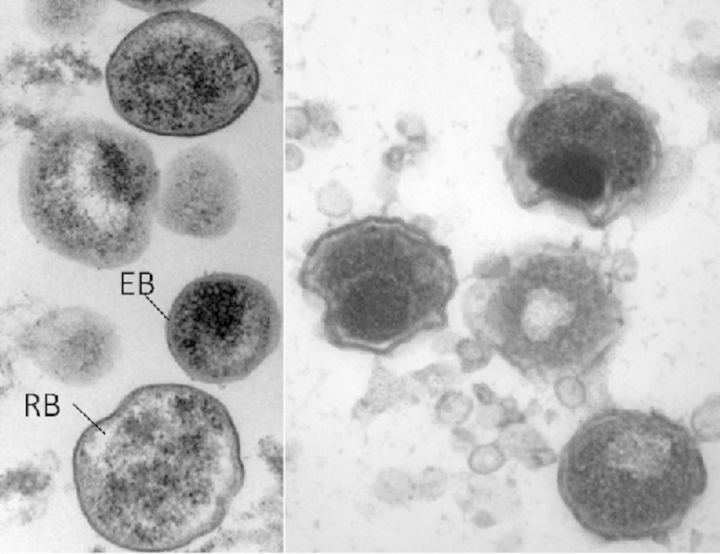
Chlamydia trachomatis is the most common sexually transmitted bacterial disease worldwide. Untreated C. trachomatis infections may cause inflammation and ultimately damage tissues. Here, we evaluated the ability of Andrographolide (Andro), a natural diterpenoid lactone component of Andrographis paniculata, to inhibit C. trachomatis infection in cultured human cervical epithelial cells. We found that Andro exposure inhibited C. trachomatis growth in a dose- and time-dependent manner. The greatest inhibitory effect was observed when exponentially growing C. trachomatis was exposed to Andro. Electron micrographs demonstrated the accumulation of unusual, structurally deficient chlamydial organisms, correlated with a decrease in levels of OmcB expressed at the late stage of infection. Additionally, Andro significantly reduced the secretion of interleukin6, CXCL8 and interferon-γ-induced protein10 produced by host cells infected with C. trachomatis. These results indicate the efficacy of Andro to perturb C. trachomatis transition from the metabolically active reticulate body to the infectious elementary body and concurrently reduce the production of a proinflammatory mediator by epithelial cells in vitro. Further dissection of Andro's anti-Chlamydia action may provide identification of novel therapeutic targets.
沙眼衣原体是全球最常见的性传播细菌性疾病。未经治疗的沙眼衣原体感染可能会引发炎症并最终损害组织。在此,我们评估了穿心莲内酯(Andro)(穿心莲的一种天然二萜内酯成分)在培养的人宫颈上皮细胞中抑制沙眼衣原体感染的能力。我们发现,Andro处理以剂量和时间依赖性方式抑制沙眼衣原体生长。当处于指数生长期的沙眼衣原体暴露于Andro时,观察到最大抑制效果。电子显微镜照片显示出现异常的、结构有缺陷的衣原体生物积累,这与感染后期表达的OmcB水平降低相关。此外,Andro显著降低了感染沙眼衣原体的宿主细胞产生的白细胞介素6、CXCL8和干扰素γ诱导蛋白10的分泌。这些结果表明,Andro在体外具有扰乱沙眼衣原体从代谢活跃的网状体向感染性原体转变的功效,并同时减少上皮细胞促炎介质的产生。对Andro抗衣原体作用的进一步剖析可能会确定新的治疗靶点。