Buzsáki György, Stark Eran, Berényi Antal, Khodagholy Dion, Kipke Daryl R, Yoon Euisik, Wise Kensall D
The Neuroscience Institute, New York University, School of Medicine, New York, NY 10016, USA; Center for Neural Science, New York University, School of Medicine, New York, NY 10016, USA.
The Neuroscience Institute, New York University, School of Medicine, New York, NY 10016, USA.
Neuron. 2015 Apr 8;86(1):92-105. doi: 10.1016/j.neuron.2015.01.028.
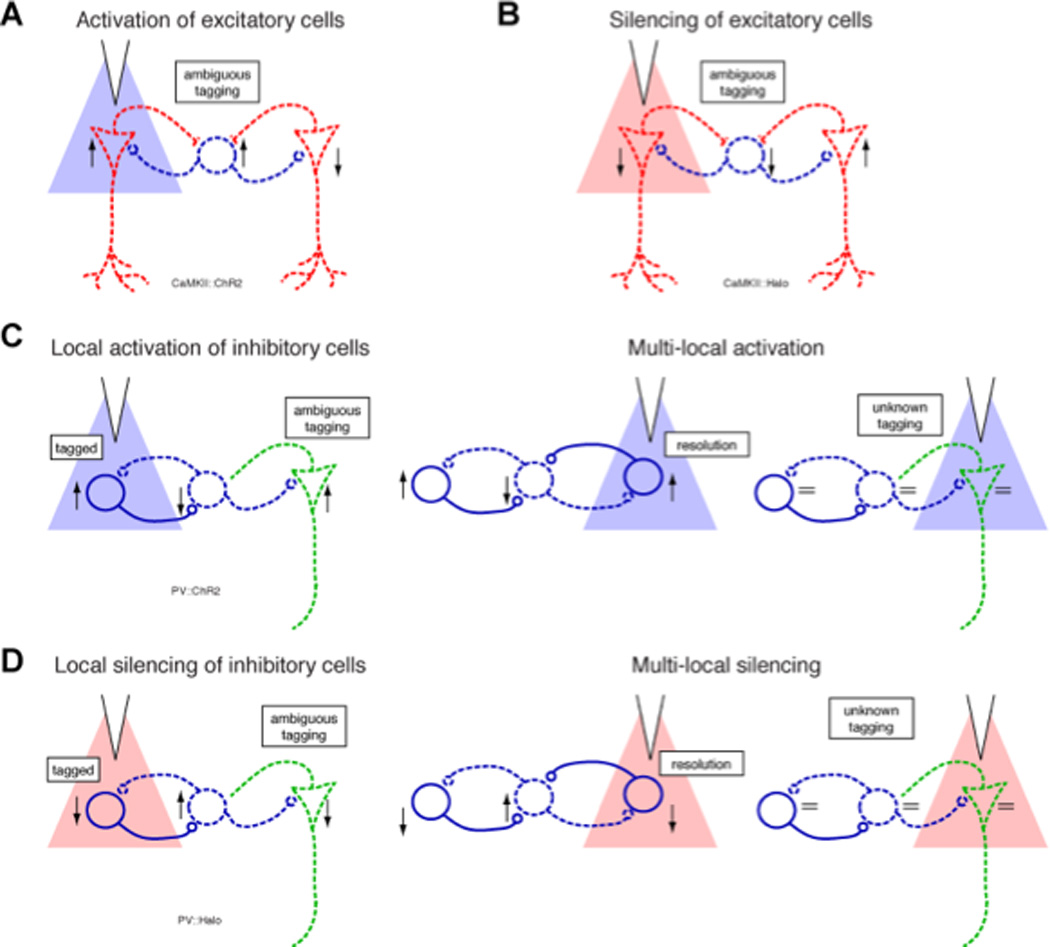
To understand how function arises from the interactions between neurons, it is necessary to use methods that allow the monitoring of brain activity at the single-neuron, single-spike level and the targeted manipulation of the diverse neuron types selectively in a closed-loop manner. Large-scale recordings of neuronal spiking combined with optogenetic perturbation of identified individual neurons has emerged as a suitable method for such tasks in behaving animals. To fully exploit the potential power of these methods, multiple steps of technical innovation are needed. We highlight the current state of the art in electrophysiological recording methods, combined with optogenetics, and discuss directions for progress. In addition, we point to areas where rapid development is in progress and discuss topics where near-term improvements are possible and needed.
为了理解神经元之间的相互作用如何产生功能,有必要使用能够在单神经元、单脉冲水平监测大脑活动,并以闭环方式选择性地对不同神经元类型进行靶向操纵的方法。将神经元放电的大规模记录与对已识别的单个神经元进行光遗传学扰动相结合,已成为在行为动物中完成此类任务的一种合适方法。为了充分发挥这些方法的潜在威力,需要多个步骤的技术创新。我们重点介绍了结合光遗传学的电生理记录方法的当前技术水平,并讨论了进展方向。此外,我们指出了正在快速发展的领域,并讨论了近期可能且需要改进的主题。