Graffigna Guendalina, Barello Serena, Bonanomi Andrea, Lozza Edoardo
Department of Psychology, Università Cattolica del Sacro Cuore Milan, Italy.
Department of Statistical Sciences, Università Cattolica del Sacro Cuore Milan, Italy.
Front Psychol. 2015 Mar 27;6:274. doi: 10.3389/fpsyg.2015.00274. eCollection 2015.
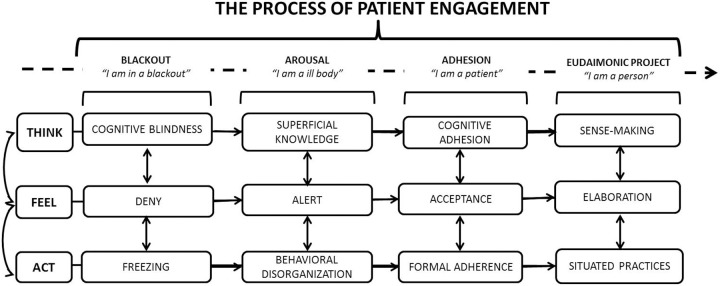
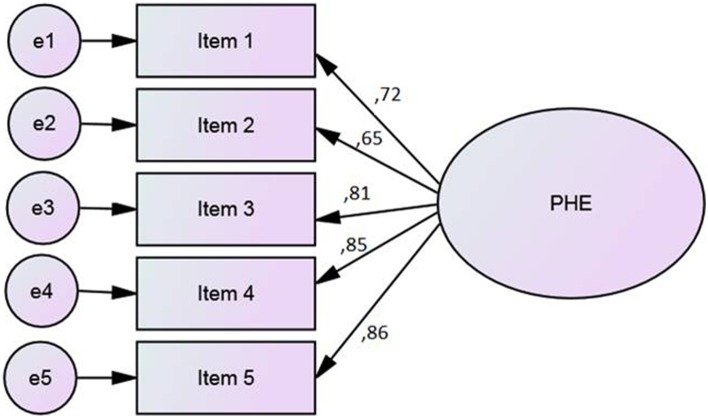
Beyond the rhetorical call for increasing patients' engagement, policy makers recognize the urgency to have an evidence-based measure of patients' engagement and capture its effect when planning and implementing initiatives aimed at sustaining the engagement of consumers in their health. In this paper, authors describe the Patient Health Engagement Scale (PHE-scale), a measure of patient engagement that is grounded in rigorous conceptualization and appropriate psychometric methods. The scale was developed based on our previous conceptualization of patient engagement (the PHE-model). In particular, the items of the PHE-scale were developed based on the findings from the literature review and from interviews with chronic patients. Initial psychometric analysis was performed to pilot test a preliminary version of the items. The items were then refined and administered to a national sample of chronic patients (N = 382) to assess the measure's psychometric performance. A final phase of test-retest reliability was performed. The analysis showed that the PHE Scale has good psychometric properties with good correlation with concurrent measures and solid reliability. Having a valid and reliable measure to assess patient engagement is the first step in understanding patient engagement and its role in health care quality, outcomes, and cost containment. The PHE Scale shows a promising clinical relevance, indicating that it can be used to tailor intervention and assess changes after patient engagement interventions.
除了在言辞上呼吁提高患者的参与度之外,政策制定者认识到迫切需要有一项基于证据的患者参与度衡量标准,并在规划和实施旨在维持消费者对自身健康参与度的举措时,了解其效果。在本文中,作者描述了患者健康参与度量表(PHE量表),这是一种基于严谨概念化和适当心理测量方法的患者参与度衡量标准。该量表是基于我们之前对患者参与度的概念化(PHE模型)开发的。具体而言,PHE量表的项目是根据文献综述结果以及对慢性病患者的访谈开发的。进行了初步心理测量分析,以对项目的初步版本进行预测试。然后对这些项目进行完善,并应用于一个全国性的慢性病患者样本(N = 382),以评估该衡量标准的心理测量性能。进行了最后阶段的重测信度测试。分析表明,PHE量表具有良好的心理测量特性,与同期测量具有良好的相关性且可靠性强。拥有一个有效且可靠的衡量标准来评估患者参与度是理解患者参与度及其在医疗质量、结果和成本控制中作用 的第一步。PHE量表显示出良好的临床相关性,表明它可用于调整干预措施并评估患者参与度干预后的变化。