Dominianni Christine, Sinha Rashmi, Goedert James J, Pei Zhiheng, Yang Liying, Hayes Richard B, Ahn Jiyoung
Department of Population Health, New York University School of Medicine, New York, New York, United States of America.
Division of Cancer Epidemiology and Genetics, National Cancer Institute, National Institutes of Health, Bethesda, Maryland, United States of America.
PLoS One. 2015 Apr 15;10(4):e0124599. doi: 10.1371/journal.pone.0124599. eCollection 2015.
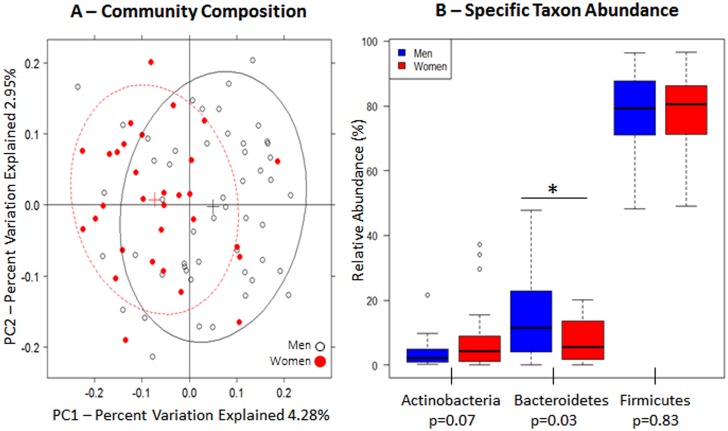
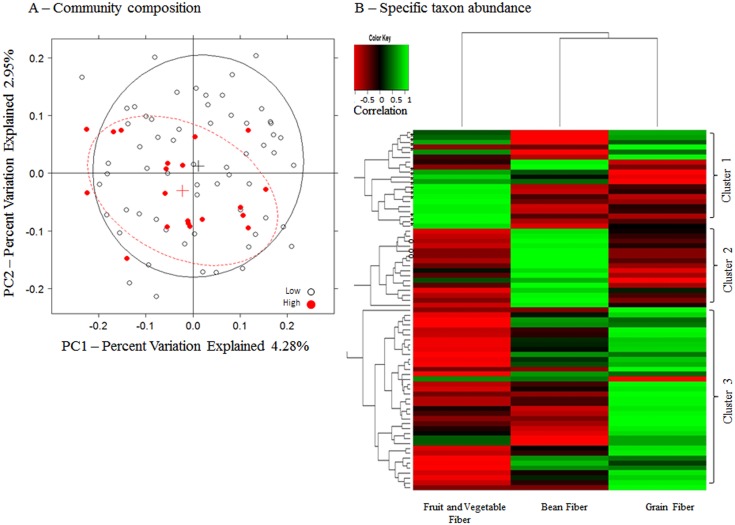
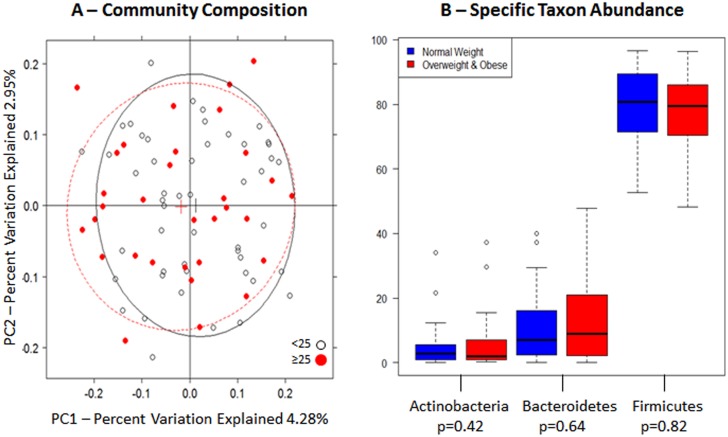
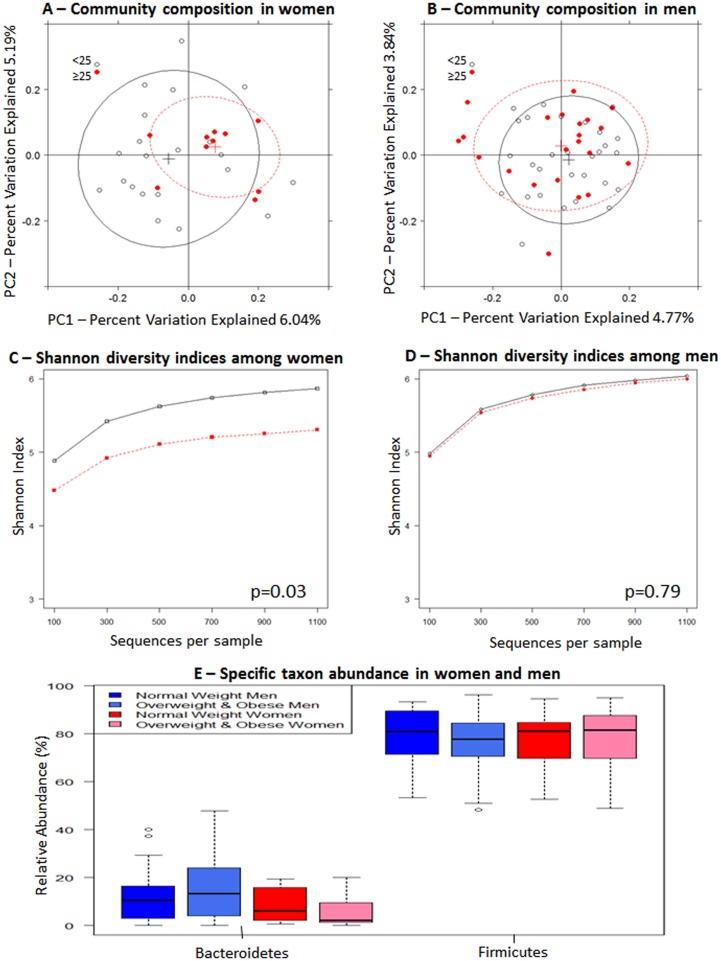
Increasing evidence suggests that the composition of the human gut microbiome is important in the etiology of human diseases; however, the personal factors that influence the gut microbiome composition are poorly characterized. Animal models point to sex hormone-related differentials in microbiome composition. In this study, we investigated the relationship of sex, body mass index (BMI) and dietary fiber intake with the gut microbiome in 82 humans. We sequenced fecal 16S rRNA genes by 454 FLX technology, then clustered and classified the reads to microbial genomes using the QIIME pipeline. Relationships of sex, BMI, and fiber intake with overall gut microbiome composition and specific taxon abundances were assessed by permutational MANOVA and multivariate logistic regression, respectively. We found that sex was associated with the gut microbiome composition overall (p=0.001). The gut microbiome in women was characterized by a lower abundance of Bacteroidetes (p=0.03). BMI (>25 kg/m2 vs. <25 kg/m2) was associated with the gut microbiome composition overall (p=0.05), and this relationship was strong in women (p=0.03) but not in men (p=0.29). Fiber from beans and from fruits and vegetables were associated, respectively, with greater abundance of Actinobacteria (p=0.006 and false discovery rate adjusted q=0.05) and Clostridia (p=0.009 and false discovery rate adjusted q=0.09). Our findings suggest that sex, BMI, and dietary fiber contribute to shaping the gut microbiome in humans. Better understanding of these relationships may have significant implications for gastrointestinal health and disease prevention.
越来越多的证据表明,人类肠道微生物群的组成在人类疾病的病因学中很重要;然而,影响肠道微生物群组成的个人因素却鲜有明确描述。动物模型表明微生物群组成存在与性激素相关的差异。在本研究中,我们调查了82名人类受试者的性别、体重指数(BMI)和膳食纤维摄入量与肠道微生物群的关系。我们通过454 FLX技术对粪便16S rRNA基因进行测序,然后使用QIIME软件包将测序读数聚类并分类到微生物基因组。分别通过置换多变量方差分析和多变量逻辑回归评估性别、BMI和纤维摄入量与整体肠道微生物群组成及特定分类群丰度的关系。我们发现,性别与整体肠道微生物群组成相关(p = 0.001)。女性的肠道微生物群特征是拟杆菌丰度较低(p = 0.03)。BMI(>25 kg/m² 与 <25 kg/m²)与整体肠道微生物群组成相关(p = 0.05),这种关系在女性中较强(p = 0.03),而在男性中不明显(p = 0.29)。豆类以及水果和蔬菜中的纤维分别与放线菌丰度增加(p = 0.006,错误发现率调整q = 0.05)和梭菌丰度增加(p = 0.009,错误发现率调整q = 0.09)相关。我们的研究结果表明,性别、BMI和膳食纤维有助于塑造人类的肠道微生物群。更好地理解这些关系可能对胃肠道健康和疾病预防具有重要意义。