Zhang Yonghe, Huang Huiming, Xu Shanshan, Wang Bo, Ju Jianhua, Tan Huarong, Li Wenli
Key Laboratory of Marine Drugs, Ministry of Education of China, School of Medicine and Pharmacy, Ocean University of China, Qingdao, 266003, China.
CAS Key Laboratory of Marine Bio-resources Sustainable Utilization, Guangdong Key Laboratory of Marine Materia Medica, RNAM Center for Marine Microbiology, South China Sea Institute of Oceanology, Chinese Academy of Sciences, 164 West Xingang Road, Guangzhou, 510301, China.
Microb Cell Fact. 2015 May 1;14:64. doi: 10.1186/s12934-015-0244-2.
Marine microorganisms are an important source of new drug leads. However, the discovery and sustainable production of these compounds are often hampered due to the unavailable expression of cryptic biosynthetic gene clusters or limited titer. Ribosome engineering and response surface methodology (RSM) integrated strategy was developed in this study to activate cryptic gene cluster in the deepsea-derived Streptomyces somaliensis SCSIO ZH66, and subsequently isolation, structural analysis, and the yield enhancement of the activated compound, anticancer drug lead Fredericamycin A (FDM A), were performed.
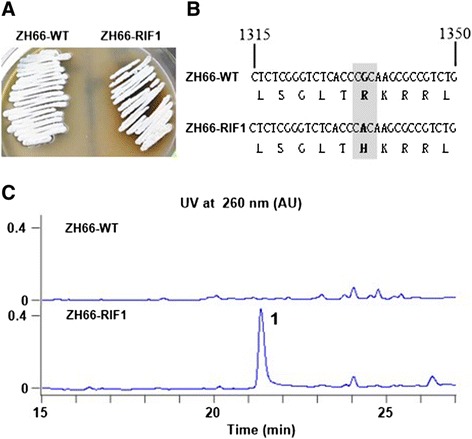
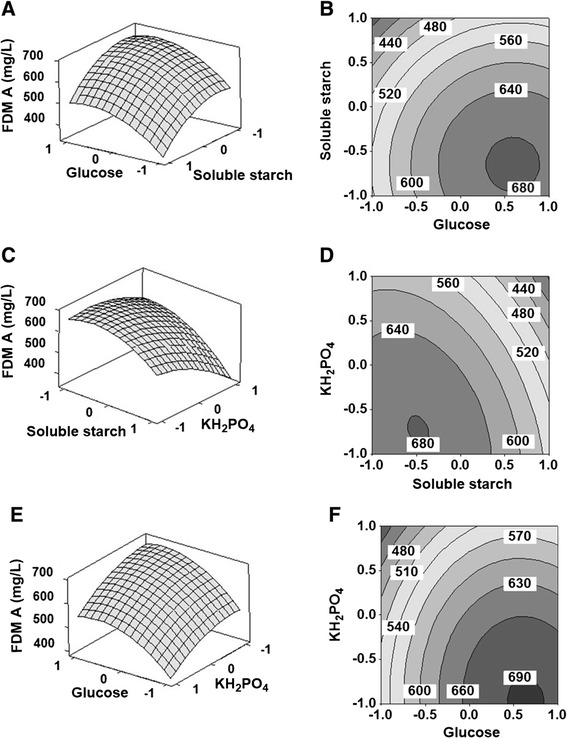
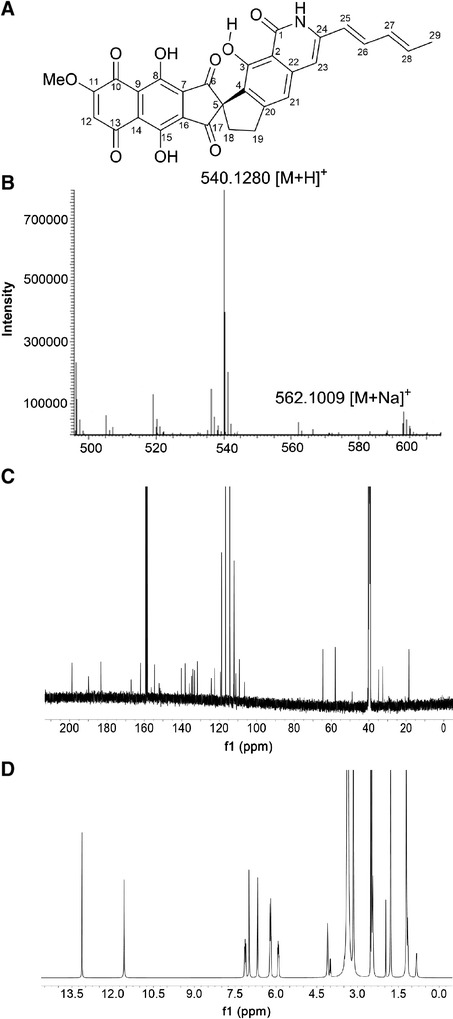
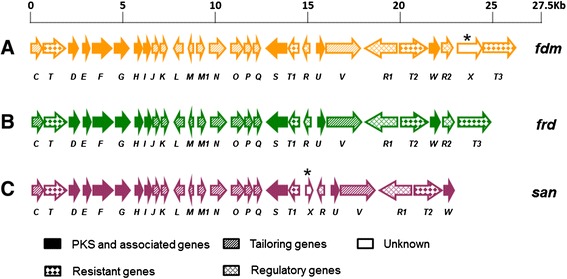
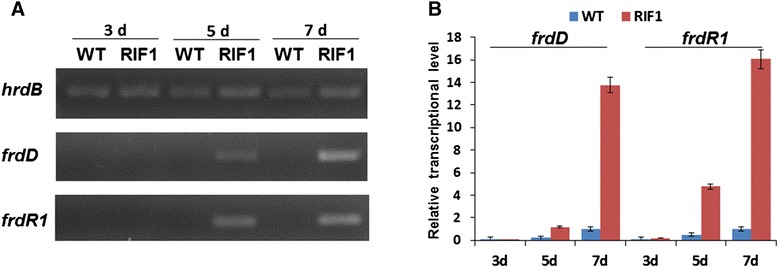
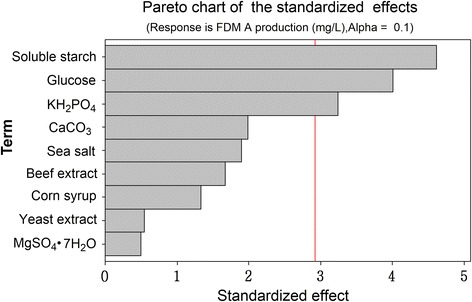
In order to discover novel natural products from marine Streptomyces strains by genome mining strategy, the deepsea-derived S. somaliensis SCSIO ZH66 was subject to ribosome engineering to activate the expression of cryptic gene clusters. A resistant strain ZH66-RIF1 was thereby obtained with 300 μg/mL rifampicin, which accumulated a brown pigment with cytotoxicity on MS plate while absent in the wild type strain. After screening of fermentation conditions, the compound with pigment was purified and identified to be FDM A, indicating that the activation of a cryptic FDM A biosynthetic gene cluster was taken place in strain ZH66-RIF1, and then it was identified to be ascribed to the mutation of R444H in the β subunit of RNA polymerase. To further improve the yield efficiently, nine fermentation medium components were examined for their significance on FDM A production by Plackett-Burman design and Box-Behnken design. The optimum medium composition was achieved by RSM strategy, under which the titer of FDM A reached 679.5 ± 15.8 mg/L after 7 days of fermentation, representing a 3-fold increase compared to the original medium. In terms of short fermentation time and low-cost fermentation medium, strain ZH66-RIF1 would be an ideal alternative source for FDM A production.
Our results would hasten the efforts for further development of FDM A as a drug candidate. Moreover, this ribosome engineering and RSM integrated methodology is effective, fast and efficient; it would be applicable to genome mining for novel natural products from other strains.
海洋微生物是新药先导化合物的重要来源。然而,由于隐秘生物合成基因簇无法表达或效价有限,这些化合物的发现和可持续生产常常受到阻碍。本研究开发了核糖体工程与响应面法(RSM)相结合的策略,以激活源自深海的索马里链霉菌SCSIO ZH66中的隐秘基因簇,随后对激活的化合物、抗癌药物先导物弗雷德里卡霉素A(FDM A)进行分离、结构分析及产量提高。
为通过基因组挖掘策略从海洋链霉菌菌株中发现新型天然产物,对源自深海的索马里链霉菌SCSIO ZH66进行核糖体工程,以激活隐秘基因簇的表达。由此获得了对300μg/mL利福平具有抗性的菌株ZH66-RIF1,该菌株在MS平板上积累了一种对细胞有毒性的棕色色素,而野生型菌株中不存在这种色素。在筛选发酵条件后,对带有色素的化合物进行了纯化和鉴定,确定其为FDM A,这表明在菌株ZH66-RIF1中发生了隐秘的FDM A生物合成基因簇的激活,随后鉴定其归因于RNA聚合酶β亚基中R444H的突变。为了进一步有效提高产量,通过Plackett-Burman设计和Box-Behnken设计研究了九种发酵培养基成分对FDM A生产的重要性。通过RSM策略实现了最佳培养基组成,在此条件下,发酵7天后FDM A的效价达到679.5±15.8mg/L,与原始培养基相比提高了3倍。就发酵时间短和发酵培养基成本低而言,菌株ZH66-RIF1将是生产FDM A的理想替代来源。
我们的结果将加速将FDM A进一步开发为候选药物的努力。此外,这种核糖体工程与RSM相结合的方法有效、快速且高效;它将适用于从其他菌株中挖掘新型天然产物的基因组。