Guo Lian-Xian, Xu Xiao-Ming, Liang Fu-Rui, Yuan Jian-Ping, Peng Juan, Wu Chou-Fei, Wang Jiang-Hai
School of Public Health, Guangdong Medical College, Dongguan, Guangdong, People's Republic of China; Guangdong Provincial Key Laboratory of Marine Resources and Coastal Engineering, Sun Yat-Sen University, Guangzhou, Guangdong, People's Republic of China.
Guangdong Provincial Key Laboratory of Marine Resources and Coastal Engineering, Sun Yat-Sen University, Guangzhou, Guangdong, People's Republic of China.
PLoS One. 2015 May 4;10(5):e0126095. doi: 10.1371/journal.pone.0126095. eCollection 2015.
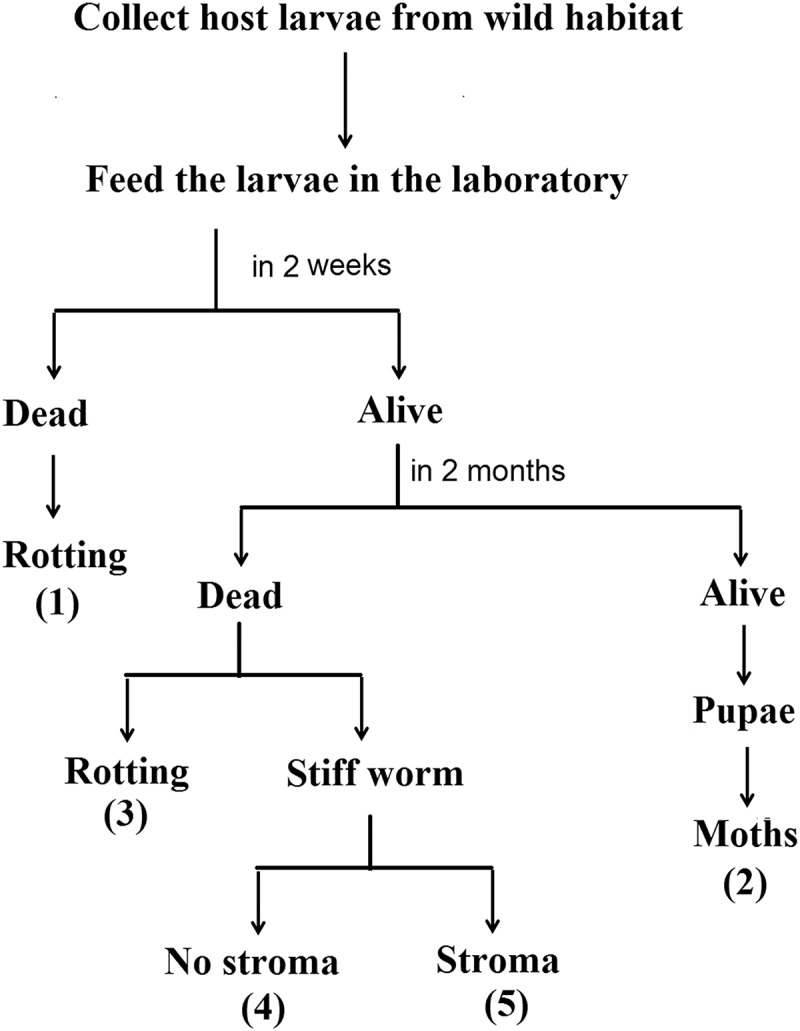
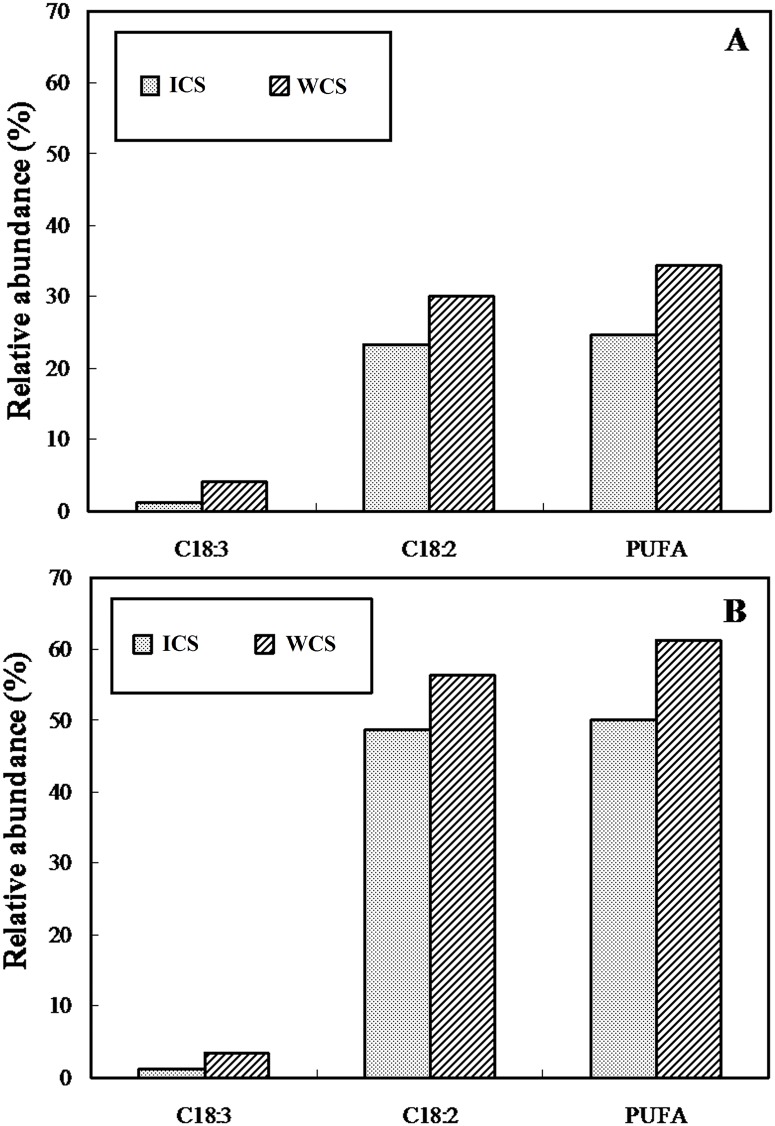
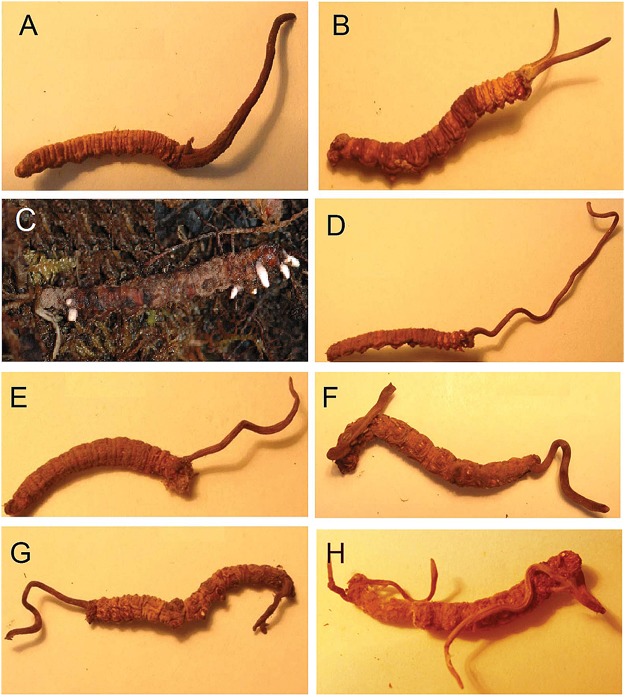
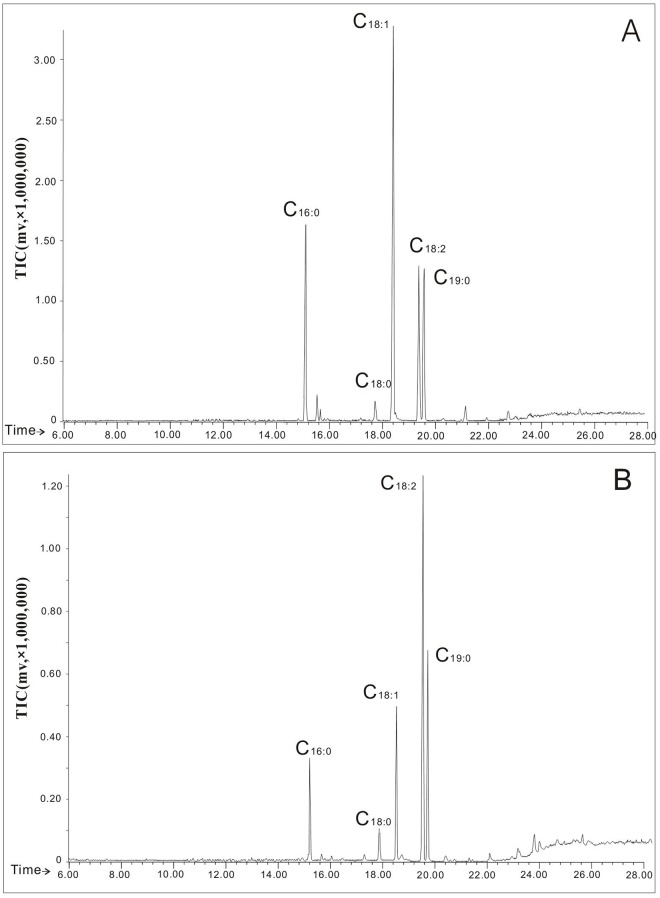
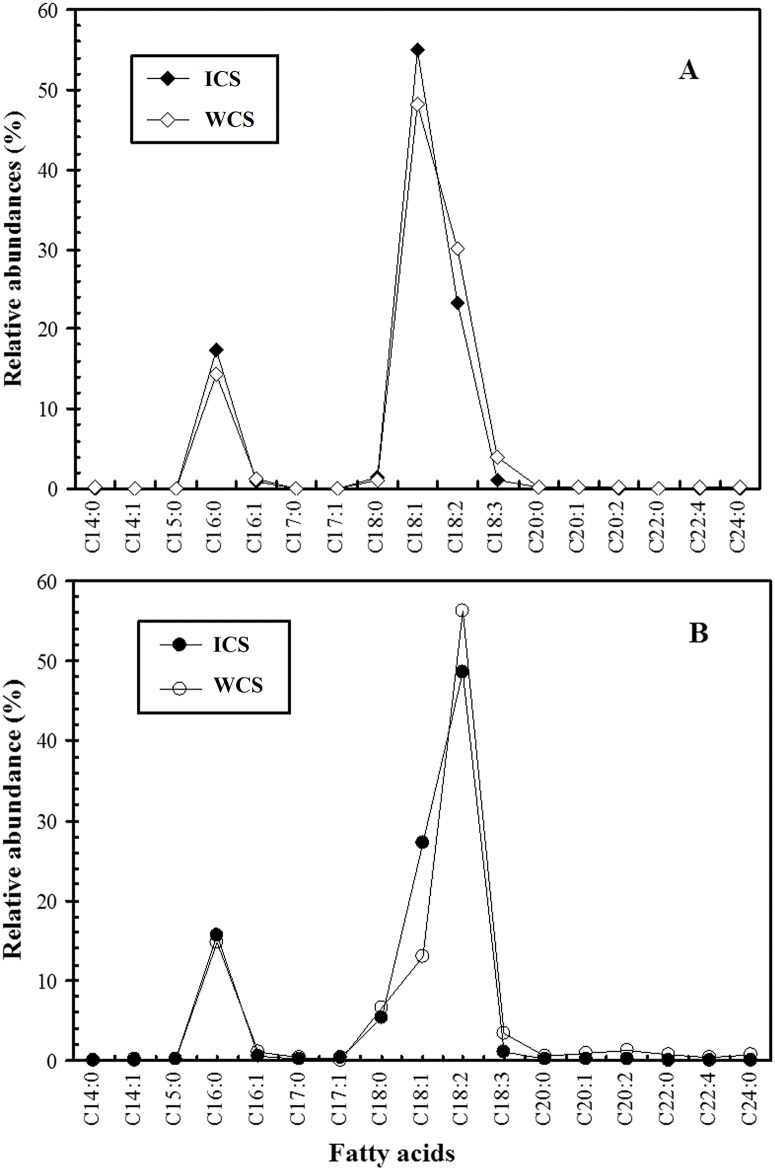
Cordyceps sinensis, a caterpillar entomopathogenic fungus-host larva complex, is a rare medicinal herb found in the Qinghai-Tibetan Plateau and its surrounding high-altitude areas. The alternation of generations in the life cycle, whatever the fungus or its host insect, requires special growth conditions. However, it is difficult to simulate the growth conditions of C. sinensis, which hinders its artificial cultivation. In this work, the life cycle from the host larva to C. sinensis was observed in an indoor-cultivation laboratory at 4,200 m a.s.l. on Sejila Mountain, Tibet. Comparative examinations between indoor-cultivated and wild C. sinensis demonstrated that the indoor-cultivated C. sinensis preferred to germinate multiple long, slim stromata at diverse positions on dead larvae, including but not limited to their heads. Their fatty acid composition shows a significant difference in the levels of polyunsaturated fatty acids (PUFAs). In indoor-cultivated C. sinensis, PUFAs constituted 24.59% and 49.43%, respectively, of neutral and polar lipids; meanwhile, in wild C. sinensis, PUFAs represented 34.34% and 61.25% of neutral and polar lipids, respectively. These observations and fatty acid data suggest that environmental factors, particularly temperature, soil pressure and light intensity, strongly affect the growth of C. sinensis. Our new findings may provide important information for improving techniques for the large-scale artificial cultivation of C. sinensis.
冬虫夏草是一种由虫草菌寄生于蝙蝠蛾幼虫形成的复合体,是一种生长于青藏高原及其周边高海拔地区的珍稀草药。无论对于真菌还是其寄主昆虫,其生命周期中的世代交替都需要特殊的生长条件。然而,冬虫夏草的生长条件难以模拟,这阻碍了其人工培育。在本研究中,在西藏色季拉山海拔4200米的室内栽培实验室中观察了从寄主幼虫到冬虫夏草的生命周期。对室内栽培和野生冬虫夏草的比较检测表明,室内栽培的冬虫夏草倾向于在死幼虫的不同位置,包括但不限于头部,萌发出多个细长的子座。它们的脂肪酸组成在多不饱和脂肪酸(PUFA)水平上存在显著差异。在室内栽培的冬虫夏草中,PUFA分别占中性脂质和极性脂质的24.59%和49.43%;同时,在野生冬虫夏草中,PUFA分别占中性脂质和极性脂质的34.34%和61.25%。这些观察结果和脂肪酸数据表明,环境因素,特别是温度、土壤压力和光照强度,对冬虫夏草的生长有强烈影响。我们的新发现可能为改进冬虫夏草大规模人工栽培技术提供重要信息。