Basak Pratima, Chatterjee Sumanta, Weger Steven, Bruce M Christine, Murphy Leigh C, Raouf Afshin
Department of ImmunologyUniversity of Manitoba, 471 Apotex Centre 750 McDermot Avenue, Winnipeg, Manitoba, Canada R3E 0T5Manitoba Institute of Cell Biology675 McDermot Avenue, Winnipeg, Manitoba, Canada R3E 0V9Department of Biochemistry and Medical GeneticsUniversity of Manitoba, Winnipeg, Manitoba, Canada R3E 0W2 Department of ImmunologyUniversity of Manitoba, 471 Apotex Centre 750 McDermot Avenue, Winnipeg, Manitoba, Canada R3E 0T5Manitoba Institute of Cell Biology675 McDermot Avenue, Winnipeg, Manitoba, Canada R3E 0V9Department of Biochemistry and Medical GeneticsUniversity of Manitoba, Winnipeg, Manitoba, Canada R3E 0W2.
Department of ImmunologyUniversity of Manitoba, 471 Apotex Centre 750 McDermot Avenue, Winnipeg, Manitoba, Canada R3E 0T5Manitoba Institute of Cell Biology675 McDermot Avenue, Winnipeg, Manitoba, Canada R3E 0V9Department of Biochemistry and Medical GeneticsUniversity of Manitoba, Winnipeg, Manitoba, Canada R3E 0W2.
Endocr Relat Cancer. 2015 Aug;22(4):505-17. doi: 10.1530/ERC-15-0105. Epub 2015 May 5.
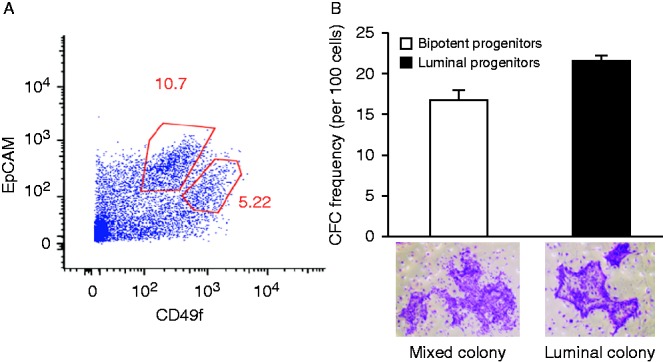
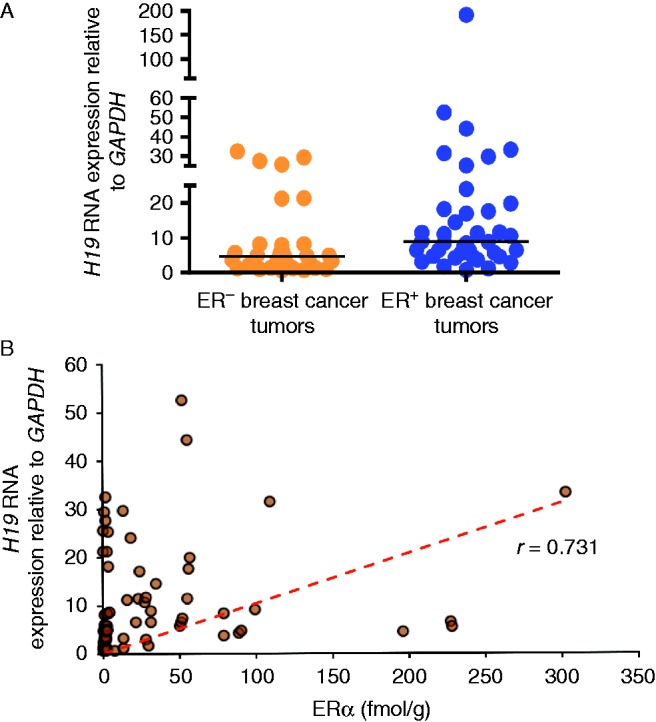
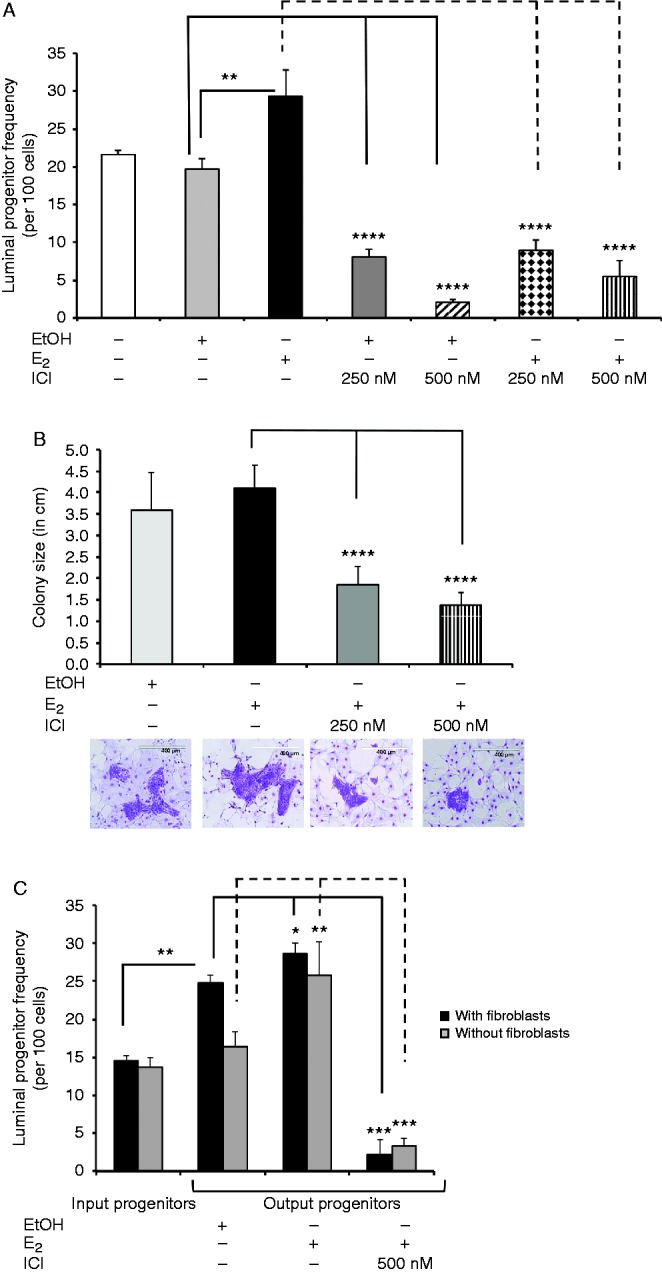
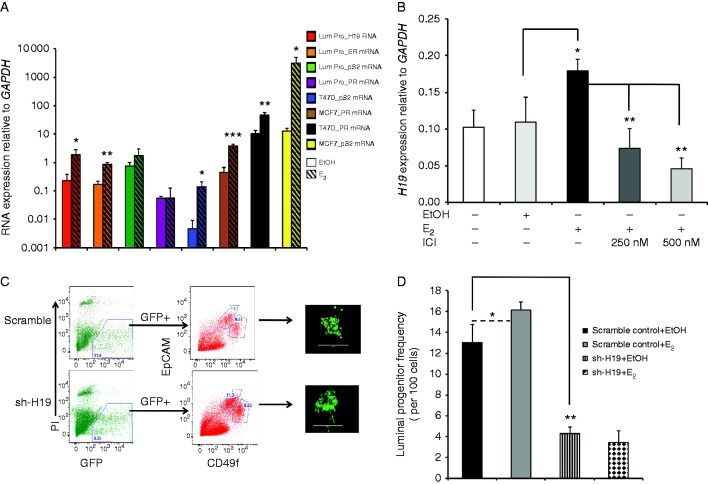
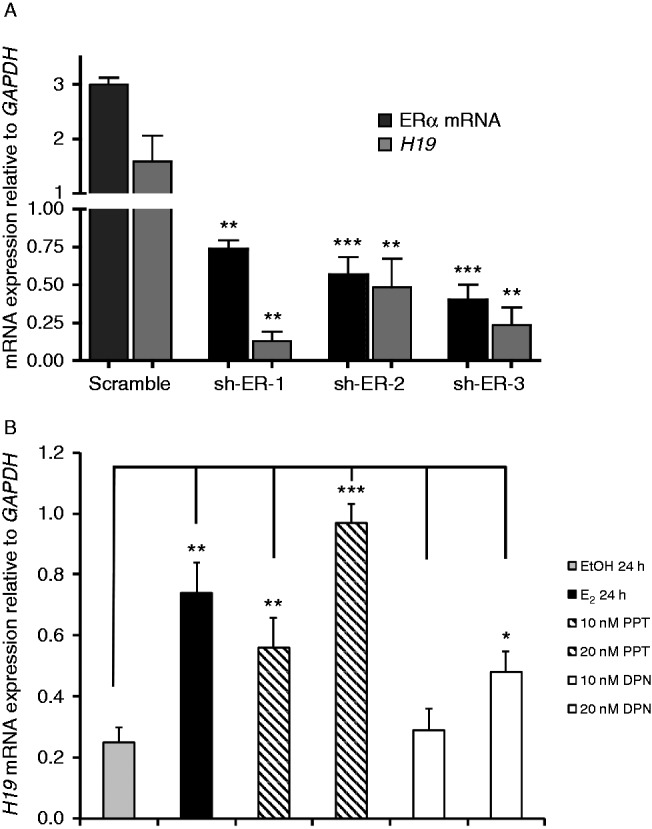
Although the role of estrogen signaling in breast cancer development has been extensively studied, the mechanisms that regulate the indispensable role of estrogen in normal mammary gland development have not been well studied. Because of the unavailability of culture system to maintain estrogen-receptor-positive (ERα(+)) cells in vitro, the molecular mechanisms that regulate estrogen/ERα signaling in the normal human breast are unknown. In the present study, we examined the effects of estrogen signaling on ERα(+) human luminal progenitors using a modified matrigel assay and found that estrogen signaling increased the expansion potential of these progenitors. Furthermore, we found that blocking ERα attenuated luminal progenitor expansion and decreased the luminal colony-forming potential of these progenitors. Additionally, blocking ERα decreased H19 expression in the luminal progenitors and led to the development of smaller luminal colonies. We further showed that knocking down the H19 gene in the luminal progenitors significantly decreased the colony-forming potential of the luminal progenitors, and this phenotype could not be rescued by the addition of estrogen. Lastly, we explored the clinical relevance of the estrogen-H19 signaling axis in breast tumors and found that ERα(+) tumors exhibited a higher expression of H19 as compared with ERα(-) tumors and that H19 expression showed a positive correlation with ERα expression in those tumors. Taken together, the present results indicate that the estrogen-ERα-H19 signaling axis plays a role in regulating the proliferation and differentiation potentials of the normal luminal progenitors and that this signaling network may also be important in the development of ER(+) breast cancer tumors.
尽管雌激素信号传导在乳腺癌发展中的作用已得到广泛研究,但调节雌激素在正常乳腺发育中不可或缺作用的机制尚未得到充分研究。由于缺乏在体外维持雌激素受体阳性(ERα(+))细胞的培养系统,调节正常人乳腺中雌激素/ERα信号传导的分子机制尚不清楚。在本研究中,我们使用改良的基质胶试验研究了雌激素信号传导对ERα(+)人腔上皮祖细胞的影响,发现雌激素信号传导增加了这些祖细胞的扩增潜力。此外,我们发现阻断ERα可减弱腔上皮祖细胞的扩增,并降低这些祖细胞的腔上皮集落形成潜力。此外,阻断ERα可降低腔上皮祖细胞中H19的表达,并导致较小的腔上皮集落形成。我们进一步表明,敲低腔上皮祖细胞中的H19基因可显著降低腔上皮祖细胞的集落形成潜力,并且添加雌激素无法挽救此表型。最后,我们探讨了雌激素-H19信号轴在乳腺肿瘤中的临床相关性,发现与ERα(-)肿瘤相比,ERα(+)肿瘤中H19的表达更高,并且在这些肿瘤中H19表达与ERα表达呈正相关。综上所述,目前的结果表明雌激素-ERα-H19信号轴在调节正常腔上皮祖细胞的增殖和分化潜力中起作用,并且该信号网络在ER(+)乳腺癌肿瘤的发生发展中可能也很重要。