Chandra-Mouli Venkatraman, Gibbs Susannah, Badiani Rita, Quinhas Fernandes, Svanemyr Joar
Department of Reproductive Health and Research, World Health Organization, Geneva, Switzerland.
Department of Population, Family and Reproductive Health, Johns Hopkins Bloomberg School of Public Health, Baltimore, MD, USA.
Reprod Health. 2015 Feb 17;12:12. doi: 10.1186/1742-4755-12-12.
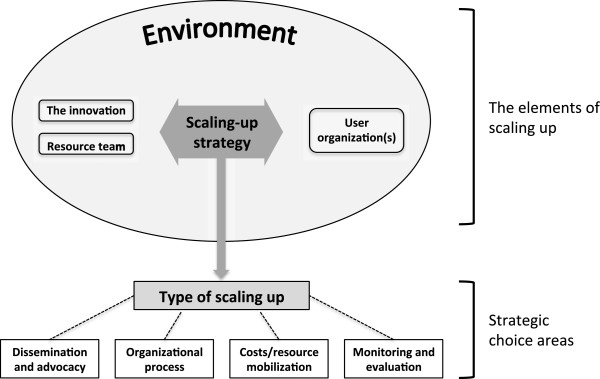
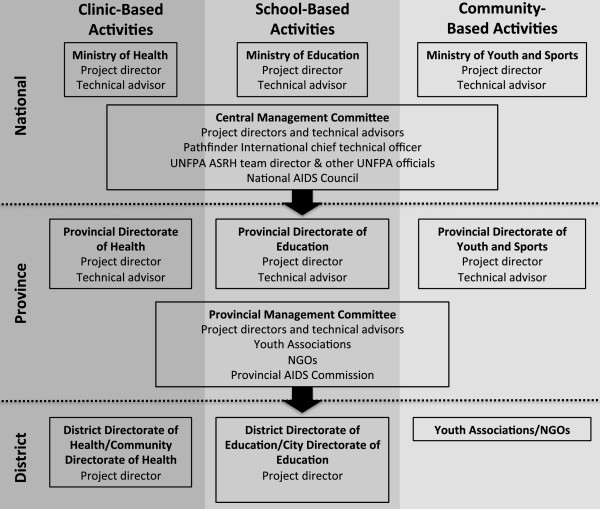
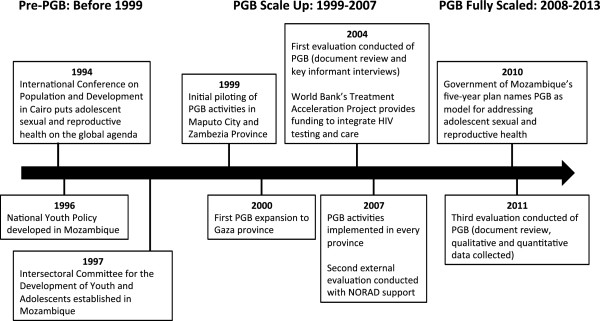
Adolescent sexual and reproductive health gained particular traction in Mozambique following the 1994 International Conference on Population and Development leading to the inception of Programa Geração Biz (PGB), a multi-sectoral initiative that was piloted starting in 1999 and fully scaled-up to all provinces by 2007. We conducted a systematic review of the literature to gather information on PGB and analyzed how it planned and managed the scale-up effort using the WHO-ExpandNet framework. PGB's activities comprised a clear and credible innovation. Appropriate resource and user organizations further facilitated national scale-up. Challenges relating to the complex nature of the multi-sectoral approach and resistance due to norms about adolescent sexual and reproductive health hindered scaling-up in some geographic areas. The national government exhibited commitment and ownership to PGB through budgetary support and integration into multiple policies. This study adds to the documentation of successful scaling-up strategies that can provide guidance for policy makers and programme managers.
1994年国际人口与发展会议之后,青少年性健康和生殖健康在莫桑比克受到特别关注,这促使“青年一代计划”(PGB)启动。该计划是一项多部门倡议,于1999年开始试点,并于2007年全面推广至所有省份。我们对文献进行了系统回顾,以收集有关“青年一代计划”的信息,并分析其如何使用世界卫生组织-扩展网框架规划和管理推广工作。“青年一代计划”的活动包含一项明确且可信的创新。适当的资源和用户组织进一步推动了全国范围的推广。多部门方法的复杂性以及青少年性健康和生殖健康相关规范引发的阻力给一些地理区域的推广带来了挑战。国家政府通过预算支持以及将其纳入多项政策,展现了对“青年一代计划”的承诺和主导权。本研究补充了成功推广策略的记录,可为政策制定者和项目管理者提供指导。