
一种新的针对皮肤自发荧光风险分层的性别特异性模型。
A new gender-specific model for skin autofluorescence risk stratification.
作者信息
Ahmad Muhammad S, Damanhouri Zoheir A, Kimhofer Torben, Mosli Hala H, Holmes Elaine
机构信息
Drug Metabolism Unit, King Fahad Medical Research Center, King Abdulaziz University, Jeddah, 21589, Saudi Arabia.
1] Drug Metabolism Unit, King Fahad Medical Research Center, King Abdulaziz University, Jeddah, 21589, Saudi Arabia [2] Department of Pharmacology, Faculty of Medicine, King Abdulaziz University, Jeddah, 21589, Saudi Arabia.
出版信息
Sci Rep. 2015 May 14;5:10198. doi: 10.1038/srep10198.
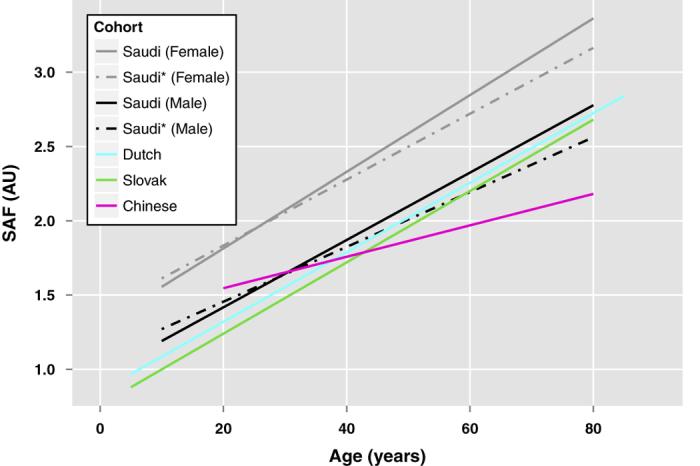
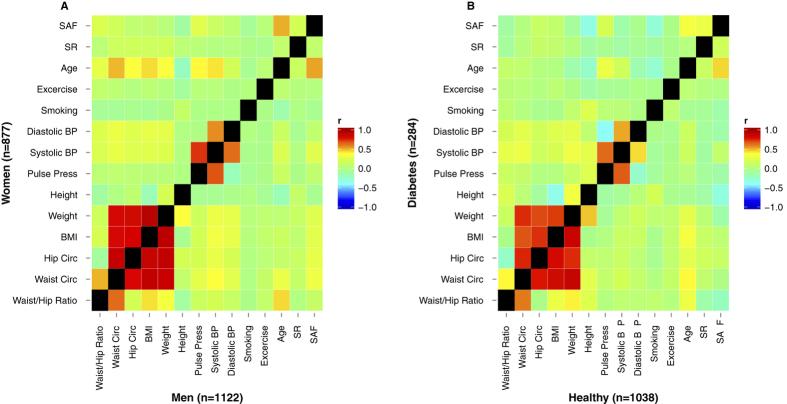
Advanced glycation endproducts (AGEs) are believed to play a significant role in the pathophysiology of a variety of diseases including diabetes and cardiovascular diseases. Non-invasive skin autofluorescence (SAF) measurement serves as a proxy for tissue accumulation of AGEs. We assessed reference SAF and skin reflectance (SR) values in a Saudi population (n = 1,999) and evaluated the existing risk stratification scale. The mean SAF of the study cohort was 2.06 (SD = 0.57) arbitrary units (AU), which is considerably higher than the values reported for other populations. We show a previously unreported and significant difference in SAF values between men and women, with median (range) values of 1.77 AU (0.79-4.84 AU) and 2.20 AU (0.75-4.59 AU) respectively (p-value « 0.01). Age, presence of diabetes and BMI were the most influential variables in determining SAF values in men, whilst in female participants, SR was also highly correlated with SAF. Diabetes, hypertension and obesity all showed strong association with SAF, particularly when gender differences were taken into account. We propose an adjusted, gender-specific disease risk stratification scheme for Middle Eastern populations. SAF is a potentially valuable clinical screening tool for cardiovascular risk assessment but risk scores should take gender and ethnicity into consideration for accurate diagnosis.
晚期糖基化终末产物(AGEs)被认为在包括糖尿病和心血管疾病在内的多种疾病的病理生理过程中起重要作用。非侵入性皮肤自发荧光(SAF)测量可作为AGEs组织蓄积的替代指标。我们评估了沙特人群(n = 1999)的参考SAF和皮肤反射率(SR)值,并对现有的风险分层量表进行了评估。研究队列的平均SAF为2.06(标准差 = 0.57)任意单位(AU),这显著高于其他人群报告的值。我们发现男性和女性的SAF值存在此前未报告的显著差异,中位数(范围)值分别为1.77 AU(0.79 - 4.84 AU)和2.20 AU(0.75 - 4.59 AU)(p值 « 0.01)。年龄、糖尿病的存在和体重指数是决定男性SAF值的最具影响力的变量,而在女性参与者中,SR也与SAF高度相关。糖尿病、高血压和肥胖都与SAF显示出强烈关联,尤其是在考虑性别差异时。我们为中东人群提出了一种调整后的、针对性别的疾病风险分层方案。SAF是一种潜在有价值的用于心血管风险评估的临床筛查工具,但风险评分应考虑性别和种族以进行准确诊断。



 Zotero 插件