Souza Pamela E, Arehart Kathryn H, Shen Jing, Anderson Melinda, Kates James M
Department of Communication Sciences and Disorders, Northwestern University Evanston, IL, USA ; Knowles Hearing Center, Northwestern University Evanston, IL, USA.
Department of Speech, Language and Hearing Sciences, University of Colorado at Boulder Boulder, CO, USA.
Front Psychol. 2015 May 7;6:526. doi: 10.3389/fpsyg.2015.00526. eCollection 2015.
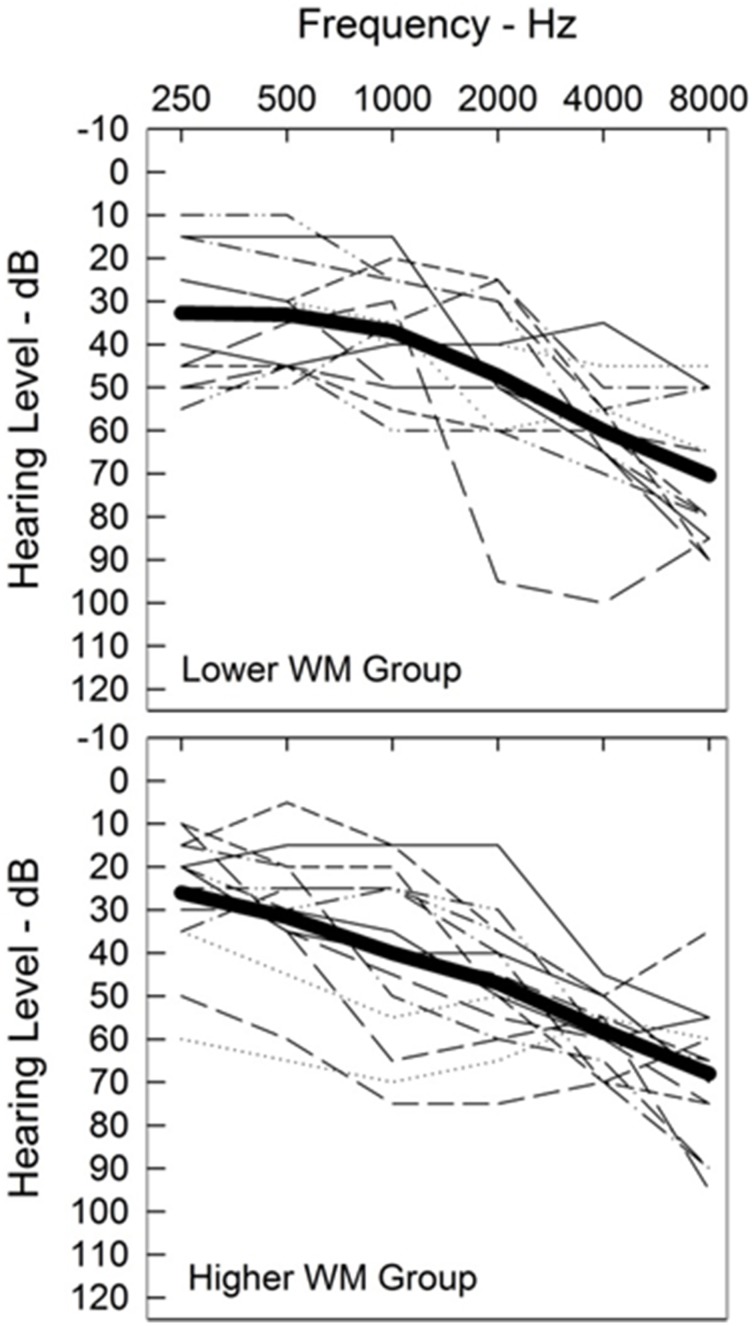
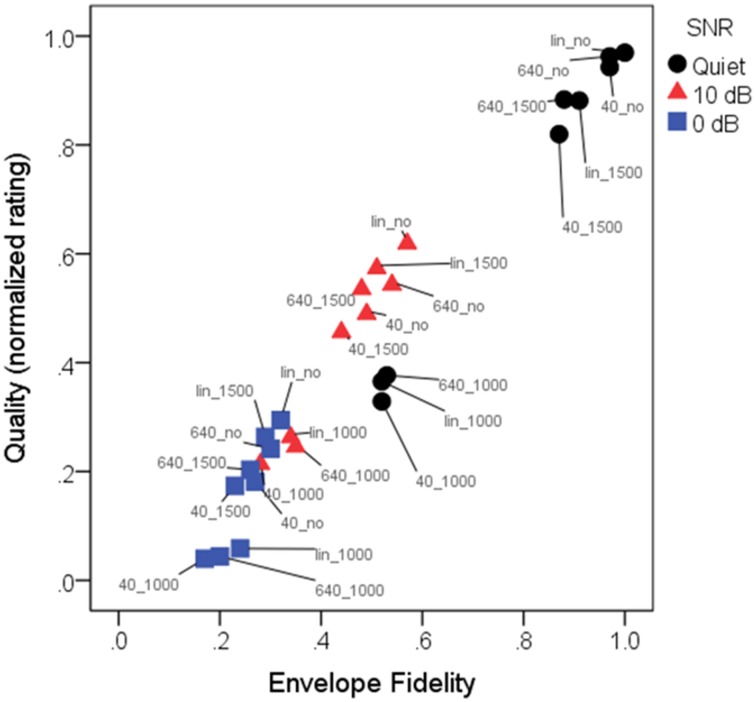
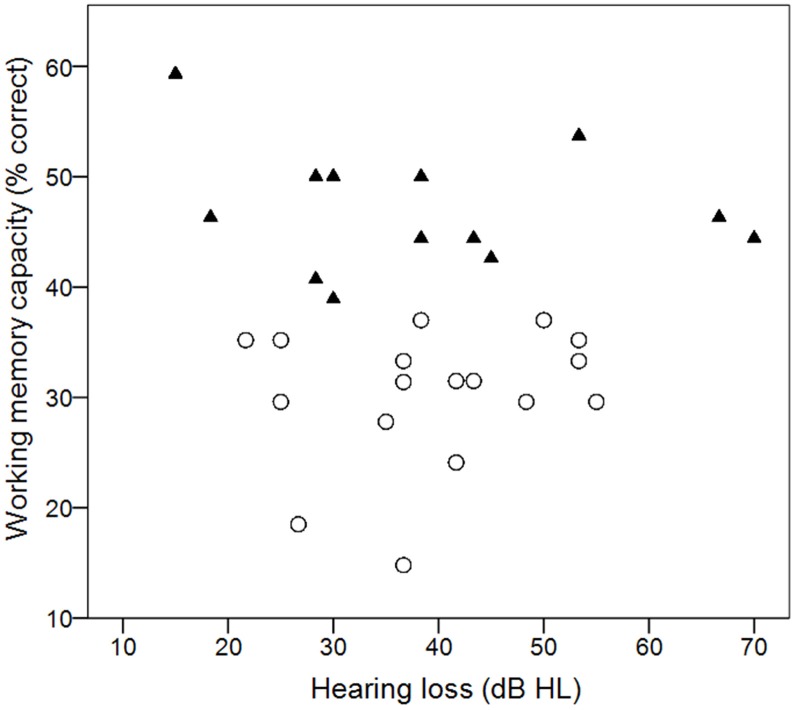
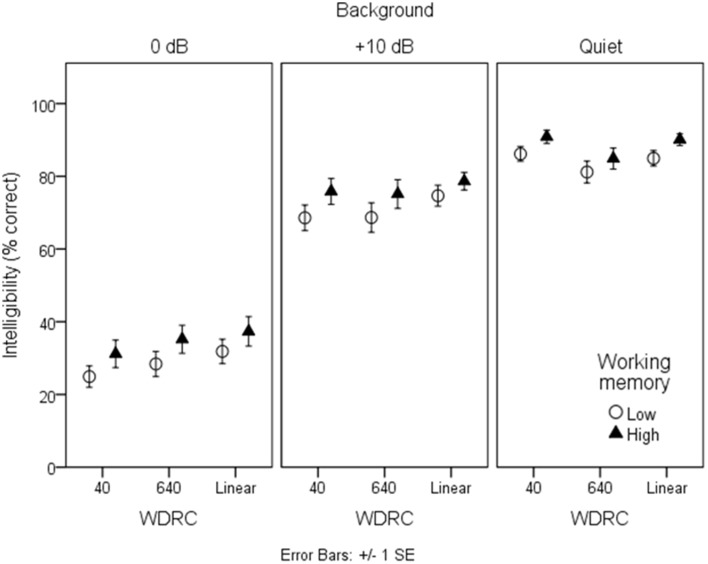
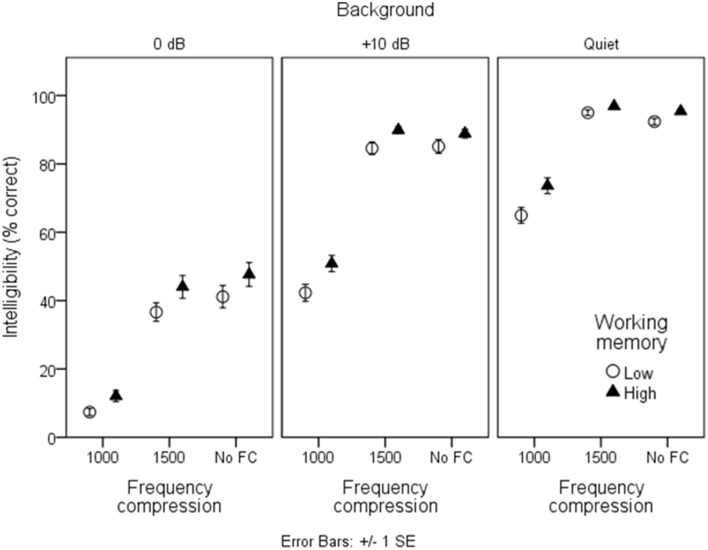
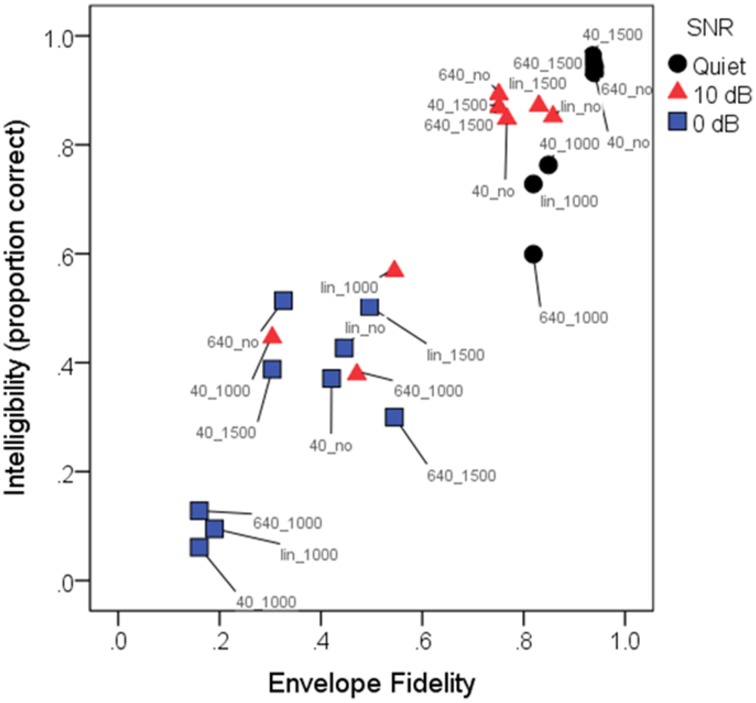
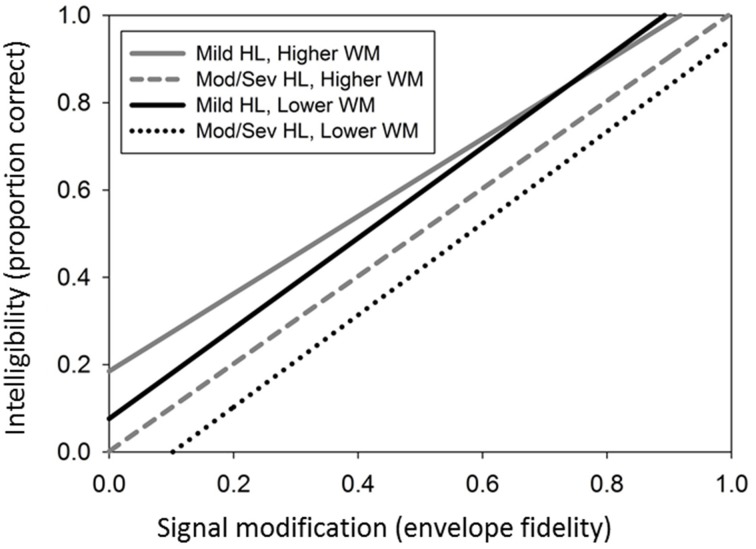
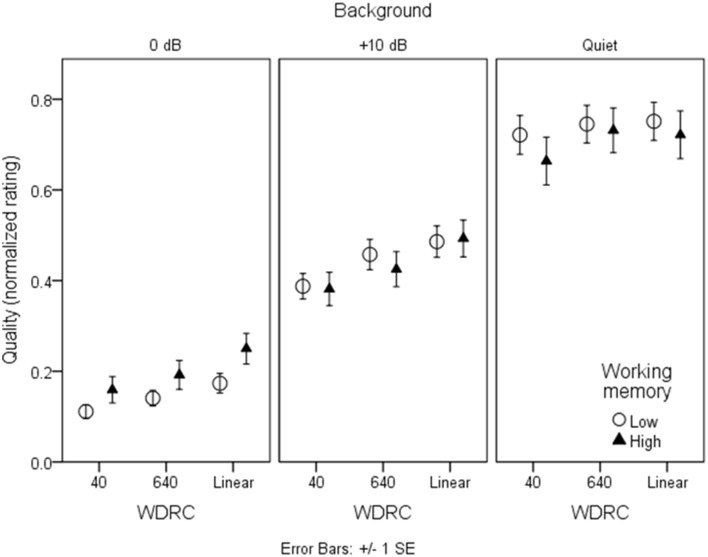
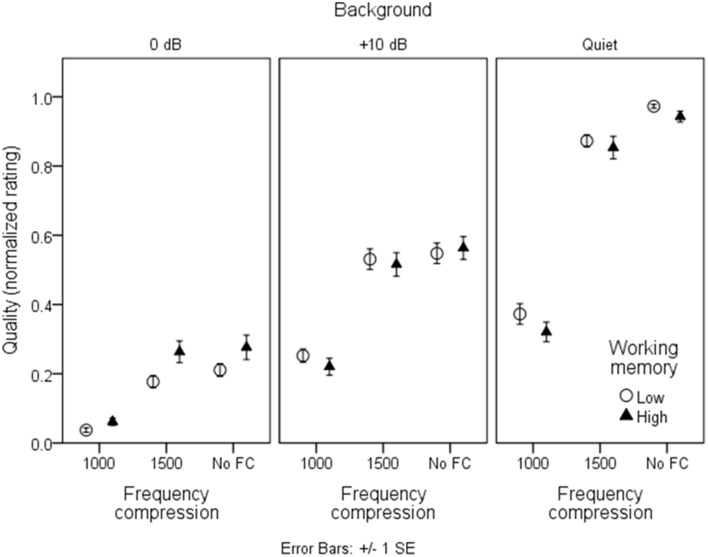
Previous work suggested that individuals with low working memory capacity may be at a disadvantage in adverse listening environments, including situations with background noise or substantial modification of the acoustic signal. This study explored the relationship between patient factors (including working memory capacity) and intelligibility and quality of modified speech for older individuals with sensorineural hearing loss. The modification was created using a combination of hearing aid processing [wide-dynamic range compression (WDRC) and frequency compression (FC)] applied to sentences in multitalker babble. The extent of signal modification was quantified via an envelope fidelity index. We also explored the contribution of components of working memory by including measures of processing speed and executive function. We hypothesized that listeners with low working memory capacity would perform more poorly than those with high working memory capacity across all situations, and would also be differentially affected by high amounts of signal modification. Results showed a significant effect of working memory capacity for speech intelligibility, and an interaction between working memory, amount of hearing loss and signal modification. Signal modification was the major predictor of quality ratings. These data add to the literature on hearing-aid processing and working memory by suggesting that the working memory-intelligibility effects may be related to aggregate signal fidelity, rather than to the specific signal manipulation. They also suggest that for individuals with low working memory capacity, sensorineural loss may be most appropriately addressed with WDRC and/or FC parameters that maintain the fidelity of the signal envelope.
先前的研究表明,工作记忆容量较低的个体在不利的听力环境中可能处于劣势,包括存在背景噪音或声学信号大幅改变的情况。本研究探讨了患者因素(包括工作记忆容量)与患有感音神经性听力损失的老年人经修改语音的可懂度和质量之间的关系。这种修改是通过将助听器处理[宽动态范围压缩(WDRC)和频率压缩(FC)]相结合应用于多人交谈的句子中产生的。信号修改的程度通过包络保真度指数进行量化。我们还通过纳入处理速度和执行功能的测量来探讨工作记忆各组成部分的作用。我们假设,在所有情况下,工作记忆容量低的听众的表现会比工作记忆容量高的听众更差,并且也会受到大量信号修改的不同影响。结果表明,工作记忆容量对语音可懂度有显著影响,并且工作记忆、听力损失程度和信号修改之间存在相互作用。信号修改是质量评级的主要预测因素。这些数据为有关助听器处理和工作记忆的文献增添了内容,表明工作记忆 - 可懂度效应可能与总体信号保真度有关,而不是与特定的信号处理有关。它们还表明,对于工作记忆容量低的个体,感音神经性听力损失可能最适合通过保持信号包络保真度的WDRC和/或FC参数来解决。